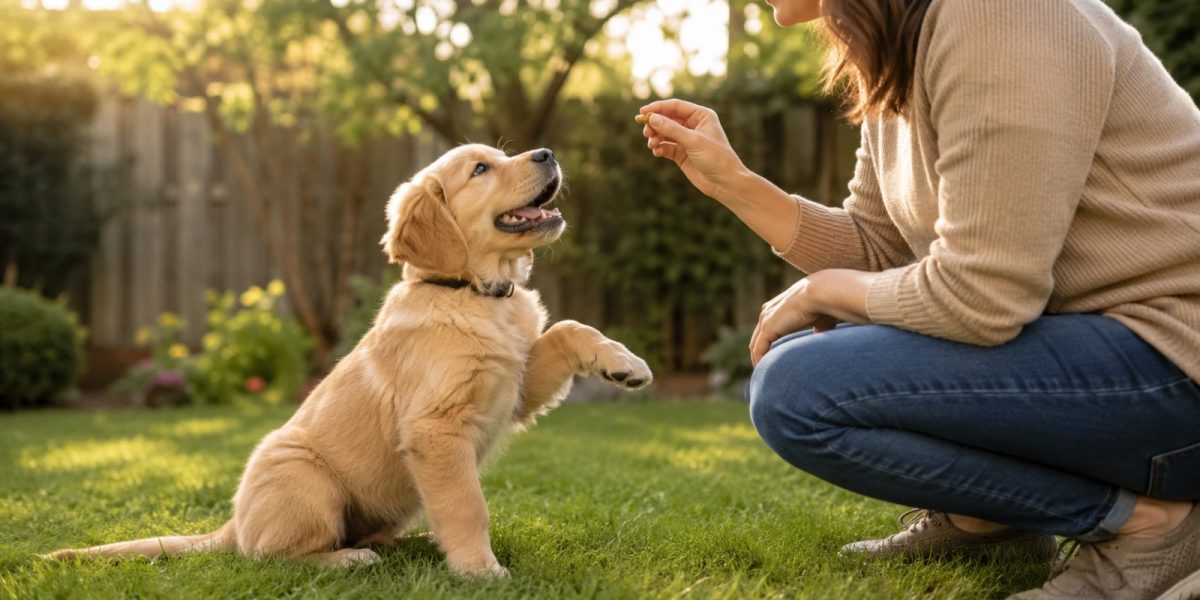

Potty training is the job every new owner dreads, and the one that causes the most middle-of-the-night despair. Here is the good news: house training is not complicated. It comes down to four things done consistently, routine, supervision, confinement, and reward, and when you get those right, most puppies pick it up surprisingly quickly. This guide gives you the exact method, a schedule you can follow, and how to handle the inevitable accidents without setting yourself back.
The four ingredients of fast potty training
Every reliable house-training plan rests on the same foundation. Routine, so your puppy’s body learns a predictable rhythm. Supervision, so you catch them before accidents happen. Confinement (usually a crate or pen), so they are not free to sneak off and go unseen. And reward, so going in the right place becomes the most rewarding option. Miss any one of these and progress stalls. Nail all four and you build a clean habit fast.
Why the crate works so well
Dogs have a natural instinct not to soil where they sleep. A correctly sized crate, just big enough to stand, turn around, and lie down, taps into that instinct and teaches your puppy to hold on until you let them out to their spot. If the crate is too big, they will simply use one end as a toilet, so block off the extra space while they are small. The crate is not a cage or a punishment, it is a cosy den and one of the most effective house-training tools there is. New to crates? Our crate training guide covers the gentle introduction.
One golden rule on timing: a puppy can generally hold their bladder for about one hour per month of age. So an 8-week-old puppy (2 months) should not be crated longer than about 2 hours. Push past that and accidents are on you, not them.
The step-by-step method
- Take them to the same spot, on a lead. Using one consistent toilet area builds a strong association through the scent left behind.
- Go out at every key moment (see the schedule below), not just when you remember.
- Wait, and stay boring. Give them a few minutes to sniff and circle. Do not play or chat, you are here for a job.
- Reward the instant they finish. The moment they go, praise warmly and give a treat right there, outside. Timing is critical: reward within a second or two so they connect the treat to the act, not to coming back inside.
- Then have some fun. A short play or walk afterwards teaches that going to the toilet does not end all the fun, which prevents “holding it” to stay out longer.
The potty schedule: when to take them out
Puppies need to go far more often than you would think. Take yours out:
- First thing every morning, and last thing at night.
- Immediately after waking from any nap.
- About 20 minutes after every meal or drink.
- After every play session and any excitement.
- Every hour or two in between while they are very young.
Yes, it is a lot. The frequency drops quickly as their bladder grows and the habit forms. For a full breakdown by age, see our puppy potty training schedule.
Supervise like a hawk (or confine)
Between toilet trips, your puppy should either be actively watched or safely confined. An unsupervised puppy is an accident waiting to happen. Learn their “I need to go” signals, sudden sniffing, circling, restlessness, or heading for the door, and whisk them out the moment you see them. When you cannot watch closely, pop them in their crate or pen for a short spell. This is not mean, it is what makes training fast and stress-free for both of you.
How to handle accidents (this matters)
Accidents will happen. How you react decides how fast you progress.
- If you catch them mid-accident, interrupt gently with a calm “oops,” scoop them up, and take them straight outside to finish. Reward if they do.
- If you find it after the fact, say nothing. Just clean it up. Your puppy cannot connect a telling-off to something they did minutes ago, all they learn is that you are unpredictable.
- Never rub their nose in it or punish. This old myth teaches fear, not cleanliness, and often makes puppies hide to toilet, which is worse.
- Clean thoroughly with an enzymatic cleaner, not a normal household one. Dogs return to spots that still smell faintly of urine, and only enzyme cleaners fully remove the scent.
How long does potty training take?
Most puppies are reliably house trained somewhere between 4 and 6 months, though some get there faster and a few take longer. A useful benchmark: consider it “done” once your puppy has gone 4 to 8 weeks with no accidents. Small breeds sometimes take a little longer simply because they have tiny bladders. Do not compare your puppy to the neighbour’s, just stay consistent and the habit will lock in.
Common mistakes that slow things down
A few traps catch almost everyone. Giving your puppy too much freedom too soon, which invites unseen accidents. Confining them straight back to the crate the second they finish, which teaches them to hold it to stay out longer. Punishing accidents, which breeds fear. And being inconsistent with the schedule, which is the single biggest reason house training drags on. Tighten those up and progress speeds up quickly.
Frequently asked questions
How long does it take to potty train a puppy?
Usually 4 to 6 months for reliable training, though it varies. Consider it complete once your puppy goes 4 to 8 weeks without an accident.
How often should I take my puppy out to potty?
After waking, about 20 minutes after eating or drinking, after play, first thing in the morning, last thing at night, and every hour or two in between while they are young.
Should I punish my puppy for accidents?
No. Punishment, especially after the fact, only teaches fear and can make puppies hide to toilet. Interrupt calmly if you catch them, otherwise just clean up and move on.
How long can a puppy hold its bladder?
Roughly one hour per month of age. An 8-week-old (2 months) should not be expected to hold it more than about 2 hours, including in the crate.
Why does my puppy keep going in the same spot indoors?
Leftover scent draws them back. Clean any accident with an enzymatic cleaner rather than a normal household product, which does not fully remove the smell dogs detect.
The bottom line
Potty training is not about talent or luck, it is about consistency across four simple pillars: routine, supervision, confinement, and reward. Take your puppy to the same spot at every key moment, reward the instant they go, supervise or confine in between, and handle accidents calmly. Do that and you will have a clean, confident puppy sooner than you think. Next, make the crate a happy place with our crate training guide, and keep building good habits with the puppy training schedule by age.
Sources and further reading: Small Door Veterinary, American Kennel Club, and PetMD.