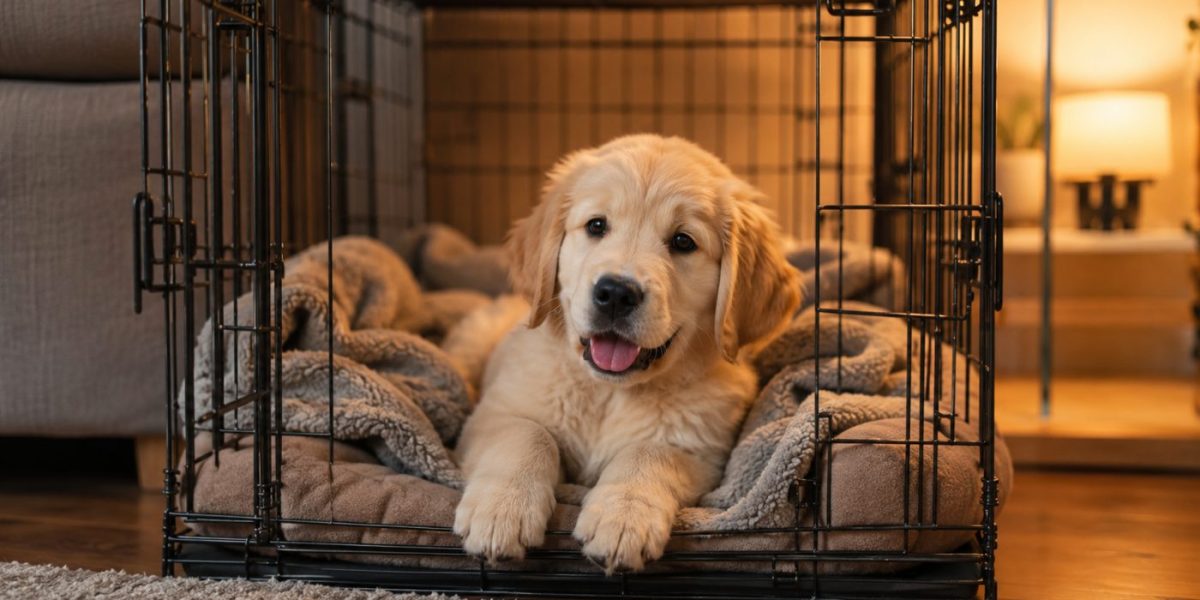

Say the word “crate” to some dog owners and they wince, picturing a cage and a crying puppy. Done properly, though, a crate is the complete opposite: it becomes your dog’s favourite room in the house, a safe den they take themselves off to for a nap. Get it right and you unlock easier house training, calmer alone time, safer travel, and a dog that can settle anywhere. Get it wrong and you create fear. This guide shows you the kind, proven way, step by step, whether you have an eight-week-old puppy or a rescue dog set in their ways.
Why crate training is worth it
A crate taps into a natural instinct. Dogs are den animals, and most feel genuinely secure in a small, cosy, enclosed space. A well-introduced crate gives your dog somewhere to decompress, keeps them safe when you cannot supervise, and speeds up potty training because dogs instinctively avoid soiling where they sleep. It also makes vet stays, travel, and recovery from injury far less stressful, because a crate-happy dog is calm in a confined space. The single rule that makes all of this work: the crate must only ever be a good place. Never a punishment.
Choosing the right crate and size
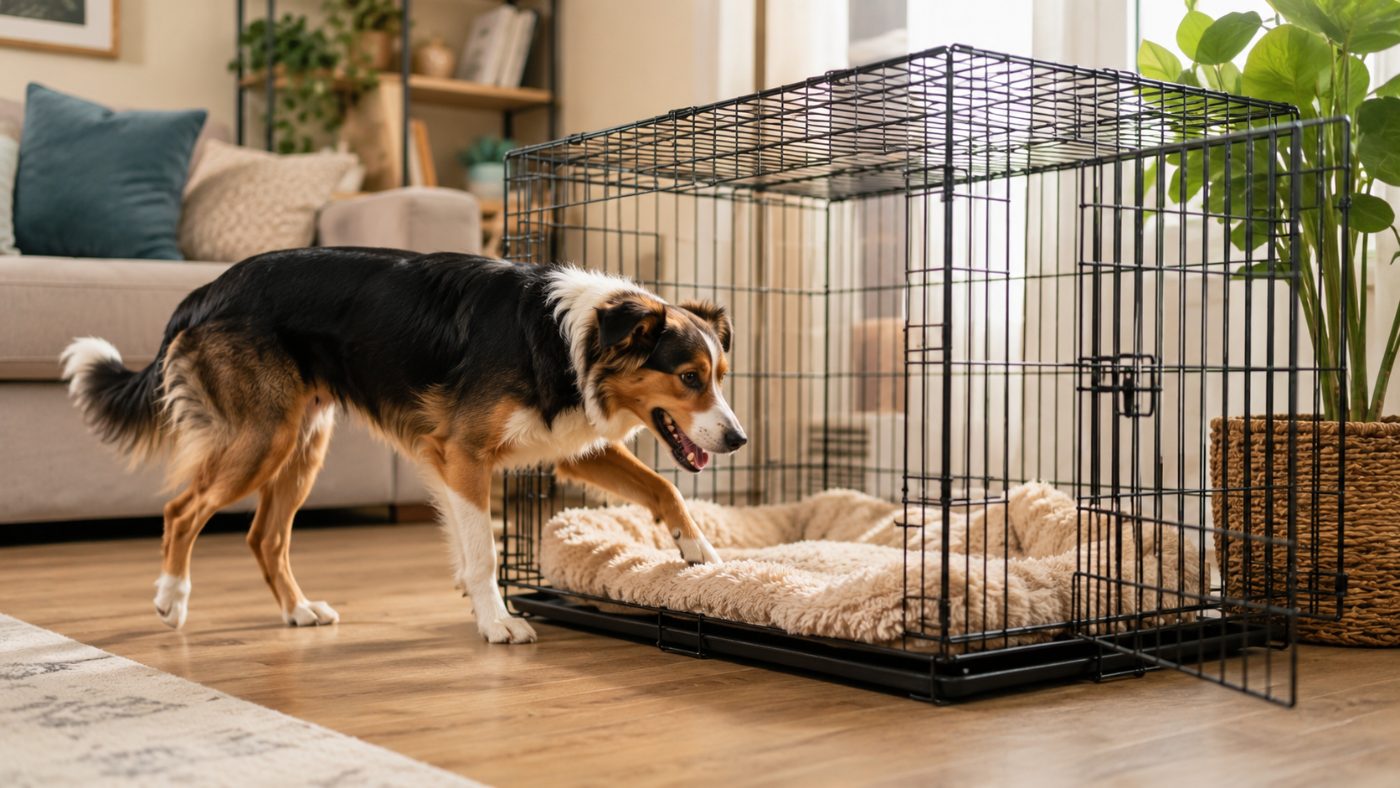
Size matters more than people realise. The crate should be just big enough for your dog to stand up, turn around, and lie down comfortably, and no bigger. If it is too large, your puppy will happily use one end as a bedroom and the other as a toilet, which wrecks house training. For a growing puppy, buy a crate sized for their adult self and use a divider to shrink the usable space, expanding it as they grow.
On type, wire crates are well ventilated, collapsible, and usually come with a divider, which makes them the practical all-rounder. Plastic airline-style crates feel more den-like and are better for travel. Fabric crates are light but easily chewed, so they suit dogs who are already crate-trained. Whatever you choose, make it inviting with a comfy mat or bed, and place the crate where the family is, a corner of the living room or your bedroom, not isolated in a garage or utility room. Dogs are social, and a lonely crate feels like exile.
The step-by-step method
Go at your dog’s pace. These steps can take a few days or a couple of weeks, and rushing is the most common reason crate training fails. Spend as long as you need on each stage before moving on.
Step 1: Introduce the crate
Set the crate up with the door open or removed, and simply let your dog investigate. Toss a few treats near it, then just inside, then at the back. Let them wander in and out freely with no pressure. You want them thinking, “good things appear around this box.”
Step 2: Feed meals in the crate
Start feeding your dog their meals in the crate, bowl placed a little further back each day until they are eating happily right at the rear. Eating is a relaxed, positive activity, and doing it inside builds a warm association fast.
Step 3: Close the door for seconds
Once your dog is comfortable going in, close the door for a few seconds while they eat or chew, then open it before they finish. Gradually extend to a minute, then a few minutes. Stay near and calm. If they stay relaxed, you are winning.
Step 4: Build duration and add distance
Give your dog a long-lasting chew or a stuffed, frozen Kong, close the door, and potter about the room. Then start stepping out of sight for a few seconds, returning before they get anxious. Slowly build both the time in the crate and the time you are away. A food puzzle turns crate time into something your dog actively looks forward to. Our guide to mental stimulation games has plenty of ideas for crate-friendly enrichment.
Step 5: Add a cue and short absences
Introduce a cheerful cue like “crate” or “bed” as they go in, and reward. Once they will settle for 30 minutes while you are out of sight, you can start leaving the house for very short periods, building up gradually. Always give a toilet break before crating and immediately after letting them out.

Crate training at night
Night-time is where many owners struggle, especially with a new puppy. The trick is to keep the crate in your bedroom at first, so your puppy can see, hear, and smell you. Being alone in a strange dark room is terrifying for a baby dog, and a night or two of proximity prevents a lot of distress. A young puppy also physically cannot hold their bladder all night, so expect one or two toilet trips: take them out calmly, no play or fuss, then straight back to the crate. As they grow and settle, you can gradually move the crate to its permanent spot if you wish. Most puppies sleep through the night by around four to five months.
How to handle whining (this is the key bit)
Whining is the moment that makes or breaks crate training, and there is a fork in the road. If your puppy whines because they need the toilet, you must take them out, briefly and boringly. If they whine purely for attention or release, and you let them out, you have just taught them that whining works, and it will get worse. The skill is telling the two apart, which comes with knowing your dog’s routine.
For attention whining, wait for a brief pause in the noise, even a couple of seconds of quiet, and reward that instead. Never open the door mid-whine. Set your dog up to succeed by making sure they are well exercised, recently toileted, and have something to chew before crating, so they have every reason to settle rather than protest. If whining escalates into genuine panic, drooling, frantic escape attempts, or destruction, stop and read the next section, because that is not stubbornness, it is fear.
When crating and separation anxiety collide
A crate is a fantastic tool for a relaxed dog, but for a dog with true separation anxiety it can sometimes make things worse, turning panic into a trapped, frantic state. If your dog shows signs of real distress the moment they are confined or left, work on the underlying anxiety first, gently and gradually, rather than forcing the crate. Our guide on separation anxiety walks through desensitising a dog to being alone, and if barking when you leave is the main issue, see stopping barking when left alone. For serious cases, a qualified, reward-based behaviourist is well worth it.
Crate training an adult or rescue dog
Older dogs and rescues can absolutely learn to love a crate, it just often takes a little more patience, especially if they have had a bad experience with confinement before. Use the exact same positive steps, but go slower and watch body language closely. Never force a nervous dog inside or shut the door before they are ready. Let a rescue dog choose to enter, feed all their meals in there, and build trust first. We cover the wider settling-in process in our guide to training a rescue dog. The payoff is a dog with a safe retreat of their own, which is hugely reassuring for an anxious newcomer.
The big mistakes to avoid
- Using the crate as punishment. This is the fastest way to ruin it. The crate must stay a happy place, always.
- Rushing the stages. Slamming the door shut too soon creates fear. Let comfort build at each step.
- Leaving a dog crated too long. A crate is a bed, not a holding pen. Puppies can hold their bladder roughly one hour per month of age, and no dog should be crated all day.
- Letting them out while whining. Wait for quiet, or you train the whining.
- A crate that is too big. It sabotages house training. Use a divider for growing puppies.
How long does crate training take?
It varies. Some puppies are comfortably napping in their crate within a few days, while nervous or older dogs might need several weeks. The pace depends entirely on your dog’s temperament and your consistency, not on any fixed timetable. Resist the urge to hurry. A dog that genuinely loves their crate is worth a slow, patient introduction, because that positive association lasts a lifetime. If after a couple of weeks of kind, consistent work your dog is still deeply distressed by the crate, step back and consider help from a professional, and rule out that separation anxiety is the real issue.
Frequently asked questions
Is it cruel to crate train a dog?
No, when done properly. A crate introduced positively becomes a safe, cosy den that dogs choose to use. It only becomes unkind if used as punishment, sized wrongly, or if a dog is left in it far too long.
How long can a dog stay in a crate?
Puppies can hold their bladder roughly one hour per month of age, so an 8-week-old should not be crated more than about 2 hours. Adult dogs should not be crated all day, a few hours at a time is the sensible limit, with plenty of exercise and company around it.
Should I let my puppy cry it out in the crate?
Not exactly. If the whining is a toilet request, take them out calmly. If it is for attention, wait for a brief pause and reward the quiet, rather than opening the door mid-cry. Never ignore genuine panic, which needs a gentler, slower approach.
Where should I put the crate at night?
In your bedroom to start with, so a new puppy can sense you nearby. This prevents a lot of night-time distress. You can move it later once your dog is settled and confident.
Can you crate train an older dog?
Yes. Older and rescue dogs learn to love a crate using the same positive steps, just with more patience. Let them choose to go in, feed meals inside, and never force a nervous dog.
The bottom line
Crate training is not about confining your dog, it is about giving them a safe, happy space of their own, and giving yourself easier house training and calmer alone time in the bargain. Introduce the crate slowly and positively, feed meals inside, build duration gently, keep it in your bedroom at night for a new puppy, and handle whining with care. Never rush and never punish. Do that, and your dog will choose their crate all on their own. Next, put it to work with our puppy potty training guide, and keep building good habits with the puppy training schedule by age.
Sources and further reading: American Kennel Club, Humane World for Animals, and PetMD.