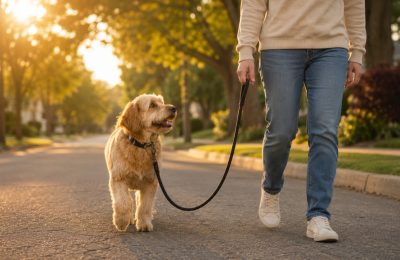
A dog that walks nicely on a lead is a joy, and a dog that does not can make you dread the front door. The good news is that loose-lead walking is a skill any dog can learn, at any age, and it starts long before you ever reach the pavement. Most people go wrong by heading straight outside into a world of exciting smells and expecting calm heeling. This guide takes it right back to basics and builds up step by step, so your dog actually understands what you want. Whether you have a wriggly puppy or a fully grown dog who has never quite got the hang of it, this is how to leash train properly.
Why leash training is worth doing right
Walks are the highlight of your dog’s day, and how they go shapes your whole relationship. A dog who pulls, lunges, and chokes on the collar is stressed, and so are you. A dog who ambles beside you on a loose lead is relaxed, focused on you, and safe near roads and other dogs. Getting the foundation right early saves you years of shoulder ache, and it is never too late to teach an older dog. The core idea throughout is simple: a loose lead makes good things happen and the walk continue, while a tight lead gets your dog nowhere.

Get the equipment right
The right kit makes training much easier. For most dogs, and especially pullers or puppies, a well-fitted harness is kinder than a collar because it keeps pressure off the neck, and a front-clip harness gently discourages pulling. Pair it with a fixed lead of about 1.2 to 2 metres. Avoid retractable leads for training, because they teach your dog that pulling extends their range, the exact opposite of the lesson. And stay away from choke and prong collars, which rely on discomfort. You will also want a pouch of small, tasty treats your dog genuinely loves, because you are competing with a very interesting world. Our guide to the best no-pull harnesses helps you choose.
Step 1: Get comfortable with the gear indoors
Before any walking, let your dog simply wear the collar or harness and trailing lead around the house, paired with treats and praise, until it feels completely normal. For a puppy or a nervous dog, this alone can take a few short sessions. You want your dog thinking the harness means good things are about to happen, not bracing for a battle.
Step 2: Teach the reward position
Decide which side you want your dog to walk on and be consistent. Stand with treats in the hand on that side, and reward your dog generously any time they are beside your leg. You are painting a clear picture from the very start: this spot, right here next to me, is where all the good things happen. Add a cheerful cue like “let’s go” or “with me” as they get it. This is the heart of loose-lead walking, and it is far more powerful than any amount of correcting pulling.
Step 3: First walks, indoors then the garden
Now start moving. Take a few steps indoors with your dog beside you, marking and rewarding the loose lead as you go. Keep sessions tiny and upbeat, a couple of minutes at most. Once your dog can walk a few paces nicely inside, graduate to the garden, then a quiet bit of pavement. Each new place is more distracting, so drop your expectations a notch and reward more when you move somewhere harder. Dogs do not generalise well, so a skill learned in the kitchen genuinely needs re-teaching outside.

Step 4: The loose-lead technique
This is the core mechanic, and it is beautifully simple.
- Walk while the lead is loose, and every so often mark (“yes”) and reward your dog at your side for keeping it slack.
- The instant the lead goes tight, stop dead. Do not pull back, just plant your feet and become a boring statue.
- Wait for your dog to ease the tension, look back, or return to you, putting a nice J-shaped slack in the lead. Then reward and walk on.
- A useful refinement: when your dog comes back, take two or three steps before you feed the treat, so you are rewarding walking with you rather than the act of returning from a pull.
Repeat, every time, and be consistent. If pulling works even occasionally, your dog learns that persistence pays off. If your dog is already a committed puller, our dedicated guide on how to stop a dog pulling on the leash goes deeper on breaking that habit.
Puppies vs adult dogs
The method is the same, but puppies have tiny attention spans, so keep sessions to a couple of minutes and end on a win. Start lead training a puppy at home from the day they arrive, well before their walks begin, so the gear and the game are old news by the time you hit the street. It fits neatly into the wider puppy training schedule. Adult and rescue dogs learn loose-lead walking just as well, they simply have a more established habit to work through, so bring extra patience and go back to indoor basics if you need to.
Troubleshooting common problems
- Constant pulling. Stop-and-go every single time, use a front-clip harness, and take the edge off with exercise first. Full method in our pulling guide.
- Freezing or refusing to walk. Common in puppies and nervous dogs. Never drag them. Crouch, encourage gently, and reward any small step toward you. Build confidence slowly.
- Biting or tugging the lead. Usually over-excited play, especially in puppies. Stop moving, stay boring until they let go, then carry on. Redirect that energy with a toy before the walk.
- Lunging at dogs or people. This is often frustration or fear rather than a walking problem, and needs distance and desensitisation, which we cover separately.
Set your dog up to win
A wound-up dog cannot concentrate, so a quick game or ten minutes of mental stimulation before a walk works wonders. Train in low-distraction places first, keep sessions short and positive, and carry treats your dog loves. Above all, stay consistent across everyone who walks the dog, because mixed messages are the number one reason lead training stalls.
How long does it take?
With short, daily practice, many dogs are walking nicely within two to three weeks, though a strong, established puller can take a couple of months to become reliable, especially in exciting places. Progress is rarely a straight line, so celebrate the good walks and do not be discouraged by the occasional messy one. Consistency, not intensity, is what gets you a dog who loves their walks as much as you do.
Frequently asked questions
At what age should you start leash training a puppy?
Start at home the day your puppy arrives, usually around 8 weeks, by getting them comfortable with the harness and lead indoors. Formal walks wait until they are fully vaccinated, but the groundwork begins straight away.
Should I use a collar or harness for leash training?
A well-fitted harness is kinder for most dogs, especially puppies and pullers, because it keeps pressure off the neck. A front-clip harness also gently discourages pulling. Avoid choke, prong, and retractable options.
How do I get my dog to stop pulling on the leash?
Reward your dog for a loose lead and stop moving the instant it goes tight, so pulling never gets them anywhere. Pair it with a front-clip harness and consistency. See our full pulling guide for stubborn cases.
Why does my puppy bite the leash while walking?
It is usually over-excited play. Stop moving and stay boring until they let go, then continue, and burn off some energy with a toy or game before the walk so they are calmer on the lead.
How long does it take to leash train a dog?
Many dogs walk nicely within two to three weeks of short daily practice. A committed puller can take a couple of months. Consistency from everyone who walks the dog is the key.
The bottom line
Leash training is not about strength or dominance, it is about teaching your dog that walking beside you on a loose lead is the best deal going. Get the gear right, start indoors, reward the position you want, then use simple stop-and-go to make a tight lead pointless. Keep sessions short, stay consistent, and be patient with puppies and pullers alike. Do that, and your walks become the calm, connected highlight of the day. Next, tackle stubborn pulling with our pulling guide, and take the edge off before walks with some brain games.
Sources and further reading: American Kennel Club, Animal Humane Society, and Hill’s Pet.