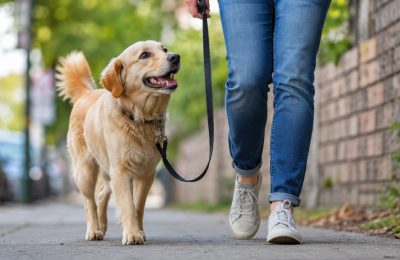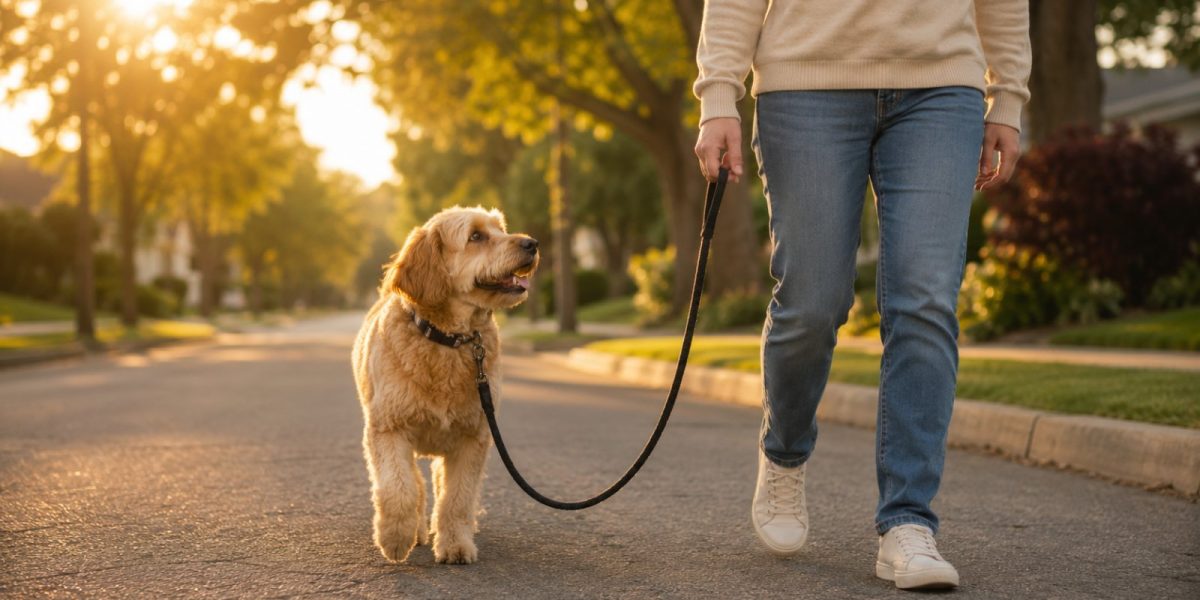

A walk should be the best part of your dog’s day and yours. Instead, for a lot of owners it is a shoulder-wrenching tug of war that leaves you dreading the front door. The frustrating truth is that pulling is one of the most common dog training problems, and also one of the most misunderstood. Your dog is not being dominant or stubborn. They are just excited, and pulling has always worked to get them where they want to go. Change that equation and you change the walk. Here is how.
Why dogs pull (and why it’s so hard to stop)
Dogs pull for a beautifully simple reason: it works. Every time your dog forges ahead and you follow, they learn that pulling gets them to the exciting lamppost faster. You have accidentally trained the pulling. On top of that, dogs naturally walk faster than we do, and the world is thrillingly full of smells. So the job is not to punish pulling, it is to teach your dog that a loose lead gets them everywhere, and a tight lead gets them nowhere.
Get the gear right first
The right equipment makes training far easier, though no tool replaces the training itself. A well-fitted front-clip harness is the go-to for most pullers: the front attachment gently turns your dog back toward you when they pull, without any pain or choking. Avoid choke and prong collars, which work through discomfort and can cause harm and fear. And ditch the retractable lead for training, because it teaches your dog that pulling extends their range, the exact opposite of what you want. A standard 1.2 to 2 metre lead gives you the consistency you need. For a full rundown, see our guide to the best no-pull harnesses.
Method 1: the stop-and-go
This is the classic and it is brilliantly effective because it is so clear to the dog. The rule: pulling makes the walk stop.
- Start walking. The moment your dog pulls and the lead goes tight, stop dead and plant your feet. Say nothing.
- Wait. Your dog will eventually ease the tension, look back, or return to you, putting a nice J-shaped slack in the lead.
- The instant the lead loosens, praise and reward at your side, then walk on.
- Repeat, every single time. Yes, your first few “walks” may only cover your own front path. That is normal and it is working.
Consistency is non-negotiable here. If you let pulling work even one time in five, your dog learns that persistence pays. Stop every time and the penny drops fast.
Method 2: reward the right position
Stop-and-go tells your dog what not to do. This method actively teaches what you do want. Bring a pouch of high-value treats, and every time your dog is walking nicely beside you with a loose lead, mark it with a “yes” and feed a treat at your leg. You are painting a clear picture: this spot, right here beside me, is where all the good things happen. Most dogs quickly start choosing to hang back near your side because that is where the pay-off is. Combine this with stop-and-go and you have both halves of the lesson.
Method 3: the turnaround
For strong or determined pullers, add direction changes. When your dog pulls ahead, calmly turn and walk the other way. Your dog now has to catch up and pay attention to where you are going, rather than dragging you along their chosen route. Reward them when they are back at your side. Done cheerfully, not as a jerk on the lead, this teaches your dog to keep an eye on you, which is the foundation of a loose lead.
Set your dog up to succeed
A few things make all of this dramatically easier. Start training somewhere boring, your garden or a quiet street, not the exciting park where every smell competes with you. Take the edge off first: a wound-up dog cannot concentrate, so a quick game in the garden or ten minutes of mental stimulation before a walk works wonders. Keep sessions short and upbeat, and stop before either of you gets frustrated. And carry treats your dog genuinely loves, because you are competing with a very interesting world.
What not to do
- Don’t yank or jerk the lead. It can hurt your dog, it damages trust, and it does not teach the lesson.
- Don’t use choke or prong collars. They rely on discomfort, and a dog that is uncomfortable is not a dog that is learning well.
- Don’t let pulling work sometimes. Inconsistency is the number one reason loose-lead training fails.
- Don’t expect miracles on day one. This is a skill that builds over weeks, especially with an established puller.
How long until it clicks?
With consistent daily practice, many owners see clear improvement within one to three weeks, though a dog with a long history of pulling can take a couple of months to become reliable, especially in exciting places. The single biggest predictor of success is consistency, from everyone who walks the dog. If one person stops for pulling and another lets the dog drag them to the park, your dog simply learns to pull for the second person. Get everyone on the same page and it comes together far faster.
Frequently asked questions
What is the fastest way to stop a dog pulling on the leash?
Combine a front-clip harness with the stop-and-go method: stop the instant the lead goes tight, and only move forward when it is loose. Reward walking beside you. Consistency is what makes it fast.
Do no-pull harnesses actually work?
A front-clip harness can significantly reduce pulling by redirecting your dog back toward you, but it is a training aid, not a cure. Pair it with training for lasting results.
Why does my dog pull even with a harness?
A harness reduces the pulling but does not teach loose-lead walking on its own. You still need to reward the loose lead and stop rewarding the tight one through consistent training.
Should I use a retractable leash for training?
No. Retractable leads teach a dog that pulling extends their range, which encourages more pulling. Use a fixed 1.2 to 2 metre lead while training.
Is it too late to stop my adult dog pulling?
Not at all. Adult dogs learn loose-lead walking well. A long pulling history means it may take a bit longer, but the same methods work at any age.
The bottom line
Pulling is a habit, and habits can be rewired. Set your dog up with a front-clip harness and a fixed lead, then teach the simple truth that a loose lead moves the walk forward and a tight one stops it. Reward the position you want, stay consistent across everyone who walks your dog, and take the edge off with a little exercise beforehand. Enjoyable walks are closer than you think. Next, tackle barking on walks with our guide to how to stop a dog from barking, and burn off pre-walk energy with some brain games.
Sources and further reading: American Kennel Club on leash pulling, Best Friends Animal Society, and Animal Humane Society.