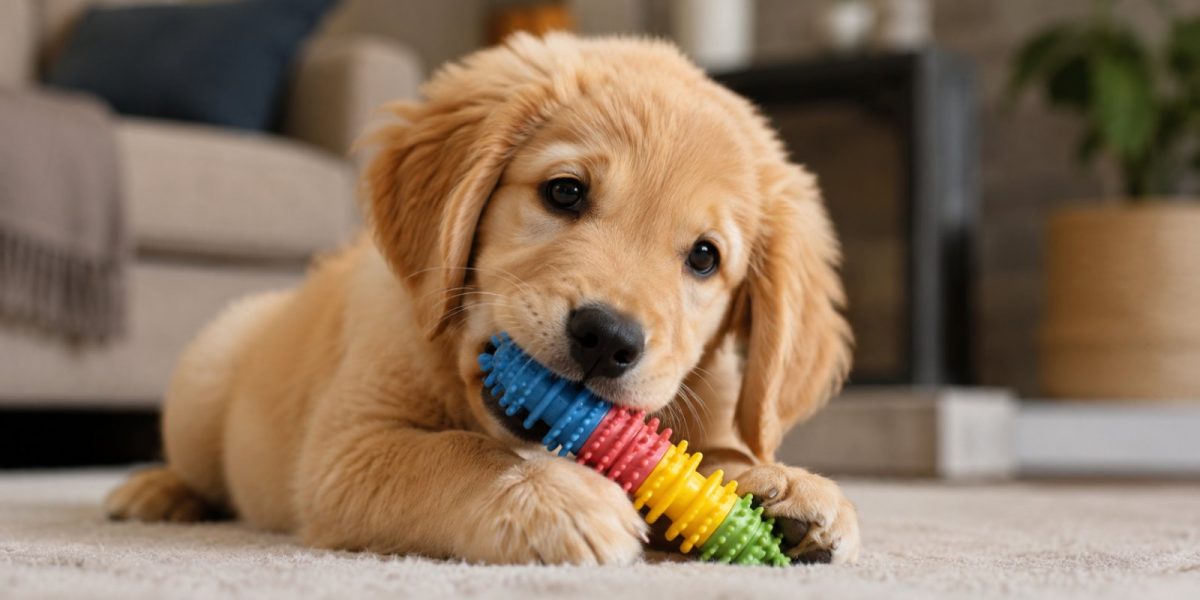

If your hands and ankles look like you lost a fight with a rose bush, welcome to the puppy biting phase. Those tiny teeth are shockingly sharp, and it can feel like your sweet new puppy has turned into a piranha. Take a breath: this is one of the most normal things a puppy does, it is not aggression, and it passes. Better still, you can speed it along and teach a gentle mouth in the process. Here is exactly how.
Why puppies bite (it’s not what you fear)
Puppies explore the world with their mouths the way babies grab everything with their hands. On top of that, they are teething, and gnawing relieves the ache of new teeth pushing through. And crucially, biting is how puppies play with their littermates. When yours nips you, it usually means “let’s play,” not “I’m dangerous.” Understanding this matters, because the goal is not to stop your puppy having a mouth, it is to teach them to be gentle with it. That skill is called bite inhibition, and it is one of the most valuable things you will ever teach.
The core method: teach a soft mouth
The single most effective approach borrows from how puppies learn in the litter. When one puppy bites another too hard, the bitten puppy yelps and play stops. The biter learns that hard mouthing ends the fun. You are going to send the same message.
- The moment those teeth touch skin, let out a calm, higher-pitched “ouch” and immediately stop playing.
- Withdraw your attention. Turn away, fold your arms, and go still and boring for 10 to 20 seconds. No talking, no eye contact, no drama.
- Resume calmly once your puppy has settled. If they bite hard again, repeat. You are teaching, clearly and consistently, that gentle play continues and hard biting ends it.
Consistency is everything. If biting works to get a reaction sometimes, your puppy will keep trying it. Everyone in the house has to respond the same way.
Redirect, don’t just react
Stopping the biting is only half the job. Your puppy still needs an outlet, so give them the right one. Keep chew toys within reach at all times, and the instant your puppy goes for your hand, calmly swap in a toy. When they bite the toy instead of you, praise warmly. Over time this teaches a simple rule: hands are not for biting, toys are. Having a tug toy in your pocket is a game-changer for ankle-biters, more on that below.
The ankle-biting ambush
Some puppies launch at moving feet and trouser legs, which is equal parts adorable and painful. The fix is specific. Carry a tug toy, and the moment your puppy ambushes your feet, stop moving, pull out the toy, and wave it enticingly. When they grab the toy, start walking again. If you have no toy to hand, freeze completely, boring feet are no fun, and the second they let go, praise and reach for a toy. What you must not do is jerk your feet away, because that looks like a game and invites the chase.
Burn energy and soothe the gums
A huge amount of biting is simply an over-tired or under-stimulated puppy with energy to spare. Two things help enormously. First, make sure they are getting enough physical and, importantly, mental exercise, our guide to mental stimulation games for dogs is full of quick ways to tire a busy brain. Second, offer teething relief: a frozen wet flannel, a chilled rubber chew, or a frozen stuffed Kong all soothe sore gums and give those needle teeth a legal target.
And watch for the “witching hour.” Many puppies get bitey and wild when they are actually overtired, much like toddlers. If your puppy suddenly turns into a land shark, try settling them for a nap rather than more play. It works more often than you would believe.
What not to do
- Don’t smack, hold the mouth shut, or shout. Physical punishment can make a puppy frightened or, oddly, more bitey, and it damages your bond.
- Don’t wave fingers or toes to rile them up, then tell them off for biting. That is a mixed message.
- Don’t yank your hand away, which triggers the chase instinct. Go limp and boring instead.
- Don’t expect overnight results. Bite inhibition develops over weeks. Consistency is what gets you there.
How long does it last?
The sharp puppy biting phase is usually at its worst between about 8 and 16 weeks and eases significantly as the adult teeth come in and your training sinks in, generally calming down by around 6 months. With consistent redirection and the soft-mouth method, most owners see a real improvement within a couple of weeks. If your puppy’s biting seems genuinely aggressive rather than playful, is paired with stiff body language or growling over resources, or is not improving at all with consistent work, speak to a qualified, reward-based trainer or behaviourist for hands-on help.
Frequently asked questions
Why does my puppy bite me so much?
Puppies bite to explore, to relieve teething pain, and above all to play. It is normal behaviour, not aggression. The goal is to teach a gentle mouth and redirect biting onto toys.
At what age do puppies stop biting?
The sharpest biting usually peaks between 8 and 16 weeks and eases as adult teeth arrive, typically settling by around 6 months, sooner with consistent training.
Should I say “ouch” when my puppy bites?
Yes, a calm, higher-pitched “ouch” followed by stopping play mimics how littermates teach each other and helps your puppy learn that hard biting ends the fun. Keep it low-key, not startling.
How do I stop my puppy biting my feet and ankles?
Carry a tug toy, and when your puppy ambushes your feet, stop moving and redirect them to the toy. Never jerk your feet away, as that triggers the chase.
Is puppy biting a sign of aggression?
Almost never. It is normal play and exploration. Genuine aggression is rare in young puppies and usually comes with stiff body language or guarding. If in doubt, consult a qualified trainer.
The bottom line
Puppy biting feels endless when you are in it, but it is a passing phase you can actively shorten. Teach a soft mouth with the calm “ouch and pause” method, always redirect to a toy, meet your puppy’s exercise and teething needs, and stay consistent across the whole household. Next, keep building good habits with our puppy training schedule by age, and drain that biting energy with some brain games.
Sources and further reading: ASPCA on mouthing and nipping, American Kennel Club, and PetMD.