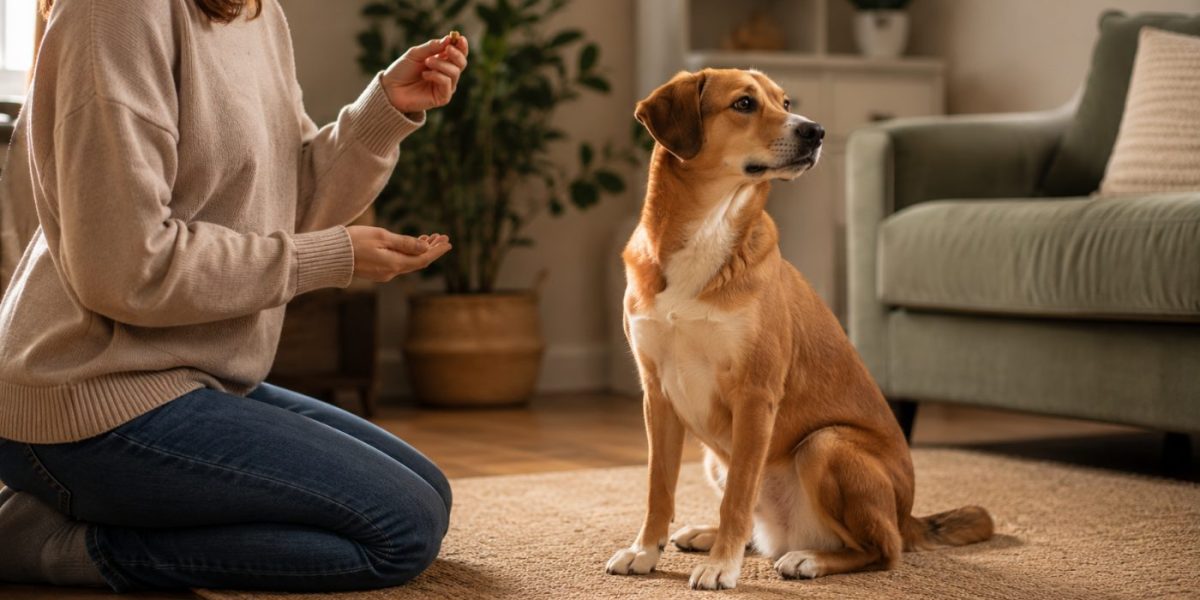

“Leave it” might be the single most useful cue you ever teach your dog, and one day it could genuinely save their life. A dropped painkiller on the kitchen floor, a chicken bone on the pavement, something rotten in the park, another dog who wants space: in every one of these moments, a reliable “leave it” lets you steer your dog away from trouble before they get to it. The best part is that it is easy and enjoyable to teach with a kind, reward-based method. This guide takes you from the very first step to a rock-solid cue that works out in the real world.
What “leave it” actually teaches
“Leave it” means “turn your attention away from that thing, and something better is coming from me.” It is not about scaring or dominating your dog into dropping something. It is a happy little deal you strike: ignore the tempting item, and you earn an even better reward. That positive foundation is exactly why it holds up when it matters, because your dog genuinely wants to leave the thing rather than feeling forced to. It is different from “drop it,” which asks a dog to release something already in their mouth. “Leave it” heads off the problem before it starts.
What you will need
Grab around ten small, tasty treats, ideally in two tiers: some ordinary ones (like plain kibble) to use as the temptation, and some higher-value ones (your dog’s absolute favourites) to use as the reward. This little trick teaches a powerful lesson: leaving the boring thing earns something even more exciting. Work somewhere quiet and free of distractions to begin with, keep sessions short at just a few minutes, and finish while your dog is still keen. As always, a marker word like “yes” or a clicker, said the instant your dog does the right thing, makes learning faster and clearer.
The method, step by step
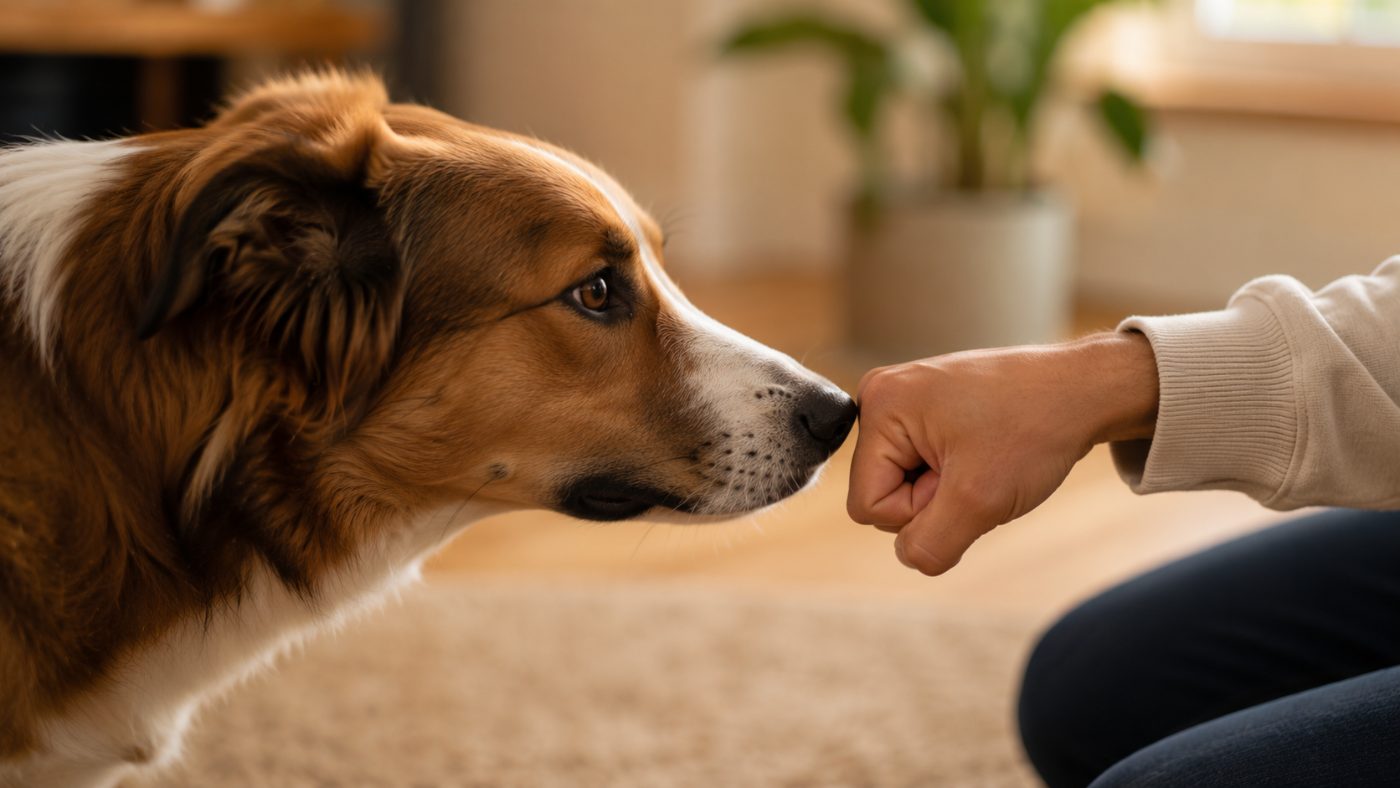
- Start with a closed fist. Put an ordinary treat in your closed hand and hold it out to your dog. They will sniff, lick, nudge, and paw at it. Say nothing and simply wait.
- Reward the moment they give up. The instant your dog stops trying and pulls their nose away, mark with “yes” and reward from your other hand, never from the fist. This is crucial: the reward always comes from a different hand, so your dog learns that leaving the tempting item pays off elsewhere.
- Add the words. Once your dog reliably backs off within a few seconds, start saying “leave it” calmly just before you present your fist. The cue now predicts the game.
- Open your palm. Progress to holding the treat on a flat, open palm. If your dog goes for it, simply close your fist. When they leave it, mark and reward from the other hand. This teaches them to resist even when the treat is in plain sight.
- Move it to the floor. Place the treat on the floor, ready to cover it with your hand or foot if your dog dives in. Ask them to “leave it,” and reward generously when they do. Gradually give them more freedom around the floor treat as they succeed.
The golden rule throughout: never let your dog get the temptation treat. If they snatch it, calmly reset and make the next rep easier. Letting them win teaches persistence, the exact opposite of what you want.
Taking it into the real world
A “leave it” that only works in your quiet kitchen is not much use when your dog spots a discarded kebab on a walk. Dogs do not generalise well, so you need to practise the cue in gradually more challenging, realistic settings. A brilliant exercise is the treat trail: with your dog out of the room, place a few low-value treats in a row along the floor, spaced apart. Then bring your dog in on a lead, say “leave it,” and walk past the row. At each treat, mark and reward with a high-value treat from your hand for ignoring the floor treat, and move on. From there, practise in the garden, then on quiet walks, then busier ones, always building up slowly. This proofing is what turns a party trick into a reliable, real-world cue.
Building a longer, more reliable “leave it”
Once the basics are solid, stretch the cue so it holds up under pressure. Increase the time your dog must leave the item before you reward. Add distance, asking them to leave something a little further from you. Introduce distractions, practising with people or gentle activity nearby. As trainers say, increase only one of these at a time, and when you make one harder, make the others easier and reward more generously. This gradual approach keeps your dog succeeding, which keeps them keen and keeps the cue strong. “Leave it” sits naturally alongside the other core cues in our basic obedience commands guide.
Why “leave it” can be life-saving
It is worth appreciating just how valuable this cue is. Dogs explore the world with their mouths, and the world is full of hazards: dropped medications, toxic foods like chocolate, xylitol, grapes, and onions, cooked bones that can splinter, rubbish, and dangerous items on walks. A reliable “leave it” gives you an instant, reliable way to interrupt your dog before they pick up something harmful. It also helps socially, letting you calmly redirect your dog away from another dog or person who needs space. Few cues offer this much safety for so little effort, which is why it belongs in every dog’s repertoire.
Common mistakes to avoid
- Rewarding from the temptation hand. Always reward from your other hand, so your dog learns that leaving the item earns a treat from elsewhere, not from the thing itself.
- Letting your dog get the bait. If they snatch it, they learn persistence pays. Keep the treat protected and reset with an easier rep.
- Rushing the stages. Jumping from a closed fist straight to a treat on a busy pavement sets your dog up to fail. Build up gradually.
- Using a harsh tone. “Leave it” works best as a calm, upbeat cue, not a shout. Fear undermines the positive deal you are building.
- Practising only at home. Proof the cue in lots of places and situations, or it will not hold up where you need it most.
How long does it take?
Most dogs grasp the basic fist-and-open-palm game within a few short sessions over a few days. A truly reliable “leave it” that holds up around real temptations, out on walks and around distractions, takes weeks of gradual, consistent practice. That is completely normal, so do not rush it. Keep sessions short and positive, build difficulty slowly, and reward well, and you will end up with a cue you can trust when it really counts. Like everything, a little every day beats a marathon session once a week.
Frequently asked questions
What is the difference between “leave it” and “drop it”?
“Leave it” tells your dog to ignore something they have not yet picked up, heading off the problem before it starts. “Drop it” asks your dog to release something already in their mouth. Both are useful, and they work well as a pair.
How do I teach “leave it” to a puppy?
Exactly the same way, just with extra patience and even shorter sessions. Start with the closed fist, reward from the other hand the instant they back off, add the cue, then progress to an open palm and the floor. Puppies learn fast with small, frequent, upbeat sessions.
My dog grabs the treat before I can react. What do I do?
Make it easier. Keep the treat fully enclosed in your fist so they cannot get it, and only progress to an open palm or floor once the closed-fist stage is rock solid. Never let them win the bait, as that rewards snatching.
Will “leave it” work outside on walks?
Yes, but only if you proof it there gradually. Practise at home first, then the garden, then quiet walks, then busier ones, using the treat-trail exercise on a lead. Building up slowly is what makes the cue reliable in the real world.
Do I need a clicker to teach “leave it”?
No, a clicker is optional. A consistent marker word like “yes,” said the instant your dog looks away from the temptation, works just as well for most owners and makes the timing clear.
The bottom line
“Leave it” is one of the easiest cues to teach and one of the most valuable your dog will ever learn. Start with a closed fist and reward the moment they give up, always from your other hand, then build through an open palm to the floor and out into the real world. Keep it positive, never let your dog win the bait, and proof it gradually around real temptations. Do that and you will have a calm, reliable cue that keeps your dog safe from hazards and makes daily life smoother. Next, round out your dog’s skills with the rest of our basic obedience commands, and keep training fun with some brain games.
Sources and further reading: the American Kennel Club, Best Friends Animal Society, and Chewy.