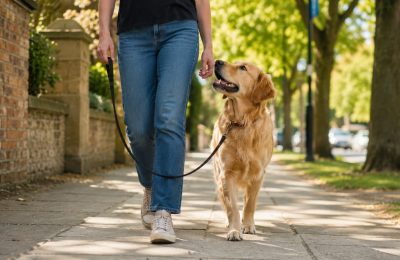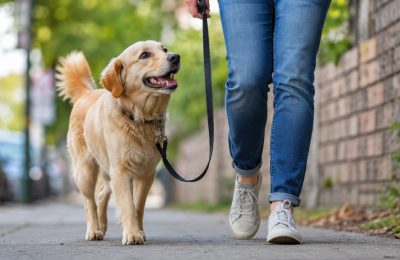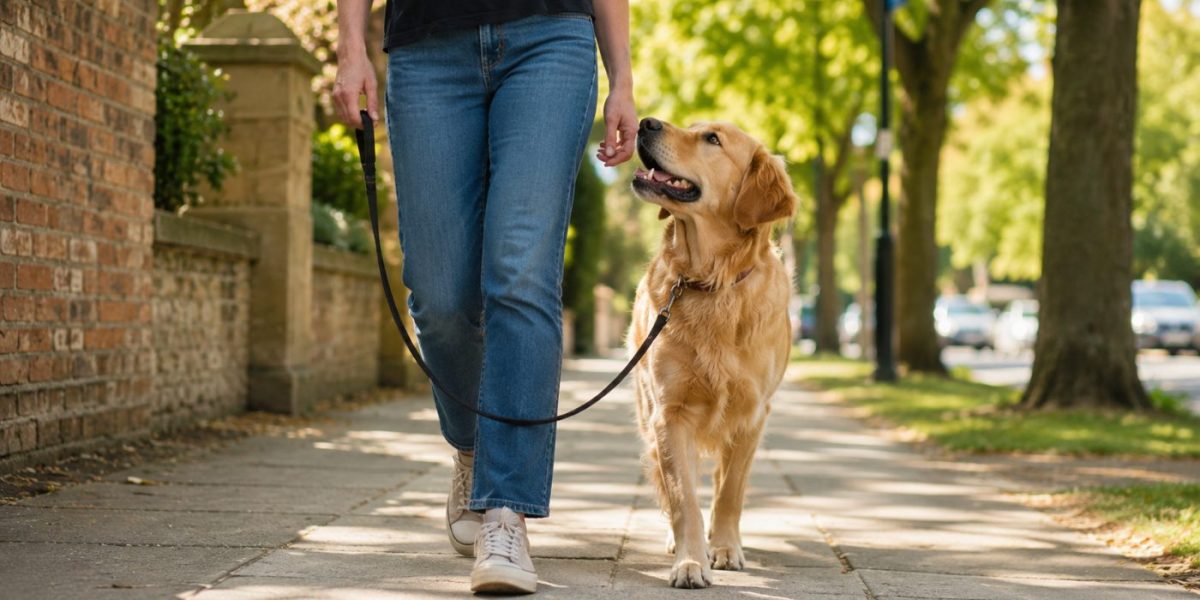

Those first walks with a new puppy can be a comedy of tiny disasters: your puppy freezes like a statue, flops down and refuses to move, or bounces around chewing the lead. It is all completely normal. Leash training is a skill your puppy has to learn from scratch, and the wonderful news is that you can start it long before their first proper walk, right there in your living room. Get the foundations right and calm, happy lead walking follows naturally. This guide takes you from a puppy who has never worn a collar to one who walks nicely beside you, gently and step by step.
Start before your puppy can even go out
Here is the single biggest tip: you do not need to wait until your puppy is fully vaccinated to begin. All the important groundwork, getting comfortable in a collar, learning the lead is nothing to fear, and understanding that walking next to you pays off, happens at home first. Starting early, indoors, in a calm and boring environment, means that by the time your puppy is ready for real walks, the hard part is already done. Trying to teach everything at once outdoors, surrounded by exciting smells and sights, is far harder, so lay the foundations in the house.

Choosing the right kit
Keep it simple and comfortable. A well-fitted flat collar or, for many puppies, a soft harness works well, and a front-clip harness can help with larger, stronger pups. The collar should be snug enough that your puppy cannot back out of it but loose enough to fit two fingers underneath. Use a standard lead of a fixed length rather than an extendable one, which teaches pulling. Avoid anything that works by causing discomfort, such as slip leads or choke or prong collars, on a puppy. You are building a happy association with the lead, and gentle, reward-based kit is all you need.
Step one: make the collar brilliant
Before the lead comes anywhere near, teach your puppy that the collar means good things. Put the collar on, immediately give a treat and some fuss, then take it off. Repeat this over a few short sessions across a few days. Your puppy might scratch at it at first, which is normal, but very soon the sight of the collar has them wagging because it predicts treats and attention. Once they happily wear it around the house without fussing, you are ready for the next step.
Step two: introduce the lead indoors
Now clip the lead to the collar or harness and simply let your puppy wander around the house dragging it, under your supervision, for short spells. This gets them used to the feel of the lead without any pressure. If they grab and chew it, calmly redirect them to a chew toy rather than making a game of tugging. After a little of this, pick up the end of the lead and just follow your puppy around, keeping it loose, so they learn that being attached to you is no big deal. Keep every session short and positive.
Step three: reward walking beside you
This is where the real walking begins, still indoors or in the garden. With the lead loose, encourage your puppy to come to your side using a treat or happy voice, and the moment they take a step or two with you, mark with “yes” and reward at your leg. Build up gradually: a couple of steps, then a few more, then a little circuit of the room, rewarding often. You are teaching your puppy that being next to you, on a loose lead, is where all the good stuff happens. This is the exact same principle that underpins polished heel work later on.
The golden rule: never pull back
The most common mistake is to haul on the lead when your puppy pulls or freezes, but this teaches them to lean into pressure and sets up a lifetime of pulling. Instead, keep the lead loose at all times. If your puppy forges ahead and it goes tight, stop moving and wait, or lure them back to your side with a treat, then set off again. If they plant themselves and refuse to move, do not drag them, crouch down, encourage them with a happy voice and a treat, and reward any movement toward you. A loose lead is the foundation of everything, and protecting it now prevents the pulling problems covered in our guide to stopping a dog pulling on the lead.
Step four: take it outside gradually
Once your puppy walks happily beside you indoors and in the garden, and once your vet confirms they are ready for the outside world, take the show on the road, slowly. Start somewhere quiet with few distractions, like a calm street or a quiet corner of the garden, and expect to go back a step or two, because the outdoors is thrilling and your puppy’s concentration will wobble. Bring extra-tasty treats, keep sessions short, and reward calm walking generously. As your puppy succeeds, gradually build up to busier, more distracting places. Patience here pays off enormously.
Common puppy leash problems
- Freezing or flopping down. Do not drag. Crouch, encourage with a happy voice and treats, and reward any step toward you. Confidence builds quickly.
- Biting the lead. Calmly redirect to a chew toy and avoid turning it into a tug game. Keeping the lead loose and boring helps.
- Pulling ahead. Stop when the lead tightens, wait or lure them back, and only move when it is loose. Never reward pulling by walking on.
- Too excited to focus outside. You have raised the difficulty too fast. Drop back to a calmer spot, use better treats, and build up gradually.
How long does it take?
Puppies pick up the indoor foundations, happy in a collar, comfortable on the lead, walking a few steps beside you, within a week or two of short daily sessions. Reliable, calm walking out in the real world around distractions takes longer, often several weeks of gradual practice, and that is completely normal. Keep sessions short, keep the lead loose, reward generously, and build difficulty slowly. It all slots neatly into the wider puppy training schedule, and the effort now sets your dog up for a lifetime of pleasant walks.
Frequently asked questions
When can I start leash training my puppy?
Straight away, at home, even before your puppy is fully vaccinated or going out on walks. Introduce the collar and lead indoors and reward walking beside you in the house and garden, so the foundations are solid before real walks begin.
How do I get my puppy used to a collar and lead?
Put the collar on, give a treat, and take it off, repeating over a few short sessions until your puppy happily wears it. Then clip on the lead and let them drag it under supervision, redirecting any chewing, before picking it up and following them around on a loose lead.
Why does my puppy freeze or refuse to walk on the lead?
It is usually uncertainty, not stubbornness. Do not drag them. Crouch down, encourage with a happy voice and a treat, and reward any movement toward you. Confidence builds with short, positive sessions.
Should I use a harness or a collar to leash train a puppy?
Either can work, and a soft or front-clip harness is often kinder and more comfortable, especially for larger or stronger puppies. Avoid choke, prong, or slip collars on a puppy. Comfortable, reward-based kit is all you need.
How long does it take to leash train a puppy?
The indoor foundations usually come within a week or two of short daily sessions, while calm walking outside around distractions takes several weeks of gradual practice. Keep sessions short, the lead loose, and rewards generous.
The bottom line
Leash training a puppy is all about building happy associations and protecting a loose lead from day one. Make the collar mean treats, let your puppy get used to the lead indoors, reward them for walking beside you, and never, ever pull back when they pull or freeze. Start at home before real walks, then head outside gradually, keeping sessions short and rewarding. Do that and calm, pleasant walks become second nature. Next, keep those good habits going with our guide to stopping lead pulling, and add precision with our how to teach a dog to heel guide.
Sources and further reading: the American Kennel Club, the Royal Kennel Club, and the Animal Humane Society.