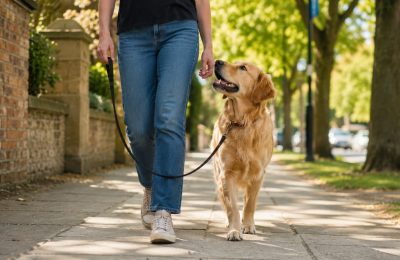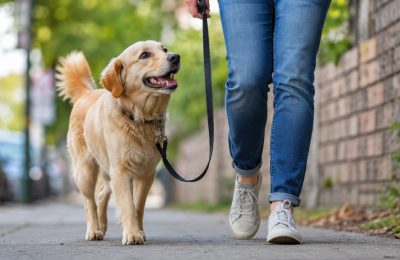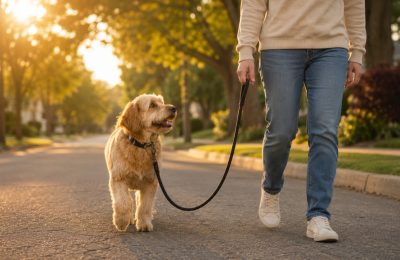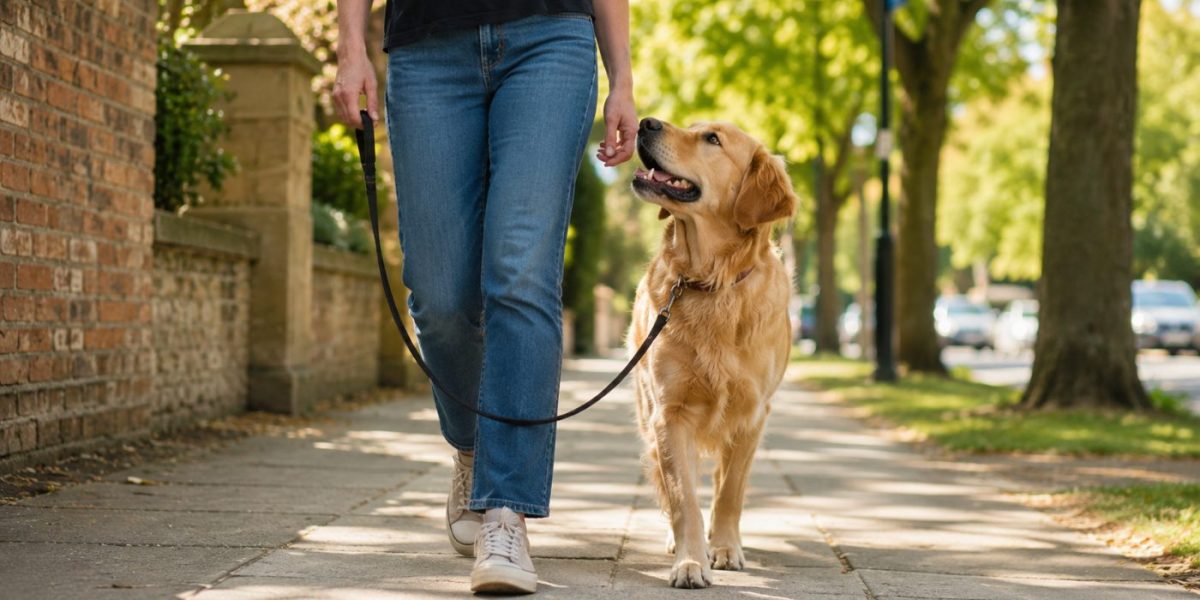

A dog who walks neatly at your side, matching your pace and turning when you turn, makes every walk a pleasure rather than a tug of war. That is the heel, and while it looks like advanced obedience-class stuff, it is genuinely simple to teach with a treat, a bit of patience, and a kind, reward-based approach. This guide takes you from the very first step to a reliable heel you can use on busy pavements and at kerbs, and it explains how heel differs from everyday loose-lead walking so you know which one you actually need.
Heel versus loose-lead walking
These two are often muddled, and it helps to be clear. Loose-lead walking simply means your dog walks without pulling, with a nice slack lead, but they have some freedom to sniff and drift a little. Heel is more precise: your dog walks right beside you, shoulder roughly level with your leg, giving you full attention. For most day-to-day walks, relaxed loose-lead walking is what you want, and if pulling is your main problem, start there. Heel is brilliant for the moments you need close control: crossing a road, passing another dog, or weaving through a crowd. Many owners teach both and switch between them.
What you will need
Grab a pouch of small, high-value treats, ideally extra tasty ones, because outdoors you are competing with a world full of exciting smells. Use a comfortable flat collar or, better still, a well-fitted harness, and a standard lead rather than an extendable one. If you already use a marker word like “yes” or a clicker in your training, have it ready, because marking the exact moment your dog is in the right spot speeds everything up. Decide which side you want your dog to walk on, traditionally the left, and stick to it consistently, because switching sides early on just confuses your dog.
The method, step by step
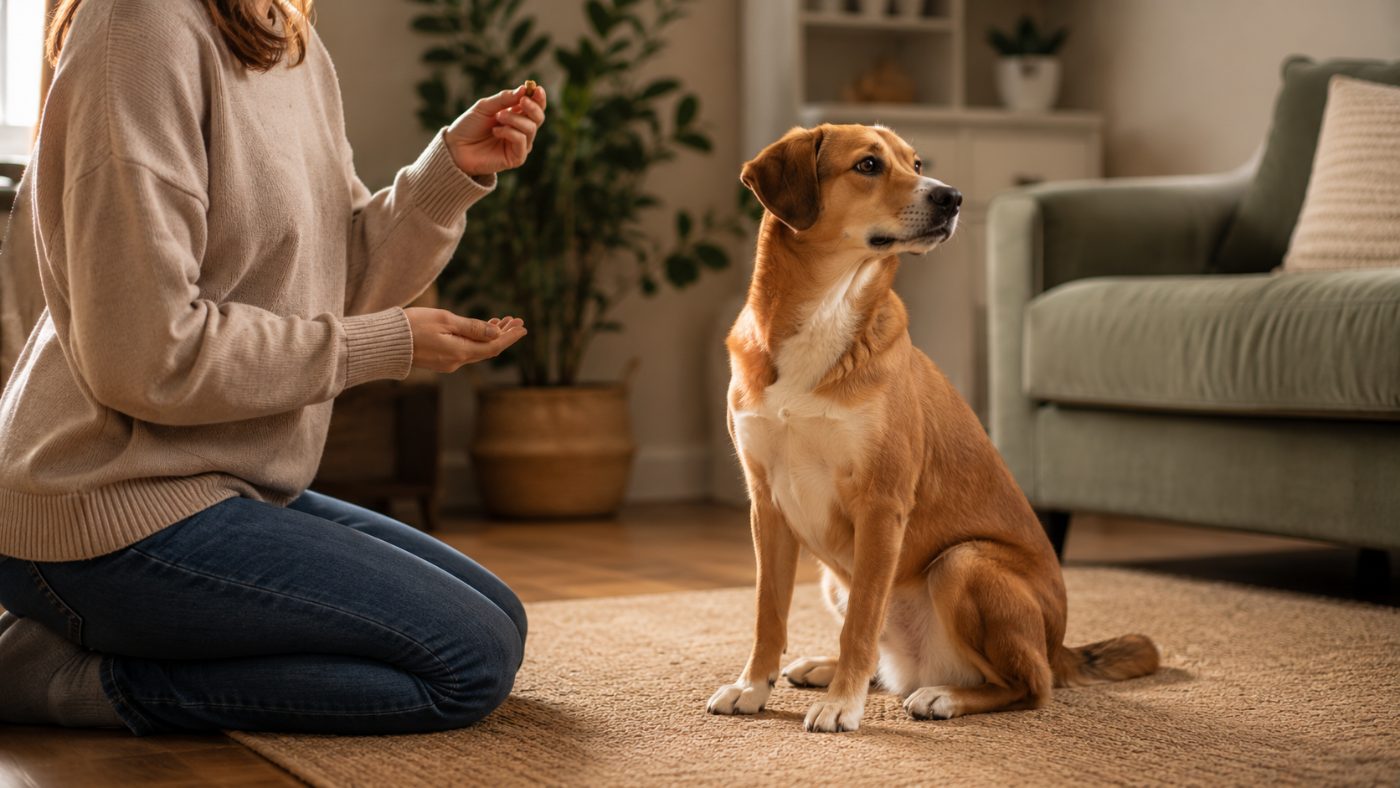
- Reward the position first. With your dog standing beside you on your chosen side, hold a treat at your leg in the heel position and reward them just for being there. You are teaching your dog that the spot next to your leg is where good things happen.
- Take one step. Hold a treat at your dog’s nose, say “heel,” and take a single step forward. The instant your dog steps with you and stays at your side, mark with “yes” and reward at your leg.
- Build up the steps. Repeat, gradually taking two steps, then three, then several, before you mark and reward. Keep the treat delivery down at your leg so your dog learns to stay close rather than jumping up.
- Add turns and pace changes. Once your dog holds position for a stretch, practise turning left and right, speeding up and slowing down, rewarding them for staying with you through each change.
- Fade the lure. Gradually stop luring with the treat in your hand and reward after your dog is in position instead, so they respond to the cue and your movement rather than following food.
The golden rule: keep the lead loose
The single biggest mistake in heel training is letting the lead go tight and using it to hold your dog in place. A tight lead teaches your dog to lean into pressure and pull, the exact opposite of what you want. The lead should be a safety backup, not a steering wheel. If your dog forges ahead and the lead tightens, do not haul them back. Instead, stop, wait for them to return to your side, reward that, and set off again. Your dog learns that a loose lead and staying with you is what keeps the walk moving. If pulling is your core issue, our dedicated guide on how to stop a dog pulling on the lead tackles it in depth.
Practise in the right order
Dogs do not generalise well, so a heel learned in your living room needs re-teaching outdoors where distractions are everywhere. Follow this order: start indoors somewhere calm and boring, then move to the garden, then to a quiet street, and only then to busier places. Each time you raise the difficulty, go back a step or two and reward more generously to help your dog succeed. Keep sessions short, no more than five minutes of focused heel work, because it takes real concentration and a tired or bored dog stops learning. You can always practise little bursts of heel within a normal walk.
Use a release word
Heel asks for concentration, so your dog needs to know when they are free to relax and sniff again. Teach a clear release word like “okay” or “free” that tells your dog the heel is over and they can potter about on a loose lead. This lets you dip in and out of heel as needed: tight, focused heel past a distraction, then release to a relaxed amble. It also keeps heel from feeling relentless, which keeps your dog willing and happy to do it.
Common mistakes to avoid
- Letting the lead go tight. Never use the lead to drag your dog into position. Stop, wait, reward the return, and move on.
- Sessions that are too long. Heel takes focus. Short, upbeat bursts beat long, frustrating slogs.
- Rushing outdoors too soon. Nail it somewhere calm before adding the huge distraction of the outside world.
- Low-value treats. A boring biscuit will not compete with a lamppost of smells. Bring your dog’s favourites.
- Never releasing. A dog held in heel with no breaks gets fed up. Use a release word and let them relax.
Troubleshooting
If your dog keeps forging ahead, slow right down, reward heavily for any moment they are level with your leg, and stop the instant the lead tightens. If they lag behind or seem reluctant, make yourself more exciting with a happy voice and better treats, and check the pace suits them. If they are fine at home but fall apart outside, you have simply raised the difficulty too fast, so drop back to an easier setting and rebuild. And if your dog is too over-aroused to concentrate at all, some general calm and mental stimulation before you train can take the edge off.
How long does it take?
Most dogs pick up the basic idea of walking in heel position within a week or two of short, daily sessions indoors and in the garden. A heel that holds up outdoors around real distractions takes longer, often several weeks of gradual practice in busier and busier places. Puppies can start a gentle version early, and it fits neatly into a wider puppy training schedule. Keep it short, kind, and rewarding, and you will build a dog who chooses to stay at your side because it is genuinely the best place to be.
Frequently asked questions
What is the difference between heel and loose-lead walking?
Loose-lead walking means your dog walks without pulling but has some freedom to sniff and drift. Heel is more precise, with your dog walking right at your side, shoulder level with your leg, giving you full attention. Heel is ideal for close control moments like crossing roads.
How do I teach my dog to heel?
Reward your dog for being at your side, then say “heel” and take one step, marking and rewarding when they move with you. Build up the number of steps, add turns and pace changes, keep the lead loose, and gradually fade the treat lure. Practise in calmer places first, then harder ones.
Which side should my dog heel on?
Traditionally the left, but either side is fine. The important thing is to pick one side and stay consistent while your dog is learning, because switching sides early on is confusing and slows progress.
Why does my dog heel at home but not outside?
Dogs do not generalise well, and the outdoors is far more distracting. You have likely raised the difficulty too quickly. Drop back to a calmer setting, reward more generously, and build up to busier places gradually.
How long does it take to train a dog to heel?
Most dogs learn the basics within a week or two of short daily sessions, while a reliable heel around real outdoor distractions usually takes several weeks of gradual, consistent practice.
The bottom line
Teaching a heel is really just rewarding your dog, again and again, for choosing the spot beside your leg. Reward the position, build up step by step, add turns and pace changes, keep the lead loose at all times, and use a release word so your dog gets breaks. Practise in calm places before busy ones, keep sessions short and fun, and bring your best treats. Do that and you will have a dog who walks politely at your side whenever you ask. Next, banish pulling for good with our loose-lead walking guide, and build the focus that makes heel easy with our basic obedience commands.
Sources and further reading: Chewy, Purina, and the Animal Humane Society.