
If you have ever walked your dog for an hour only to have them bouncing off the walls ten minutes after getting home, you have discovered one of the most useful truths in dog ownership: you cannot exercise a dog into calmness with physical activity alone. The missing piece is mental tiredness. Making your dog think, sniff, and solve problems drains energy in a way that a walk simply cannot match, and it leaves them genuinely, contentedly settled. This guide explains why mental exhaustion works so well, then gives you quick, practical ways to tire your dog’s brain, even in just a few minutes a day.
Why mental tiredness beats physical exercise
Here is the science, simply put. Physical exercise burns energy, but for many dogs, especially young or high-drive ones, it can also rev them up, building fitness so they need even more running to feel tired. Mental work is different. Concentrating, problem-solving, and using that extraordinary nose demand real cognitive effort, and cognitive effort is deeply tiring. Ten or fifteen minutes of the right brain activity often does more to settle a dog than a long walk, because it satisfies their need to think and forage, not just move. That is why a short puzzle session can leave a dog snoozing happily for hours. Our pillar guide to mental stimulation games for dogs explores this in depth.
Put that nose to work
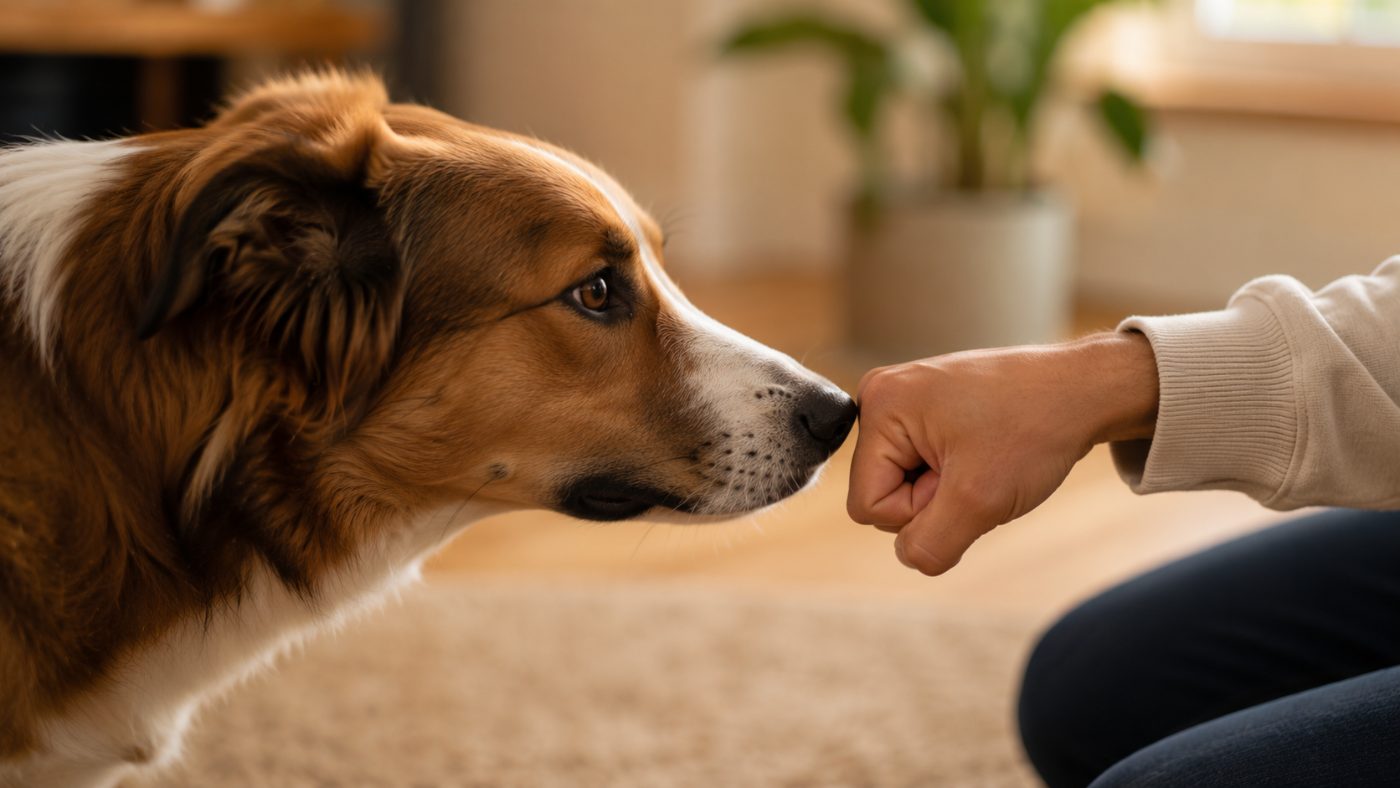
Scent work is the single most powerful way to tire a dog mentally, because sniffing is both natural and genuinely demanding for them. Try scatter feeding, tossing your dog’s kibble across the lawn or a room so they have to hunt for every piece. Play “find it” by hiding treats or a toy around the house and sending your dog to search. On walks, try a “sniffari”: a slow, aimless amble on a long line where you let your dog lead and sniff to their heart’s content, following their nose rather than covering distance. Ten minutes of concentrated sniffing can tire a dog more than a brisk half-hour march.
Make them work for their food
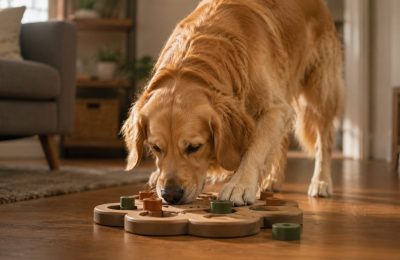
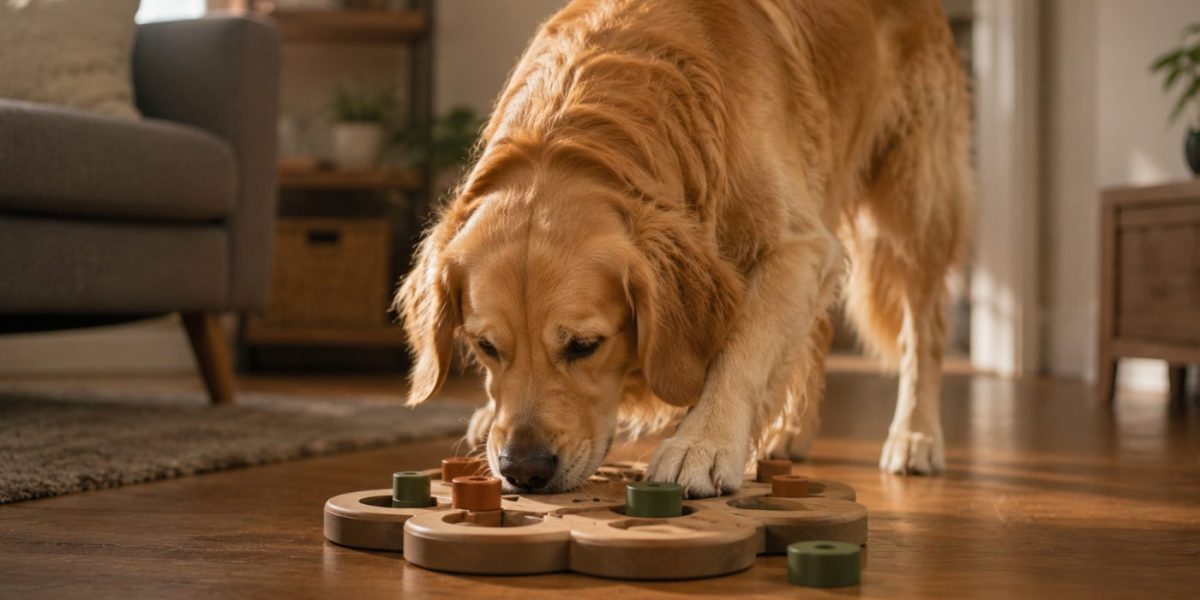
A food bowl is a missed opportunity. Instead, feed your dog through puzzle toys, stuffed and frozen food toys, snuffle mats, or slow-feeder gadgets that make them solve a small problem for every mouthful. This turns a thirty-second meal into ten or fifteen minutes of satisfying mental effort, twice a day, every day. It is one of the easiest wins in dog ownership: you are feeding them anyway, so simply change how the food is delivered and you get a free daily brain workout that leaves your dog calm and content.
Short training sessions
Learning is hard work, which is exactly why it tires dogs out. A few minutes of training, whether you are teaching a brand-new trick like spin or roll over, polishing up your obedience commands, or working on a reliable recall, forces your dog to concentrate and think. Keep sessions short and upbeat, five to ten minutes at a time, ending on a win. Beyond tiring your dog, training strengthens your bond and makes them better behaved, so it is enrichment that pays you back several times over. Teaching your dog the names of their toys, or a “tidy up” routine, adds novelty and challenge.
Interactive and problem-solving toys
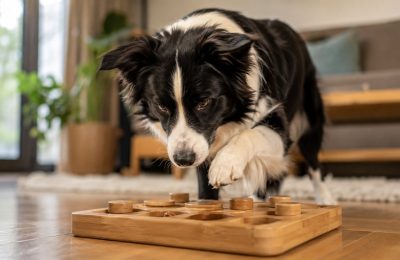
Toys that make your dog think, rather than just chew, are a quick route to mental fatigue. Treat-dispensing balls, wobble toys, and lift-and-slide puzzle boards make your dog adapt and problem-solve for their reward, extending engagement far beyond a simple game of fetch. Start with easy versions so your dog succeeds and stays keen, then increase the difficulty as they get the hang of it. Rotating these toys, putting some away and swapping them every few days, keeps them fresh and interesting, which keeps your dog working harder.
Combine brain and body for the ultimate tire-out
The most effective approach mixes physical and mental effort. Add little bits of thinking into physical activity: ask for a sit or a trick between throws of the ball, hide the toy for your dog to find rather than just chucking it, or build a simple obstacle course they have to navigate thoughtfully. A walk that includes plenty of sniffing, some training moments, and a bit of exploring tires a dog far more than the same walk done as a straight route march. When body and brain are both worked, you get a truly settled dog.
A simple daily tire-out routine
You do not need hours. A realistic, effective daily rhythm might look like this: breakfast delivered through a puzzle feeder or scattered for sniffing, a short five-minute training or trick session mid-morning, a sniffy walk where your dog gets to explore rather than march, a stuffed frozen toy in the afternoon, and a quick “find it” game in the evening. That is perhaps thirty minutes of brain work spread across the day, in bite-sized chunks, and it will leave most dogs calmer and more settled than a single exhausting walk. Little and often is the secret. For rainy days when you are stuck inside, our guide on how to keep a dog busy indoors has plenty more ideas.
Frequently asked questions
How do I mentally tire out my dog quickly?
Scent games are the fastest route: scatter their food to sniff out or play “find it” with hidden treats. Feeding through a puzzle toy, a few minutes of training, and problem-solving toys also tire a dog’s brain quickly. Ten to fifteen minutes of focused brain work often does more than a long walk.
Is mental exercise better than physical exercise for dogs?
Both matter, but for tiring a dog out and settling them, mental exercise is often more effective, because concentrating and problem-solving are genuinely demanding. Physical exercise can even rev some dogs up. The ideal is combining the two.
How long should I mentally stimulate my dog each day?
Around fifteen to thirty minutes spread across the day, in short chunks, suits most dogs. Delivering meals through puzzles, a couple of short training or sniffing games, and an enrichment toy adds up quickly without needing a big time commitment.
Can mental stimulation replace walks?
It does not fully replace the physical and social benefits of walks, but on days you cannot get out, brain games are an excellent substitute for tiring your dog. The best results come from combining sniffy, exploratory walks with mental enrichment.
Why is my dog still hyper after a long walk?
Physical exercise alone often is not enough, and can even build fitness and excitement. What many dogs are missing is mental tiredness. Adding scent work, training, and puzzle feeding usually settles a dog far better than simply walking further.
The bottom line
The fastest way to a calm, settled dog is not more miles, it is more thinking. Put your dog’s nose to work with scent games, feed them through puzzles instead of a bowl, do short training sessions, offer problem-solving toys, and combine brain and body for the ultimate tire-out. Spread a little enrichment through the day and you will have a dog who genuinely relaxes rather than pacing and pestering. Ready for more ideas? Explore our full mental stimulation games guide, and grab plenty of indoor options in our guide to keeping a dog busy indoors.
Sources and further reading: the American Kennel Club, the RSPCA, and PetMD.