
Rainy days, dark winter evenings, illness, recovery from an injury, or just a dog with more energy than the weather allows: sooner or later every owner needs to keep a dog happily busy without leaving the house. The good news is that you do not need a big garden or hours of free time. A tired mind beats a tired body, and fifteen minutes of the right indoor activity can settle a restless dog more than a long walk. Here are simple, proven ways to keep your dog entertained indoors, why it matters, and how to build it into your day so boredom never turns into chewed skirting boards.
Why indoor enrichment matters so much
Dogs are intelligent, curious animals, and a bored dog is a recipe for trouble: chewing, barking, digging, restlessness, and general mischief are almost always signs of an under-stimulated brain rather than a naughty dog. Mental exercise is genuinely tiring, often more so than physical exercise, because it makes your dog think, problem-solve, and use their powerful nose. That is why a short brain game can leave a dog contentedly snoozing. Keeping your dog busy indoors is not just about filling time, it is about meeting a real need, and it heads off many of the behaviour problems owners struggle with. Our pillar guide to mental stimulation games for dogs goes even deeper.
Food-based games (the easiest win)
Making your dog work for their food is the simplest, most powerful indoor enrichment there is, and it uses something you are giving them anyway.
- Scatter feeding. Instead of a bowl, scatter your dog’s kibble across a room or over a towel and let them sniff it out. Ten minutes of nose work is wonderfully tiring.
- Stuffed and frozen toys. Pack a rubber toy with wet food, mashed banana, or soaked kibble and freeze it. A frozen stuffed toy can keep a dog busy for a long time and soothes teething puppies too.
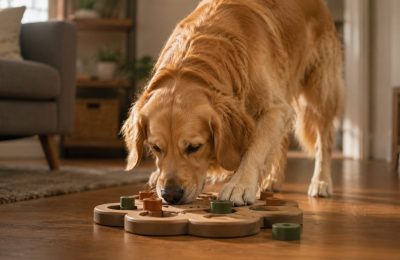
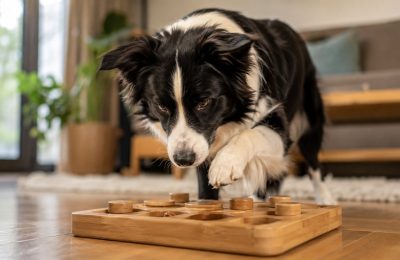
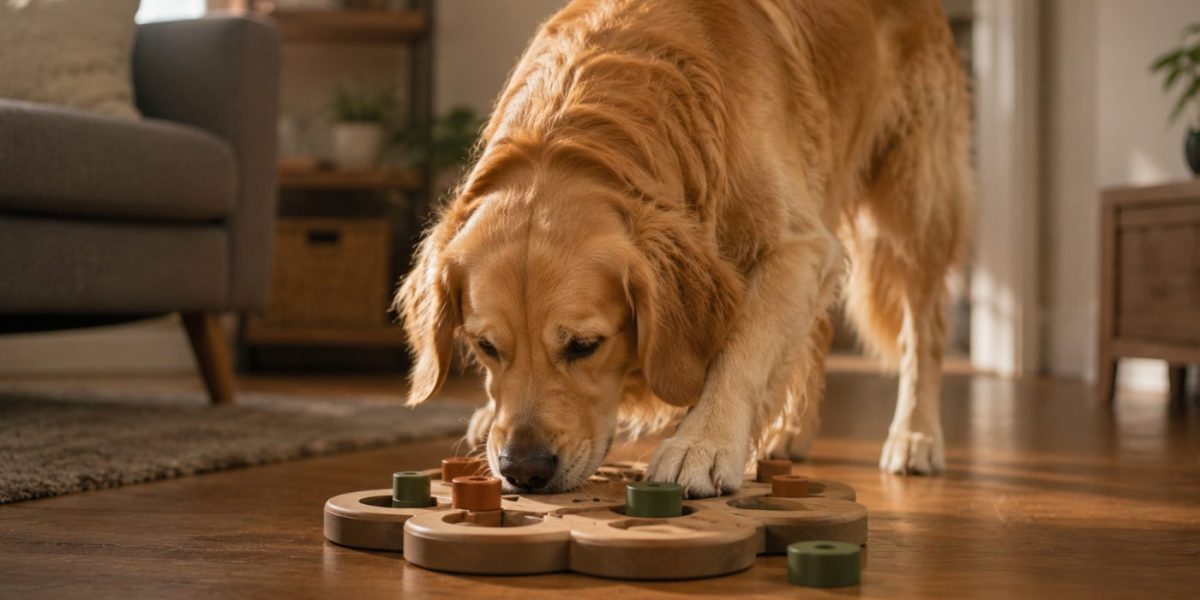
- Puzzle feeders. Slide, flip, and lift puzzle toys make your dog solve a small problem for each morsel. Start easy so they do not give up.
- The muffin tin game. Pop treats in a muffin tin, cover each cup with a tennis ball, and let your dog nose the balls away to find the food.
- Snuffle mats. These fabric mats hide food in their folds, turning a meal into a satisfying sniffing session.
Training as a game
A few minutes of training is brilliant indoor enrichment, because learning makes your dog concentrate and think. Teach a new trick like spin, roll over, or “find it,” polish up their basic obedience commands, or work on impulse control games. Keep sessions short and upbeat, a few minutes at a time, and use it all as an excuse to strengthen your bond. Because it is all reward-based, it is fun for your dog rather than a chore, which is exactly the point. Even teaching your dog the names of their toys and asking them to fetch each one by name is a genuine mental workout.
Nose work and hide-and-seek
Your dog’s sense of smell is astonishing, and using it is deeply satisfying for them. Hide a few treats or a favourite toy around a room while your dog waits, then release them with a “find it” and let them search. Start easy with treats in plain sight, then make the hiding spots trickier as they get the idea. You can also play hide-and-seek with yourself: pop behind a door or the sofa and call your dog, rewarding them when they track you down. This doubles as gentle recall practice. Scent games tire dogs out quickly and can be played in the smallest of homes.
Toys, chews, and rotation
Appropriate chewing is calming and satisfying for dogs, so keep a good selection of safe chew toys and long-lasting chews available. The clever trick is to rotate them: rather than leaving every toy out all the time, put most away and swap them every few days. A toy that has been out of sight becomes exciting and new again, which keeps your dog far more interested than a permanent pile they have grown bored of. Giving an appropriate chew also redirects dogs who might otherwise turn to your furniture, which is a common theme in our guide to stopping destructive chewing.
Indoor physical games (when you have the space)
You can burn some physical energy indoors too, safely. A gentle game of tug is great fun and, contrary to old myths, will not make your dog aggressive as long as you have an “off” or “drop it” cue. Rolling a ball down a hallway for a dog to fetch works in longer spaces. You can even set up a simple indoor obstacle course with cushions to weave around and a broom balanced on books to step over. Keep it low-impact on hard floors to protect joints, and always supervise. These games mix body and brain, which is the ideal combination for a genuinely settled dog.
DIY enrichment on a budget
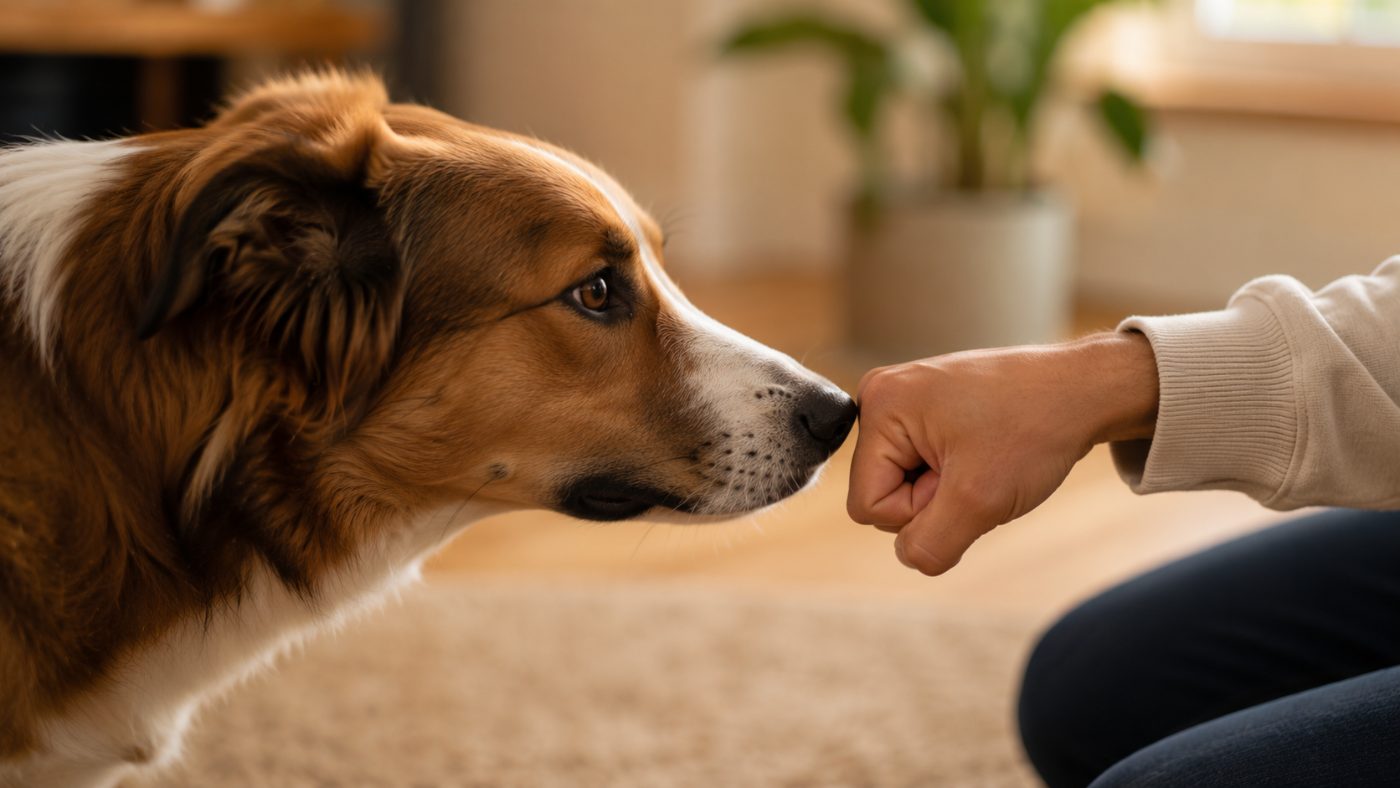
You do not need to spend a penny. Hide treats inside a cardboard box stuffed with scrunched paper and let your dog dig them out. Roll treats up in an old towel for your dog to unravel. Cut holes in a plastic bottle and let kibble fall out as they roll it (supervised, and remove the cap and ring). A homemade snuffle mat, a “which hand” guessing game with a treat, or simply teaching your dog to tidy their toys into a box all deliver real mental exercise for free. Enrichment is about creativity, not gadgets.
Build it into a routine
The secret to a calm indoor dog is little and often rather than one big burst. A few short enrichment sessions spread through the day, a stuffed toy at breakfast, a training game mid-morning, some nose work in the afternoon, keeps your dog satisfied and settled far better than nothing followed by a frantic evening. Predictable rest matters too: a dog with a comfy settling spot or their crate learns that downtime is normal and good. The aim is a dog whose brain is regularly exercised, so they choose to relax rather than inventing their own entertainment.
Frequently asked questions
How do I keep my dog busy indoors on a rainy day?
Reach for food games like stuffed frozen toys, snuffle mats, and scatter feeding, add a short training session or a new trick, and play nose-work hide-and-seek with treats or toys. A few of these spread through the day will keep most dogs happily occupied without a walk.
Is mental stimulation as good as a walk?
For tiring a dog out, mental exercise is often more effective than physical exercise, because problem-solving and sniffing are genuinely demanding. It does not fully replace the physical and social benefits of walks, but on days you cannot get out, brain games are an excellent substitute.
How do I entertain my dog indoors without buying toys?
Use what you have: scatter kibble to sniff out, hide treats in a cardboard box of scrunched paper, roll treats in a towel, play “which hand,” or teach a new trick. DIY enrichment costs nothing and works just as well as shop-bought puzzles.
How long should I keep my dog mentally busy each day?
Little and often works best. Several short sessions of five to fifteen minutes spread through the day usually satisfy a dog better than one long stint, and help them settle and rest in between.
Can indoor games help with a dog on crate rest or recovering from injury?
Yes, low-impact brain games are ideal when physical activity is restricted. Stuffed toys, gentle nose work, and calm training let a recovering dog use their mind and stay content without straining their body. Always follow your vet’s advice on activity limits.
The bottom line
Keeping a dog busy indoors comes down to feeding their mind, not just their body. Make them work for food with stuffed toys, snuffle mats, and puzzles, sprinkle in short training games and nose work, rotate their toys to keep them fresh, and add gentle indoor play when you have the space. Build a few short sessions into your daily routine and you will have a calmer, happier, better-behaved dog who settles easily, whatever the weather. Ready for more? Dive into our full mental stimulation games guide, and if boredom has been fuelling chewing, read how to stop a dog chewing everything.
Sources and further reading: the American Kennel Club, the RSPCA, and the ASPCA.