
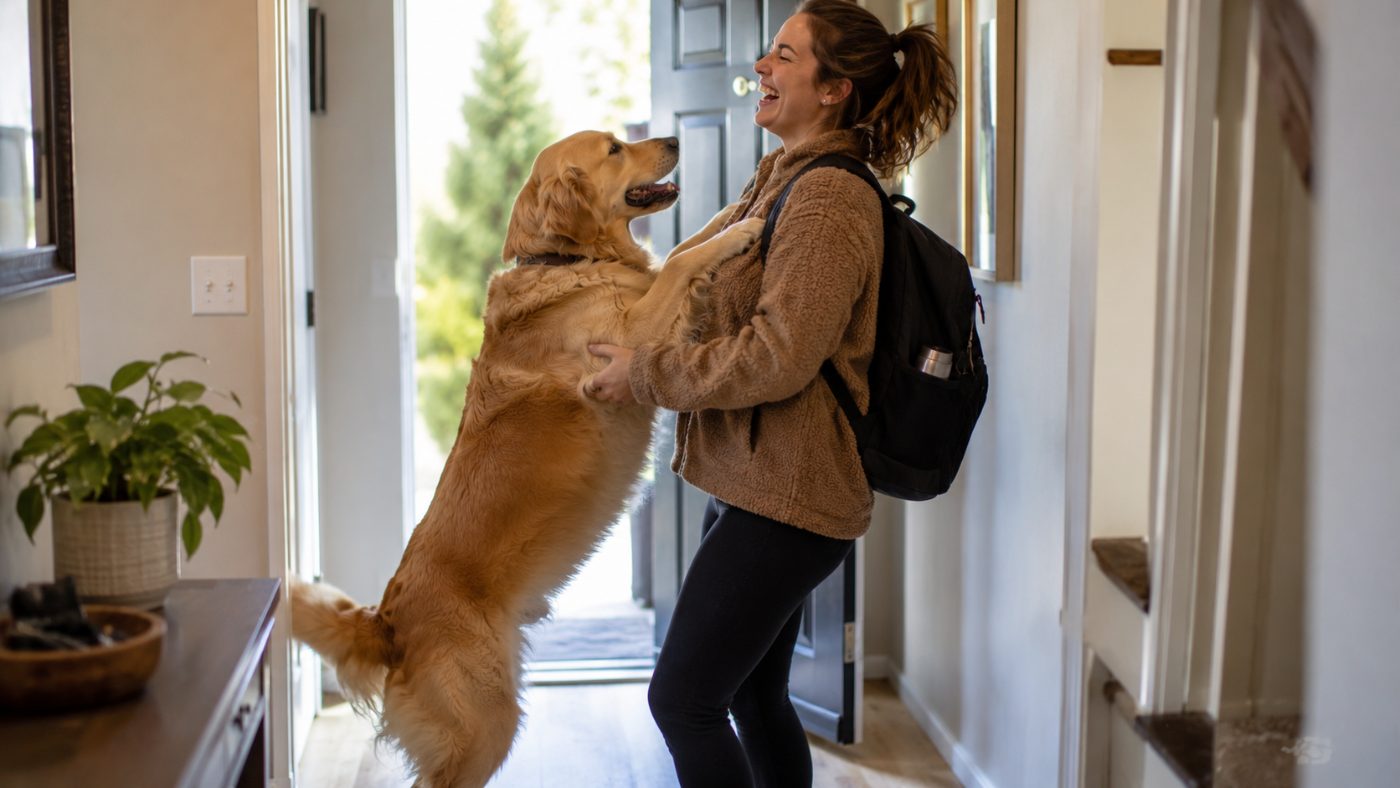
An excited dog launching at you, or your guests, the moment you walk through the door is one of the most common complaints owners have, and one of the easiest to misunderstand. Your dog is not being dominant or rude. Jumping up is simply how dogs say an enthusiastic hello, getting closer to your face and, almost always, earning a big reaction in the process. That reaction is the problem, and it is also the solution. Teach your dog that four paws on the floor gets the attention they crave, and jumping fades away. Here is exactly how.
Why dogs jump up
Dogs jump to greet, to get close to our faces, and above all to get attention. And here is the crucial bit: it works. Even “negative” attention like pushing them off, shouting, or saying “no” is still attention, and to an excited dog that is a reward. So without meaning to, most of us have accidentally trained our dogs to jump by reacting to it. The fix is to flip that equation completely.
The golden rule: jumping earns nothing
Everything below rests on one simple principle: jumping up makes all the good stuff disappear, and four paws on the floor makes it appear. When your dog jumps, they get nothing at all, no eye contact, no words, no touch. When their feet are on the floor, they get your warm attention. Do this consistently and your dog quickly works out which choice pays.
The method, step by step
- When your dog jumps, remove your attention instantly. Turn away, fold your arms, look at the ceiling, and stay silent and boring. Do not push them off, because that is contact and counts as a reward.
- The moment all four paws are on the floor, turn back and reward. Quietly praise and pet, or offer a treat. You are marking the calm.
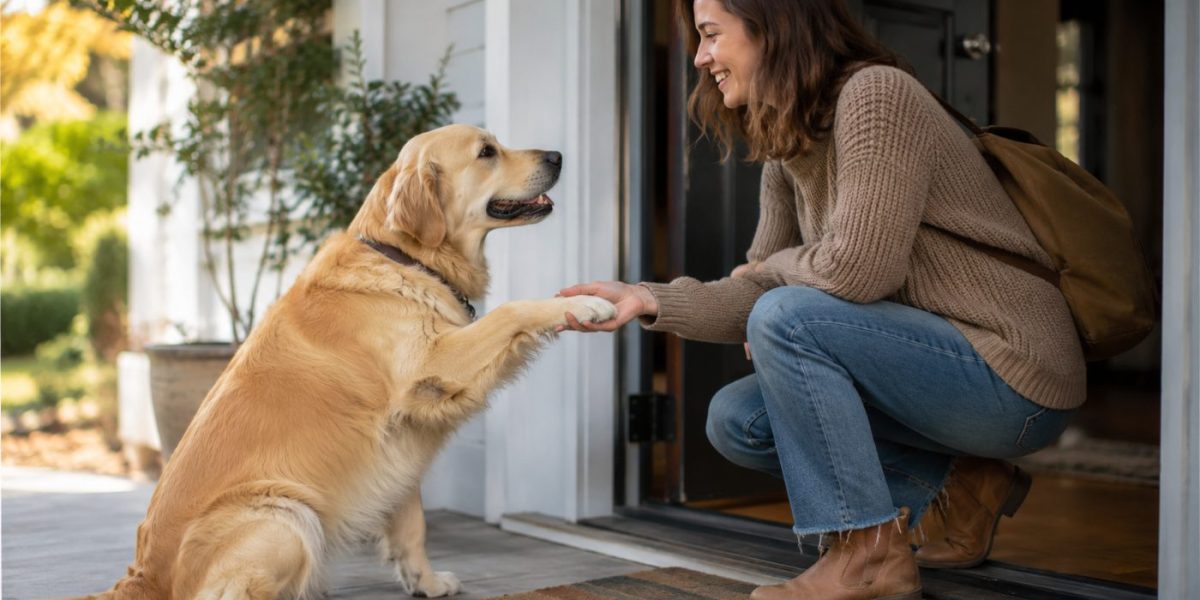
- Teach a greeting behaviour. Ask for a sit as people approach, and reward the sit generously. A sitting dog cannot jump, so this gives them a clear, rewarding alternative. Our obedience guide covers teaching a solid sit.
- Practise on cue. Set it up deliberately: approach your dog, and if they get up, calmly walk away and try again. If they stay sitting, reach them and reward. Repeat until calm greetings become the default.
Managing visitors and the doorbell
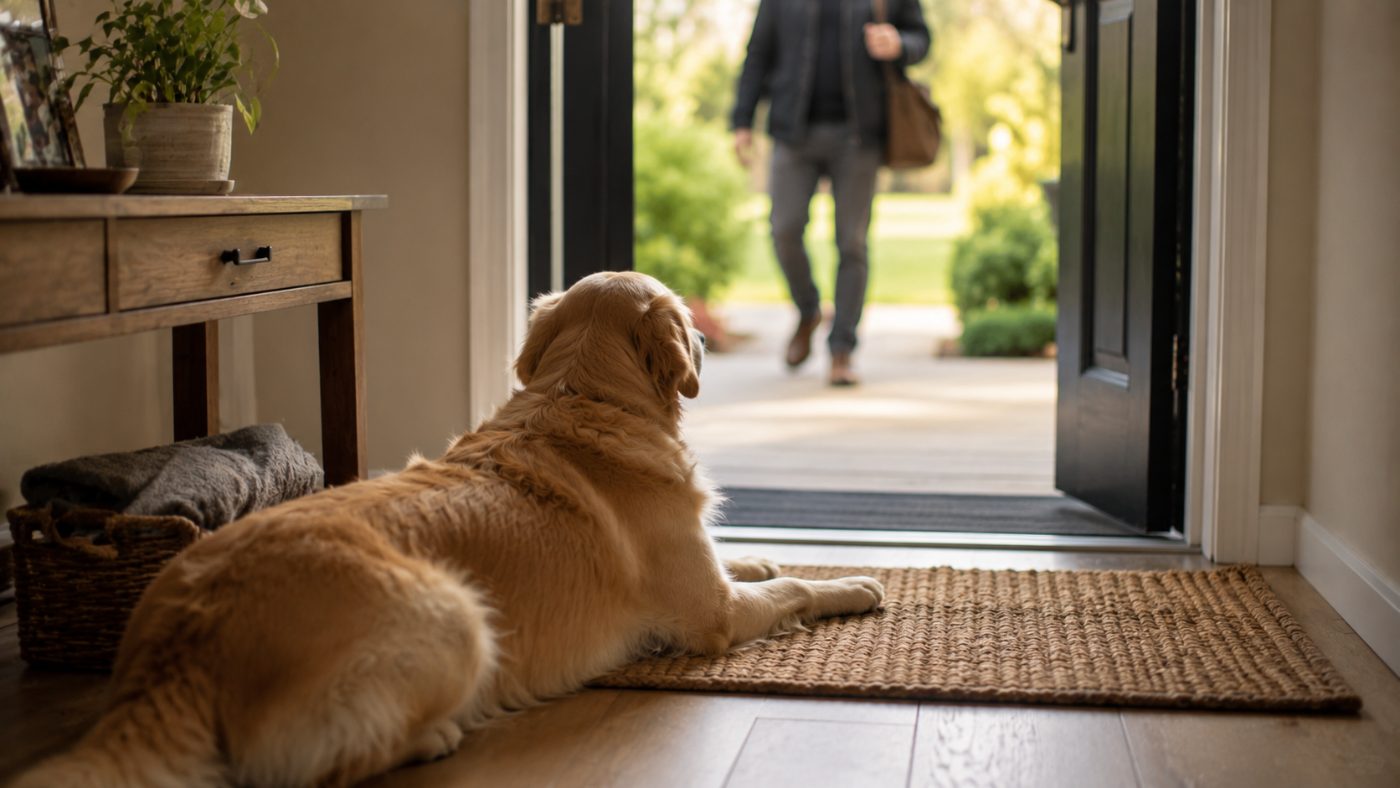
While your dog is learning, prevent them from rehearsing the jumping, because every successful leap makes the habit stronger. When guests arrive, pop your dog on a lead, use a baby gate to keep them back, or send them to a mat or their crate with a “go to your place” cue. Ask visitors to ignore your dog until all four paws are on the floor, then greet calmly. Managing the situation is not cheating, it is what lets the training actually stick.
Everyone has to play along
This is the part that makes or breaks it. If you ignore jumping but a family member or a delighted visitor rewards it with fuss, your dog learns that jumping sometimes works, and “sometimes” is enough to keep the habit alive. Get everyone in the household on the same page, using the same rules and the same cue, and politely coach visitors too: “please turn away if she jumps, and say hello once she sits.” Consistency is the single biggest factor in how fast this works.
Puppies: start early
A jumping puppy is adorable, which is exactly why the habit takes hold, we all want to scoop them up. But a jumping adult dog is a lot less charming, so teach calm greetings from day one. Reward four-on-the-floor and sitting right from puppyhood, and you will save yourself the harder job of undoing the habit later. It fits neatly alongside the rest of your puppy training.
What not to do
- Do not knee your dog, grab their paws, or shout. These can hurt or frighten your dog, and the attention often reinforces the jumping anyway.
- Do not give any attention to a jumping dog, even telling them off. Silence and turning away are far more powerful.
- Do not be inconsistent. Rewarding jumping even occasionally keeps it going.
- Do not forget to reward the calm. Ignoring jumping only works if four-on-the-floor reliably earns the good stuff.
How long does it take?
With consistent practice from everyone your dog meets, many owners see a real improvement within a couple of weeks. An excited, well-practised jumper, or a household where the rules slip, will take longer. A useful extra: a dog who has had enough exercise and mental stimulation greets more calmly, because they have less pent-up excitement to unleash at the door. Keep at it and calm hellos become second nature.
Frequently asked questions
Why does my dog jump on people?
To greet, to get close to faces, and to earn attention, which usually works because any reaction, even a telling-off, rewards the jump. Teaching that only four-on-the-floor earns attention resolves it.
How do I stop my dog jumping on guests?
Manage the arrival with a lead, gate, or a “go to your place” cue, ask guests to ignore your dog until all four paws are down, then greet calmly. Reward your dog for sitting to say hello.
Should I knee my dog to stop them jumping?
No. Kneeing, grabbing paws, or shouting can hurt or frighten your dog and often reinforces the behaviour with attention. Turn away, ignore the jump, and reward calm, four-on-the-floor greetings instead.
How long does it take to stop a dog jumping up?
Often a couple of weeks with consistent practice from everyone the dog meets. Well-established jumpers take longer. Consistency across the household is the key factor.
How do I stop my puppy jumping up?
Start from day one: reward four-on-the-floor and sitting, never reward the jump, and ask everyone to do the same. Preventing the habit early is far easier than undoing it later.
The bottom line
Stopping a dog jumping up is not about telling them off, it is about changing what jumping earns. Ignore the jump completely, reward calm and sitting generously, teach a clear greeting behaviour, manage visitors so your dog cannot practise leaping, and get everyone consistent. Do that and your dog learns that polite, four-on-the-floor hellos are the way to earn the attention they love. Next, lock in that solid sit with our obedience commands guide, and take the edge off with some brain games.
Sources and further reading: American Kennel Club, Best Friends Animal Society, and Humane World for Animals.