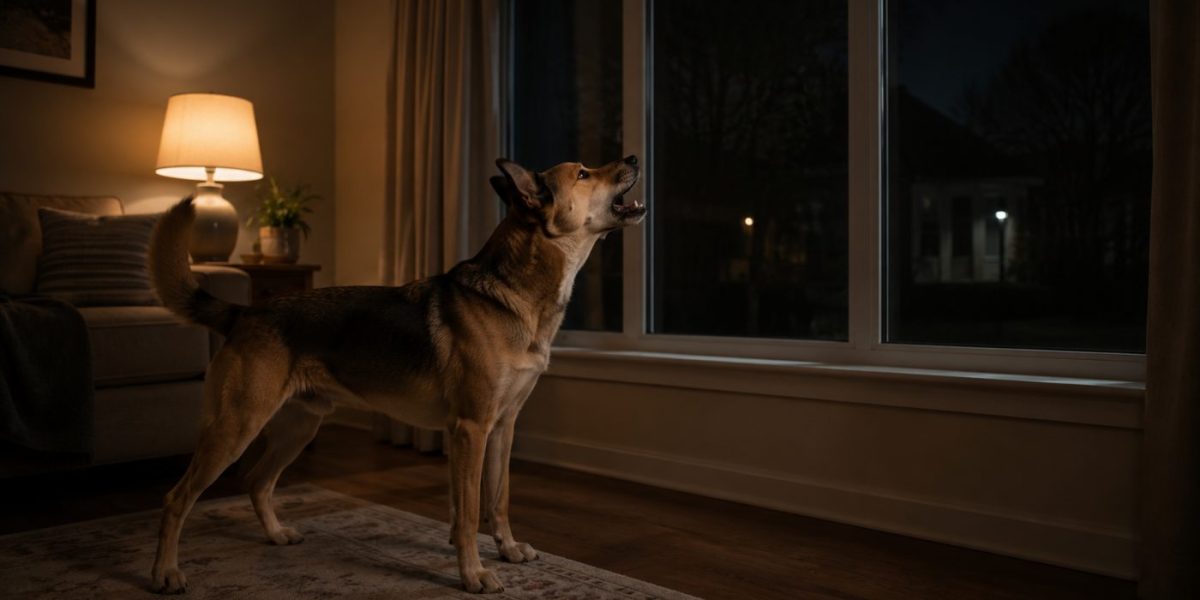

A dog who barks, lunges, or bristles at every stranger who walks past the window or approaches on a walk is stressful to live with and, quite often, stressed themselves. The reassuring news is that this is one of the most well-understood behaviours in all of dog training, and there is a clear, kind method that genuinely works. It is not about punishing the barking. It is about changing how your dog feels about strangers in the first place, so the barking simply melts away. This guide explains why dogs bark at strangers and walks you through the exact process to turn it around, calmly and without force.
Why dogs bark at strangers
Barking at strangers usually comes down to one of a few things, and almost all of them are rooted in emotion rather than naughtiness. Most commonly it is fear or wariness: an unfamiliar person feels like a potential threat, and barking is your dog’s way of saying “stay back.” Some dogs bark to guard territory, warning off anyone who approaches the house or garden. Others are simply over-aroused and frustrated, especially on the lead where they cannot greet or investigate. And a few have learned that barking gets a reaction, so it becomes a habit. Working out which of these fits your dog helps, but the good news is that the core method below works for all of them, because it builds a calm, positive feeling about strangers.

The golden rule: do not punish it
It is tempting to shout at a barking dog, but this almost always backfires. To your dog, your raised voice can look like you are barking along at the same scary thing, which confirms that strangers are worth worrying about. Worse, if the barking is fear-based, adding your anger adds stress, and a more stressed dog barks more, not less. Punishment can also suppress the warning bark while leaving the fear underneath, which is genuinely risky. So throw out the telling-off entirely. The whole approach here is calm and reward-based, which is exactly why it works, and it sits on the same foundation as everything in our guide to positive reinforcement training.
The method: desensitisation and counter-conditioning
The gold-standard approach has two parts that work together. Desensitisation means exposing your dog to strangers so gently and at such a comfortable distance that they do not react. Counter-conditioning means pairing the sight of a stranger with something wonderful, so your dog’s brain slowly rewrites “stranger equals threat” into “stranger equals chicken.” Done together, over many small sessions, they change how your dog feels. Here is how to do it.
- Find the threshold. Work out the distance at which your dog can see a stranger but stays calm and can still take a treat. This might be right across the road or the length of the garden. That distance is your starting point, and it is essential you begin far enough away that your dog does not tip into barking.
- Pair strangers with amazing treats. The instant your dog notices a stranger at that safe distance, calmly feed a stream of high-value treats, think chicken, cheese, or hot dog, not dry biscuits. When the stranger passes out of sight, the treats stop. The stranger literally makes the good stuff appear.
- Keep sessions short and successful. A few minutes at a time is plenty. You want your dog to end each session feeling relaxed, not overwhelmed.
- Close the gap slowly. Over many sessions, as your dog stays relaxed and starts to look to you happily when a stranger appears, gradually decrease the distance. Always stay below the point where they would react.
- Never rush. If your dog barks, you have gone too close or too fast, so calmly increase the distance and make the next rep easier. This is not a setback, just information.
Managing the home and window barking
While you train, prevent your dog from rehearsing the barking, because every frantic bark at the window makes the habit stronger. Use film or frosting on the lower part of windows, close curtains, or use a baby gate to keep your dog away from their favourite lookout spot. When the doorbell goes, you can pop your dog behind a gate or send them to a mat with a chew rather than letting them charge the door. This management is not cheating, it is what stops the problem getting worse while the training does its slower, deeper work.
An easy off switch: the “quiet” cue and “find it”
Alongside changing the emotion, two simple cues give you practical control in the moment. A trained “quiet” cue lets you calmly end a bark once it has started. And a “find it” game, where you scatter treats on the floor for your dog to sniff out, is brilliant for defusing tension, because sniffing is naturally calming and it turns the stranger’s appearance into a fun hunt. Use these as helpful tools on top of the desensitisation work, not as a replacement for it.
Don’t forget exercise and enrichment
A dog who is under-exercised and under-stimulated has a shorter fuse and reacts more strongly to everything, strangers included. Making sure your dog gets enough physical exercise and, just as importantly, plenty of mental stimulation lowers their overall stress and makes them far easier to work with. A calmer, more satisfied dog simply has less pent-up reactivity to unleash at the postman.
When to get professional help
If your dog’s reaction to strangers is severe, if there is any lunging and snapping, or if you feel out of your depth, please bring in a qualified, reward-based behaviourist. Barking that tips into genuine aggression needs careful, in-person guidance, and there is no shame in getting it. Our guide to dog aggression explains when professional help should be your first call rather than your last. A good behaviourist will read your dog accurately and keep everyone safe while you work through it.
How long does it take?
Be patient, because this is emotional retraining, not a quick trick. The longer your dog has felt negatively about strangers, the longer it takes to rewrite that feeling, and progress is measured in weeks and months rather than days. That said, most owners see encouraging early signs, a softer reaction, looking to you for a treat when a stranger appears, within the first couple of weeks of consistent work. Keep sessions short, stay below threshold, reward generously, and trust the process. Calm, sociable behaviour is absolutely achievable for the vast majority of dogs.
Frequently asked questions
Why does my dog bark at strangers?
Usually fear or wariness of unfamiliar people, territorial guarding, or frustration at not being able to greet, especially on the lead. Some dogs also learn that barking gets a reaction. Most causes are emotional, which is why a calm, reward-based approach works best.
How do I stop my dog barking at strangers?
Use desensitisation and counter-conditioning: keep your dog at a distance where they stay calm, and feed high-value treats the moment they notice a stranger, so strangers start to predict good things. Gradually close the distance over many short sessions, never letting your dog tip into barking.
Should I punish my dog for barking at strangers?
No. Shouting or punishing can look like you are joining in, adds stress to a fear-based problem, and can suppress the warning while leaving the fear. Stay calm and change how your dog feels about strangers with rewards instead.
How long does it take to stop a dog barking at strangers?
It is gradual emotional retraining, so think weeks to months rather than days, especially for a long-standing habit. Many owners see early improvement within a couple of weeks of consistent, below-threshold practice.
Should I get a trainer for a dog that barks at strangers?
If the reaction is severe, involves lunging or snapping, or you feel out of your depth, yes. A qualified, reward-based behaviourist can keep everyone safe and tailor the plan. For milder alert barking, the home method usually works well.
The bottom line
Stopping a dog barking at strangers is not about silencing the noise, it is about changing the feeling underneath it. Find the distance where your dog stays calm, pair every stranger with something delicious, close the gap slowly, and manage the environment so your dog cannot keep rehearsing the barking. Skip the shouting, add a “quiet” cue and calming sniff games for in-the-moment control, meet your dog’s exercise and enrichment needs, and get professional help if the reaction is severe. Do that patiently and your dog learns that strangers are nothing to worry about. Next, learn the off switch in our guide to the quiet command, and tackle every cause of barking in our complete barking guide.
Sources and further reading: the American Kennel Club on desensitisation and counter-conditioning, Best Friends Animal Society, and the ASPCA barking guide.