

A reliable “stay” is one of the most useful things you can teach your dog. It keeps them safe at kerbs and open doors, makes vet visits and grooming calmer, and generally makes life together smoother. Yet it is also where a lot of owners get stuck, usually because they try to make it too hard too fast. The secret is a simple framework trainers call the three Ds: duration, distance, and distraction. Build them one at a time, in the right order, and a rock-solid stay is genuinely straightforward. Here is exactly how to do it, step by step and entirely reward-based.
What “stay” really means
“Stay” means “hold this position, exactly here, until I release you.” That last part matters: a stay is not truly finished until you give a clear signal that your dog is free to move. So the very first thing to teach, before anything else, is a release word, a cue like “okay,” “free,” or “break” that tells your dog the stay is over and they can relax. Say your release word and encourage your dog to move, every single time you end a stay. Once your dog understands that they hold position until they hear that word, the whole exercise clicks into place. It sits alongside the other core cues in our guide to basic obedience commands.
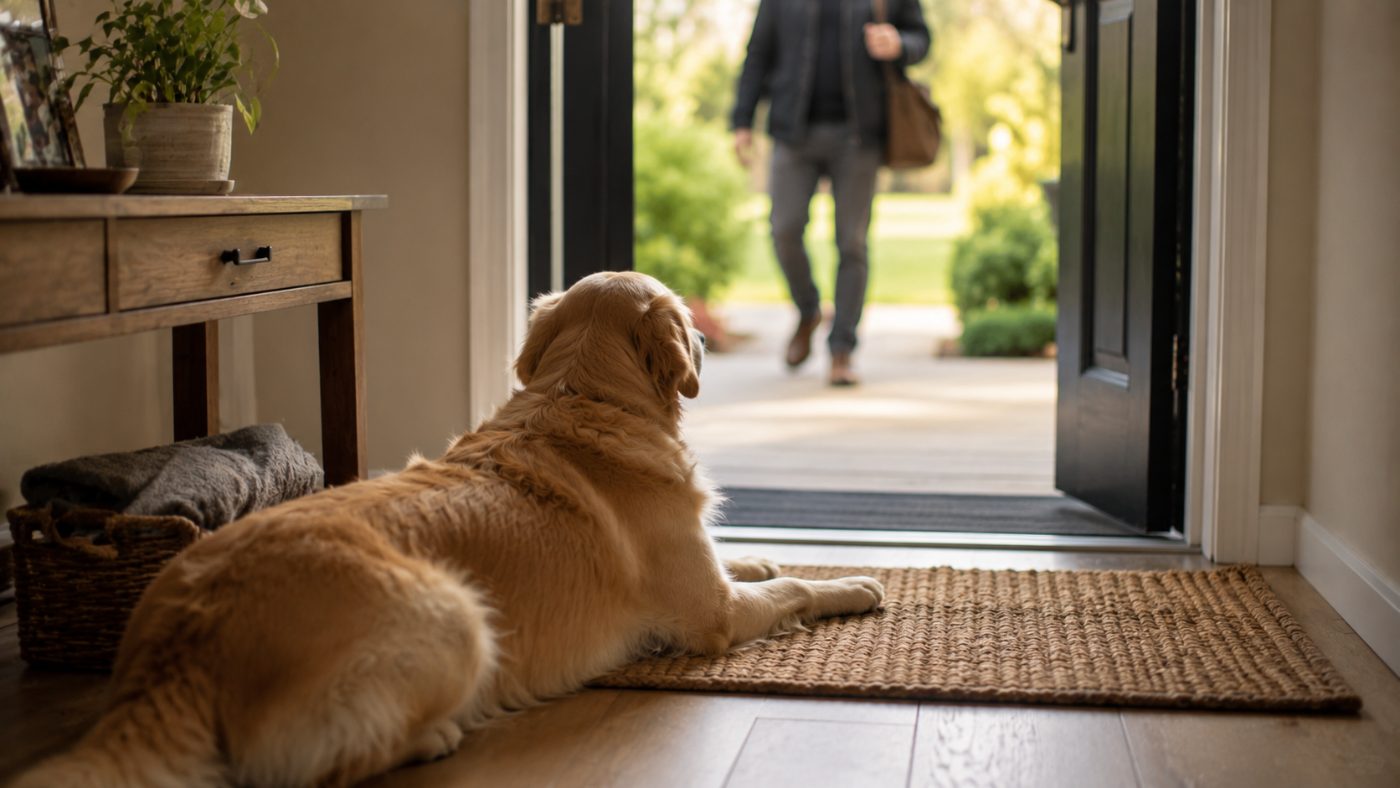
The three Ds, and why order matters
Dogs do not generalise well, so a stay that works when you are standing right in front of them in a quiet kitchen falls apart the moment you step away or something interesting happens. The three Ds break the challenge into manageable pieces: duration (how long they hold it), distance (how far you move away), and distraction (what is going on around them). The golden rule is to work on only one D at a time, build duration first, then distance, and leave distraction until last. And crucially, whenever you increase one D, relax the others. If you add distance, drop the duration right back to a couple of seconds. This keeps your dog succeeding, which is what keeps them learning.
Step one: build duration
Start with your dog in a sit or a down, whichever they find easier to hold. Hold up a flat palm, say “stay,” and wait just one second. Then calmly return, mark with “yes,” reward, and give your release word. That is one rep. Gradually stretch the time: two seconds, then three, then five, then ten, always rewarding before your dog breaks position rather than after they have got up. If your dog moves, you have asked for too long too soon, so simply reset and make the next rep shorter. Build up to your dog holding a stay for thirty seconds or so with you standing right there before you move on. Reward generously and often at this stage.
Step two: add distance
Once your dog can hold a steady stay while you stand in front of them, start adding distance, but drop the duration right back down. Say “stay,” take a single step back, immediately step in again, then mark, reward, and release. The key rule here is to always return to your dog before you reward or release. If you call them to you as a reward, they learn to anticipate and creep forward, so instead you go back to them. Gradually increase the distance, one step at a time, then two, then across the room, keeping the duration short whenever the distance is new. Over sessions you can combine a bit more distance with a bit more duration.
Step three: add distractions
Distraction is the hardest D, which is why you save it for last. Once your dog has solid duration and distance in a calm setting, start introducing small distractions while dropping the other two Ds right back. Begin gently: take a small step to the side, drop a boring item on the floor, or have someone walk past at a distance while you ask for just a few seconds of stay up close. Reward heavily for holding through the distraction. As your dog succeeds, gradually build up to bigger distractions, a bouncing ball a few feet away, a person approaching, another dog in the distance. If your dog breaks, the distraction was too much, so make it easier and try again. This is exactly the kind of proofing that turns a party trick into a cue you can rely on.
Proof it in real life
A stay is only truly useful when it works in the real situations you need it for, so once the basics are solid, practise in different rooms, in the garden, and eventually out and about. Use it at the front door before your dog barges out, at the kerb before crossing, or while you put their food bowl down. Each new location is a little harder, so go back to short, easy stays when you change the setting and build back up. This gradual, patient proofing is the same principle behind a reliable “leave it” and a solid recall.
Common mistakes to avoid
- Increasing more than one D at a time. Adding distance and duration together sets your dog up to fail. Change only one, and relax the others.
- Calling your dog out of the stay to reward them. This teaches creeping and anticipation. Always return to your dog to reward and release.
- Forgetting the release word. Without a clear release, your dog never knows when the stay is over, so the cue stays fuzzy.
- Going too fast. If your dog keeps breaking, you are asking too much. Make it easier and rebuild. Success breeds success.
- Punishing a broken stay. It just adds stress and confusion. Calmly reset and make the next rep achievable instead.
How long does it take?
Most dogs grasp the basic idea of holding a short stay within a few days of brief daily sessions. A genuinely reliable stay, one that holds up at a distance, for a decent duration, and around real distractions, takes several weeks of gradual, patient practice, and that is completely normal. Keep sessions short and upbeat, build one D at a time, reward generously, and always end on a win. Do that and you will have a stay you can actually count on when it matters, which is one of the most reassuring skills a dog can have.
Frequently asked questions
How do I teach my dog to stay?
Teach a release word first, then build the three Ds one at a time: duration (hold longer), then distance (step further away), then distraction. Start with a one-second stay right in front of your dog, reward before they break, and always return to reward and release rather than calling them to you.
What are the three Ds of teaching a stay?
Duration (how long your dog holds the stay), distance (how far you move away), and distraction (what is happening around them). Work on only one at a time, in that order, and relax the others whenever you make one harder.
Why does my dog break the stay when I walk away?
You have likely added distance too quickly while still asking for duration. When you add distance, drop the duration right back to a couple of seconds, and always return to your dog before rewarding, so they do not learn to follow you.
Should I use a release word for stay?
Yes, it is essential. A release word like “okay” or “free” tells your dog exactly when the stay is over. Without it, your dog never knows when they can move, and the cue stays unreliable. Use it every time you end a stay.
How long does it take to teach a reliable stay?
The basics come within a few days, but a stay that holds up at a distance, for a good duration, and around distractions usually takes several weeks of gradual practice. Build one D at a time and reward well.
The bottom line
Teaching a dog to stay is simple when you stop trying to do everything at once. Teach a clear release word, then build duration, distance, and distraction one at a time, in that order, always relaxing the other two whenever you raise one. Return to your dog to reward and release rather than calling them to you, keep sessions short and rewarding, and proof it gradually in real-life situations. Do that and you will have a rock-solid stay that keeps your dog safe and makes daily life calmer. Next, round out your dog’s manners with the rest of our basic obedience commands, and add the life-saving “leave it” cue.
Sources and further reading: the American Kennel Club on teaching stay, the AKC on the three Ds, and PetMD.