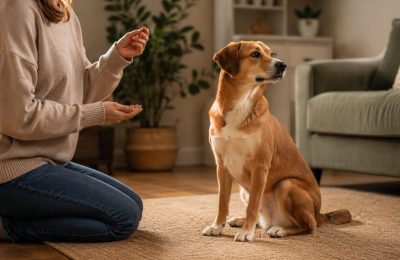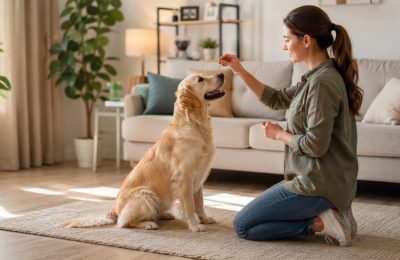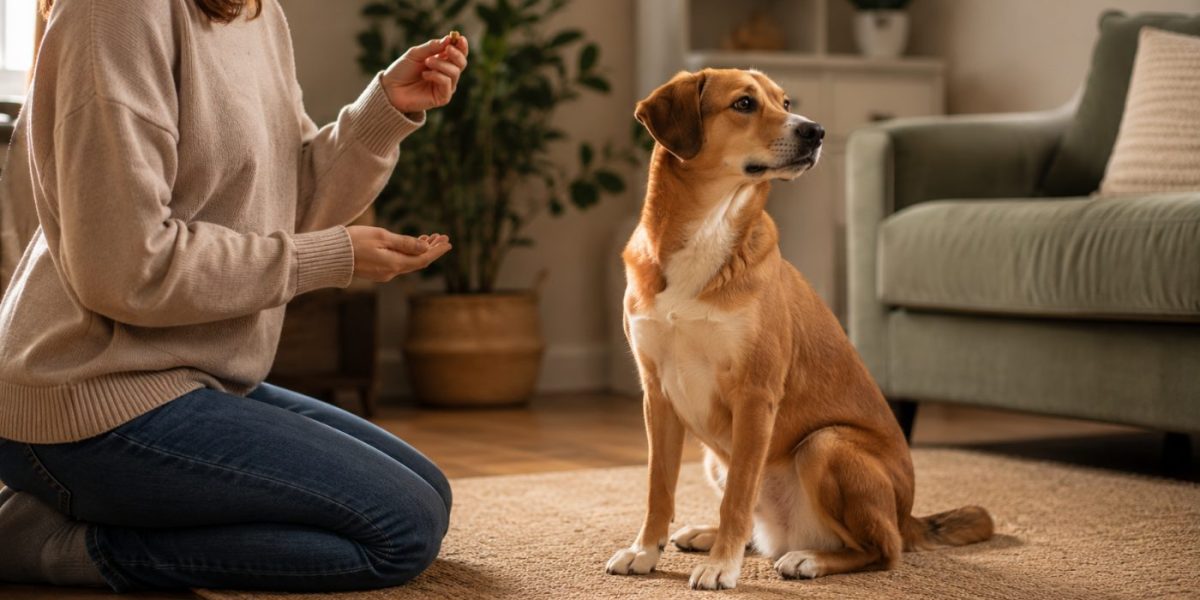

Every dog owner knows the sinking feeling of watching their dog snatch up something they absolutely should not have. A sock, a chicken bone off the pavement, a child’s toy, or worse, something genuinely dangerous. In that moment, you do not want to be chasing your dog around the garden or prising their jaws apart. You want them to open their mouth and let go, happily and instantly. That is exactly what a solid “drop it” cue gives you. Teaching a dog to drop it is one of the most practical, and occasionally lifesaving, skills you can train, and the good news is that it is built entirely on kindness and trading rather than force. This guide walks you through the whole thing, from your very first practice session to a rock-solid release you can trust in an emergency.
What “drop it” actually means (and how it differs from “leave it”)
Before we get into the how, it helps to be crystal clear about what you are teaching, because two cues get muddled all the time. “Drop it” and “leave it” sound similar and both keep your dog safe, but they do completely different jobs.
“Drop it” tells your dog to release something that is already in their mouth. The item has been picked up, the deed is done, and you need it back out again. Think of your dog trotting off with your slipper, or lifting a discarded takeaway box off the ground on your walk.
“Leave it”, by contrast, is a preventative cue. It tells your dog not to pick something up in the first place, to leave it exactly where it is on the floor or the ground. It happens before the object ever reaches their mouth. If you want the full method for that one, we cover it in our guide on how to teach a dog to leave it, and the two cues work beautifully as a pair.
Here is the simplest way to remember the difference. “Leave it” means “don’t pick that up.” “Drop it” means “give me what you’ve already got.” Ideally your dog learns both, because life throws up both situations. You will not always spot the dead frog before your dog does, and that is precisely when a reliable “drop it” earns its keep.
Why teaching “drop it” is worth the effort
It is tempting to think of “drop it” as a party trick or a fetch add-on, but it is far more important than that. A dog who reliably drops on cue is a safer dog.
The biggest reason is emergencies. Dogs pick up things that can genuinely harm them: dropped medication, cooked bones that splinter, toxic foods like chocolate or grapes, string, batteries, small objects that can cause an intestinal blockage. If you can ask your dog to drop the item and they do, you have removed the danger in a single word. No wrestling, no vet dash, no gamble.
The second reason is that it stops the chase game before it starts. If your only tool is grabbing your dog or running after them, you teach them something you really do not want them to learn: that snatching things is a brilliant way to start a fun game of keep-away. Most dogs adore being chased, so every chase rewards the stealing. Worse, a dog who is being chased often gulps the item down to keep it, which turns an annoyance into an actual medical problem. A calm “drop it” sidesteps all of that.
Third, trading kindly protects your relationship and helps prevent resource guarding. Prising a dog’s mouth open, or repeatedly snatching things away with nothing offered in return, can teach a dog that human hands near their prized possessions mean loss. Over time that can tip into growling, stiffening or snapping over objects. Trading up does the opposite: it teaches your dog that giving things up leads to good things, so hands approaching become a promise rather than a threat. This is positive reinforcement at its most useful, and if you want the wider picture on why reward-based methods work so well, our explainer on what positive reinforcement dog training is is a good companion read.
Before you start: the trading mindset
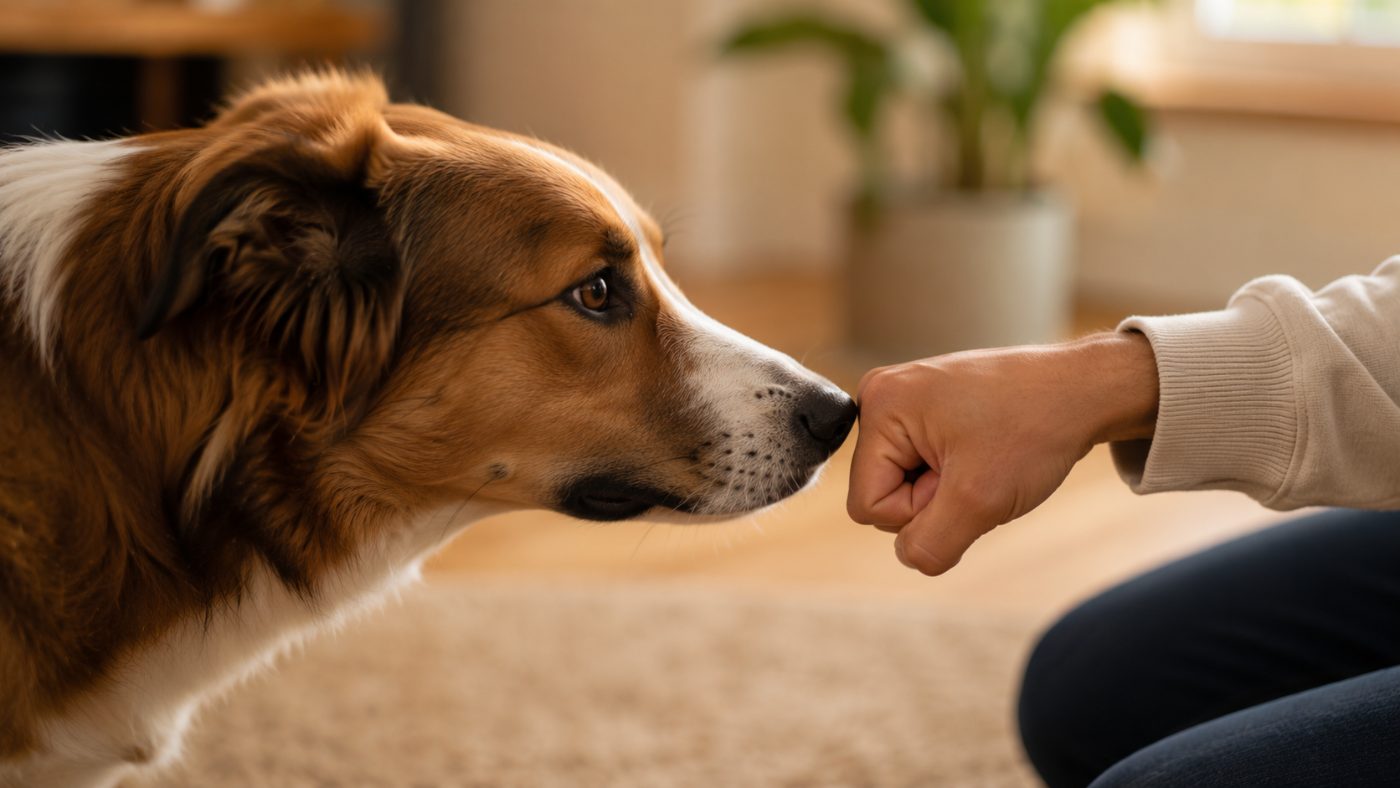
The single idea that makes “drop it” click, both for you and your dog, is trading up. You are not taking something away. You are offering a swap, and the swap should always feel like a good deal to your dog.
Picture it from their point of view. If your dog is holding a favourite squeaky toy and you offer a piece of dry kibble, why on earth would they let go? That is trading down. But if they are holding a boring old tennis ball and you produce a sliver of roast chicken, the maths changes instantly. Letting go now gets them something better. Your job during training is to make sure the thing you offer is more exciting than the thing they are holding.
This gentle, reward-first philosophy is echoed by veterinary sources such as VCA Animal Hospitals, which stress swapping rather than snatching. There is a second, slightly counterintuitive part to this. During training with safe items, you often give the original object back after they drop it. That teaches your dog the best lesson of all: dropping does not mean the fun ends. They get a reward and they get their toy back. Dropping becomes a double win, which makes them far more willing to do it next time. Obviously you would never hand back a chicken bone or a pill, but with toys and safe objects, returning the item builds enormous trust in the cue.
Get this mindset right and the mechanics almost look after themselves. Get it wrong, chasing, grabbing, scolding, and you will teach your dog to run, gulp or guard instead.
What you will need
- A low-value toy your dog likes but is not obsessed with, to start with.
- A generous supply of high-value treats cut small, think chicken, cheese or a bit of hot dog.
- An optional second, more exciting toy for dogs who are not food motivated.
- A quiet, low-distraction spot such as a hallway or a calm corner of a room.
- A lead, in case your dog likes to run off with their prize.
- Patience and short sessions. Five minutes of happy practice beats twenty minutes of frustration.
How to teach a dog to drop it: a step-by-step guide
Here is the core method using treats, in line with the trade-based approach recommended by the American Kennel Club. Work through it slowly, and do not rush to add the words until your dog is already dropping reliably in exchange for the trade. A common mistake is naming the behaviour too early, before the dog knows what it is being asked to do.
- Offer a low-value toy. Hand your dog something they enjoy but are not besotted with. You want it easy for them to give up, so save the beloved squeaky pheasant for later.
- Let them have a little play. Give them a few seconds to hold and mouth the toy so there is actually something to trade. If they are not holding it, there is nothing to drop.
- Present a high-value treat at their nose. Bring a tasty treat right to their nose so they can smell it. With a low-value toy and an exciting treat, most dogs will open their mouth to investigate the food, and the toy falls out.
- Mark the moment they let go. The instant the toy leaves their mouth, mark it, either with a click if you clicker train, or a clear word like “yes”. Then give the treat. The timing here is what teaches your dog exactly which action earned the reward.
- Pick up the toy while they eat. As your dog enjoys the treat, calmly collect the toy and pop it behind your back. No racing, no lunging. If your dog tries to beat you to it, toss the treat a little way off to buy yourself a second or two.
- Repeat until it is predictable. Present the toy again and run through the sequence. After several rounds you will see your dog start to spit the toy out the moment the treat appears. That reliability is your green light for the next step.
- Add the verbal cue. Now, and only now, say your word, “drop it”, “drop”, “trade” or “out”, just as they are about to release. Say it once, calmly and cheerfully. Repeat over many sessions so the word becomes glued to the action.
- Fade the treat lure. Once the word is working, say the cue without showing the treat first. If they drop, throw a party: mark, praise and give a jackpot of several treats in a row to show them this is the best game going. If they hesitate, wait a beat, then produce the treat, and gradually stretch that gap over future reps until they drop on the word alone.
- Sometimes give the toy back. With safe items, return the toy after they drop and reward. This teaches your dog that dropping is not a loss, which massively strengthens the cue.
Little and often is the rule. A few five-minute sessions across the week will get you far further than one marathon slog, and your dog will stay keen rather than fed up.
The toy-only method for dogs who aren’t food motivated
Not every dog goes weak at the knees for chicken. If yours is more toy-driven, you can run the same idea using two toys instead of treats. Offer the first toy, let them play, then bring out a second toy and make it irresistible, wiggle it along the floor, squeak it, act as though it is the most thrilling thing you have ever held. When your dog drops the first toy to come and investigate the new one, mark and let them have their game. Add the cue once they are dropping predictably, exactly as above.
Using tug to teach a natural drop
Tug-of-war is a brilliant, and often overlooked, way to build “drop it” into play, a technique also championed in step-by-step guides from retailers like Chewy. Start a game of tug, then simply go completely still and stop pulling. Hold the toy quietly and wait. Sooner or later your dog will get bored of tugging against a statue and let go. The moment they do, mark it, praise them, and instantly restart the game as their reward. Once your dog is releasing the moment you freeze, add your cue just before they let go. Done this way, the reward for dropping is more of the game they love, which is exactly why it sticks. A flirt pole works on the same principle if you have one.
Building a reliable “drop it” in the real world
Dropping a tennis ball in your quiet living room is one thing. Dropping a mystery lump of something on a busy walk is quite another. To get a cue you can actually rely on when it matters, you need to generalise it, which is trainer-speak for practising in gradually harder situations.
Once your dog is fluent with a low-value toy, start climbing the ladder. Introduce slightly more exciting toys, then practise in different rooms, then in the garden, then on a lead in a quiet outdoor spot, then somewhere with a bit of mild distraction. Each time you raise the difficulty, be ready to raise the value of your reward to match. Asking your dog to drop something genuinely tempting deserves a genuinely tempting payoff.
Keep rewarding, even long after your dog “knows” the cue. Occasional treats keep a behaviour strong, whereas a cue you never reward slowly rusts. You do not need to carry a bumbag forever, but for something as safety-critical as this, staying generous is well worth it. Think of the reward as insurance for the day it really counts.
Practising with real objects safely
At some point you will want to rehearse with the kinds of things your dog actually steals, socks, shoes, the odd bit of food. Do this deliberately and calmly. Set it up so you control the situation rather than waiting for a genuine grab. Reward hugely for the drop. The more you practise the release with everyday temptations in a relaxed frame of mind, the more automatic it becomes when the stakes are high. For dogs whose favourite crime is destroying household items, pairing this training with the advice in our guide on how to stop a dog chewing everything tackles both ends of the problem at once.
Common mistakes to avoid
Most “drop it” problems come down to a handful of avoidable errors. Sidestep these and your training will go far more smoothly.
- Chasing your dog. The classic. Chasing turns theft into a game and often makes your dog swallow the item to win. Stay put and use the cue, or lure them to you.
- Prising the mouth open. Forcing jaws apart risks a bite, encourages gulping, and can trigger guarding. Trading is safer and works better.
- Trading down. Offering something less exciting than what your dog holds. Always make the swap a genuine upgrade.
- Adding the word too soon. Naming the behaviour before your dog reliably performs it just attaches the cue to confusion. Get the action first, then label it.
- Never giving the item back. With safe objects, always taking things away teaches your dog that dropping means loss. Return toys often during training.
- Punishing or scolding. Telling your dog off for picking things up teaches them to hide, gulp or run from you, the exact opposite of what you want.
When to seek professional help
Training “drop it” should feel like a friendly game. If at any point your dog growls, stiffens, shows their teeth, snaps or lunges when you approach an item they are holding, stop the exercise and do not push it. Those are signals of resource guarding, and while it is a very common and treatable behaviour, it needs the guidance of a qualified, reward-based trainer or a veterinary behaviourist rather than a well-meaning DIY approach. Getting expert eyes on it early keeps everyone safe and prevents the habit from hardening.
“Drop it” also sits within a wider foundation of everyday manners. If you are building your dog’s skills from the ground up, it fits neatly alongside the other essentials covered in our overview of basic obedience commands. And because a mentally tired dog is far less likely to go looking for forbidden treasures in the first place, adding some mental stimulation games to your week quietly reduces how often you need the cue at all.
Frequently asked questions
How long does it take to teach a dog to drop it?
Many dogs grasp the basic trade within a few short sessions over the first week, especially with an exciting treat and a boring toy. Building a genuinely reliable cue you can trust in real-world, high-distraction situations takes longer, usually several weeks of regular, low-pressure practice. Keep sessions short and frequent, and remember that a dog dropping a ball indoors is at an earlier stage than one dropping a chicken bone on a busy walk.
What’s the difference between “drop it” and “leave it”?
“Drop it” asks your dog to release something already in their mouth, while “leave it” asks them not to pick something up at all. “Drop it” happens after the object has been grabbed; “leave it” happens before. Both are useful safety cues and work best as a pair, because you will not always spot a tempting item before your dog does.
My dog runs away when I try to take something. What do I do?
Stop chasing, as running after them only rewards the game and can make them gulp the item. Instead, do your training on a lead so your dog has to stay near you, and lean hard on trading up with a high-value treat. Practise the “drop it” cue calmly and often with safe items, so that by the time it matters, letting go feels like the obvious, rewarding choice rather than a cue to bolt.
Should I always give the object back after my dog drops it?
With safe items like toys, yes, giving it back often is one of the most powerful things you can do, because it teaches your dog that dropping does not end the fun. You clearly would not return anything dangerous such as a bone, medication or a toxic food. For those, reward generously with a treat or an acceptable chew instead, so the trade still feels like a good deal.
Can I teach an older dog to drop it, or is it just for puppies?
Older dogs can absolutely learn “drop it”. The trading method works at any age, and many adult dogs pick it up quickly because they already understand that you are a reliable source of good things. Older dogs with an established habit of guarding or running off may simply need a little more patience and consistency, and if any guarding appears, bring in a reward-based professional.
The bottom line
Teaching a dog to drop it is not about winning a battle over an object. It is about making the swap so appealing that your dog wants to let go. Start with a boring toy and a brilliant treat, mark and reward the instant they release, add the word only once the action is reliable, then slowly practise in harder and harder situations while keeping your rewards generous. Avoid the classic traps of chasing, grabbing and scolding, give safe items back to build trust, and call in a professional the moment you see any guarding. Do that, and you will end up with a calm, cheerful release cue that turns a potentially dangerous moment into a two-second non-event, which is exactly the kind of quiet superpower every dog owner wants.