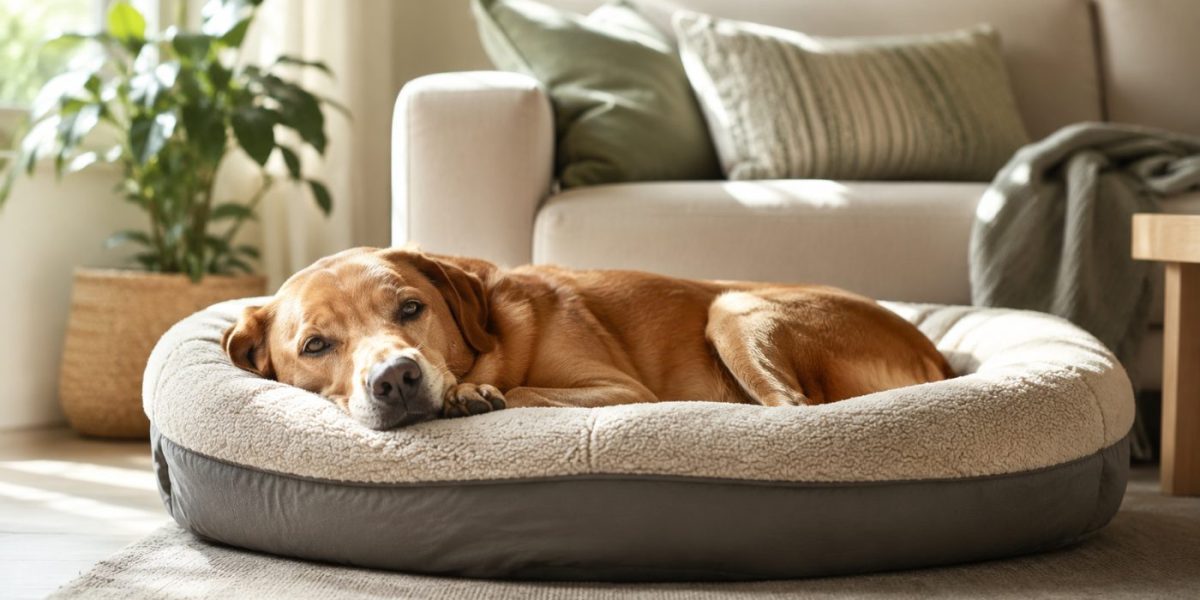

Coming home to a shredded sofa, a soaked crate, or a note from an unhappy neighbour about non-stop howling is heartbreaking, because behind every one of those things is a dog in genuine distress. Separation anxiety is not your dog being naughty or spiteful. It is panic, real fear at being left alone, and no amount of telling off will fix it. The good news is that it is very treatable with the right approach. This is a calm, step-by-step plan to help your dog feel safe on their own, built on the method behaviourists actually use.
What separation anxiety really is
Separation anxiety is a panic response triggered by being separated from the people your dog is attached to. It sits on a spectrum, from mild unease and a bit of whining right through to full-blown terror with drooling, frantic escape attempts, and self-injury. The key thing to understand is that it is an emotional state, not a behaviour choice. Your dog is not “getting revenge” for being left. Their brain has genuinely decided that being alone is dangerous, and everything you do from here is about gently teaching it otherwise.
Signs to look for
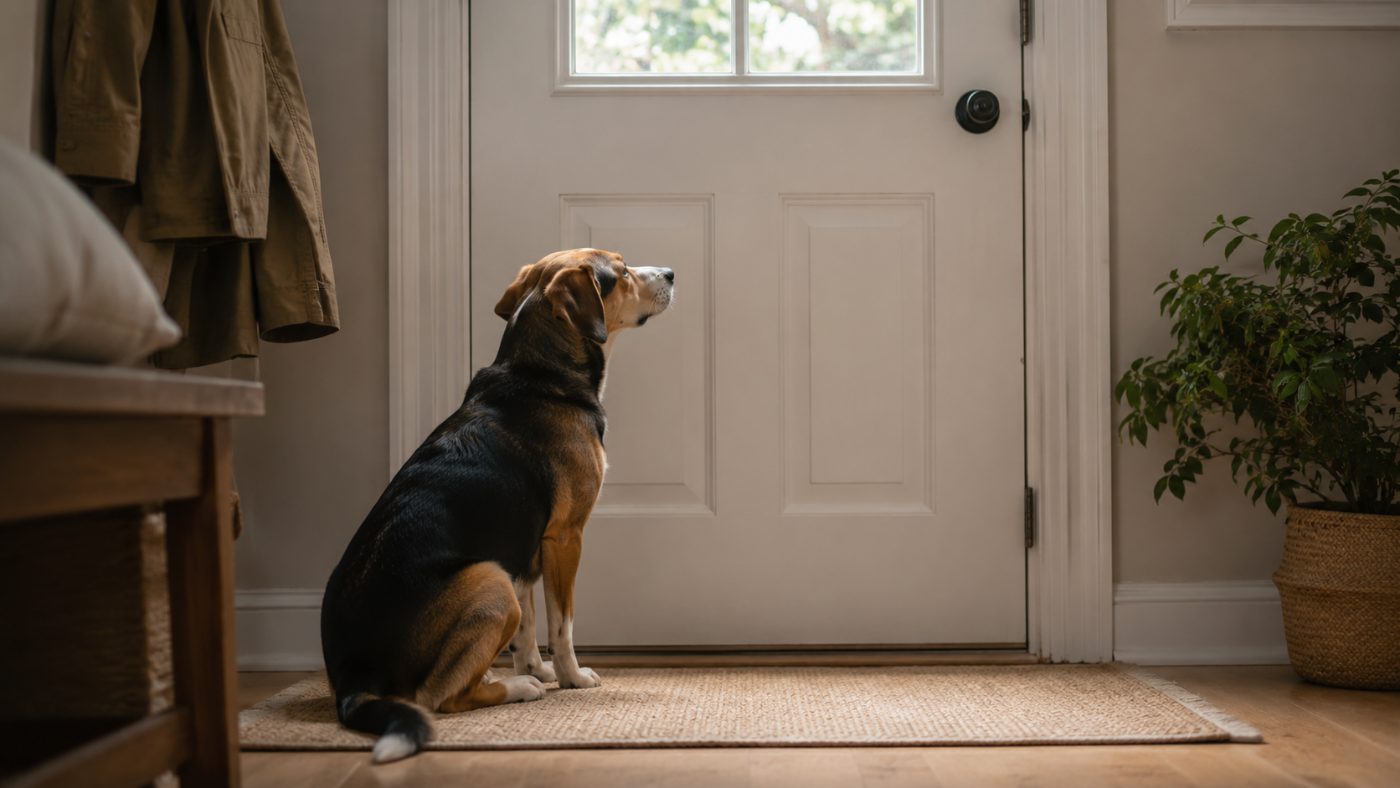
Separation anxiety usually shows up within the first few minutes of you leaving, which is one way to tell it apart from boredom. Common signs include:
- Barking, howling, or whining that starts as you prepare to leave or soon after.
- Destructive behaviour, often focused on doors, windows, or exit points.
- Toileting indoors despite being house trained.
- Pacing, drooling, or excessive panting.
- Following you from room to room and reacting anxiously to your “getting ready to leave” cues, like picking up keys.
If the trouble is mainly barking, it is worth ruling out simple boredom first, our guide on barking when left alone covers that. A quick tip: set up a phone or pet camera to film your dog after you leave. It tells you instantly whether you are dealing with panic or just a bored dog inventing entertainment.
Why dogs develop it
There is rarely a single cause. It can follow a big change like a house move, a new routine, being rehomed, or the loss of a family member. It is common in rescue dogs, who may have been abandoned before, which is why our guide to training a rescue dog treats alone-time so carefully. And it can build quietly in dogs who have simply never learned to be on their own, which became far more common after long periods of people working from home. Whatever the cause, the fix is the same: teaching your dog, slowly and kindly, that alone time is safe and even pleasant.
The one rule that makes or breaks recovery
Here is the principle that surprises most owners and matters more than any other: while you are treating separation anxiety, your dog should not be left alone to panic. Every time your dog is left long enough to hit full panic, it reinforces the fear and undoes your progress. So during training you manage absences using a dog walker, daycare, a friend, family, or taking your dog with you, so that the only “alone time” they get is the tiny, controlled amount you are practising. This feels like a big ask, but it is the difference between weeks of steady progress and months of going in circles.
The step-by-step desensitisation plan
The core method is desensitisation: exposing your dog to being alone in doses so small they never trigger the panic, then building up gradually. Behaviourists call this staying “below threshold.” Go slowly, and let your dog’s body language set the pace.
Step 1: Fade your departure cues
Long before you reach the door, your dog is already worrying, because they have learned that keys, shoes, and coats mean you are leaving. Break those associations by doing the cues randomly throughout the day without leaving: pick up your keys and sit back down, put your coat on and make a cup of tea. Repeated often, these signals stop predicting your departure and stop triggering dread.
Step 2: Practise micro-absences
Start comically small. Step to the other side of a door, or just outside, and come straight back before your dog reacts. Seconds, not minutes. Keep it calm and unremarkable. Repeat many times, and only extend the time when your dog stays completely relaxed. If they show any stress, you have gone too far, so drop back to an easier level.
Step 3: Build duration slowly
Gradually stretch the absences: a few seconds, then thirty, then a couple of minutes, then five, always returning before your dog worries. Progress is rarely a straight line, so vary the times rather than always making them longer, and have some easy reps mixed in. Watch for the early stress signals, lip licking, yawning, pacing, panting, and stay under them.
Step 4: Keep greetings boring
Big emotional hellos and goodbyes make the contrast of your absence sharper. Leave calmly with no fuss, and when you return, greet your dog gently and wait until they are settled before any real attention. You are teaching them that comings and goings are no big deal.
Make alone time genuinely nice
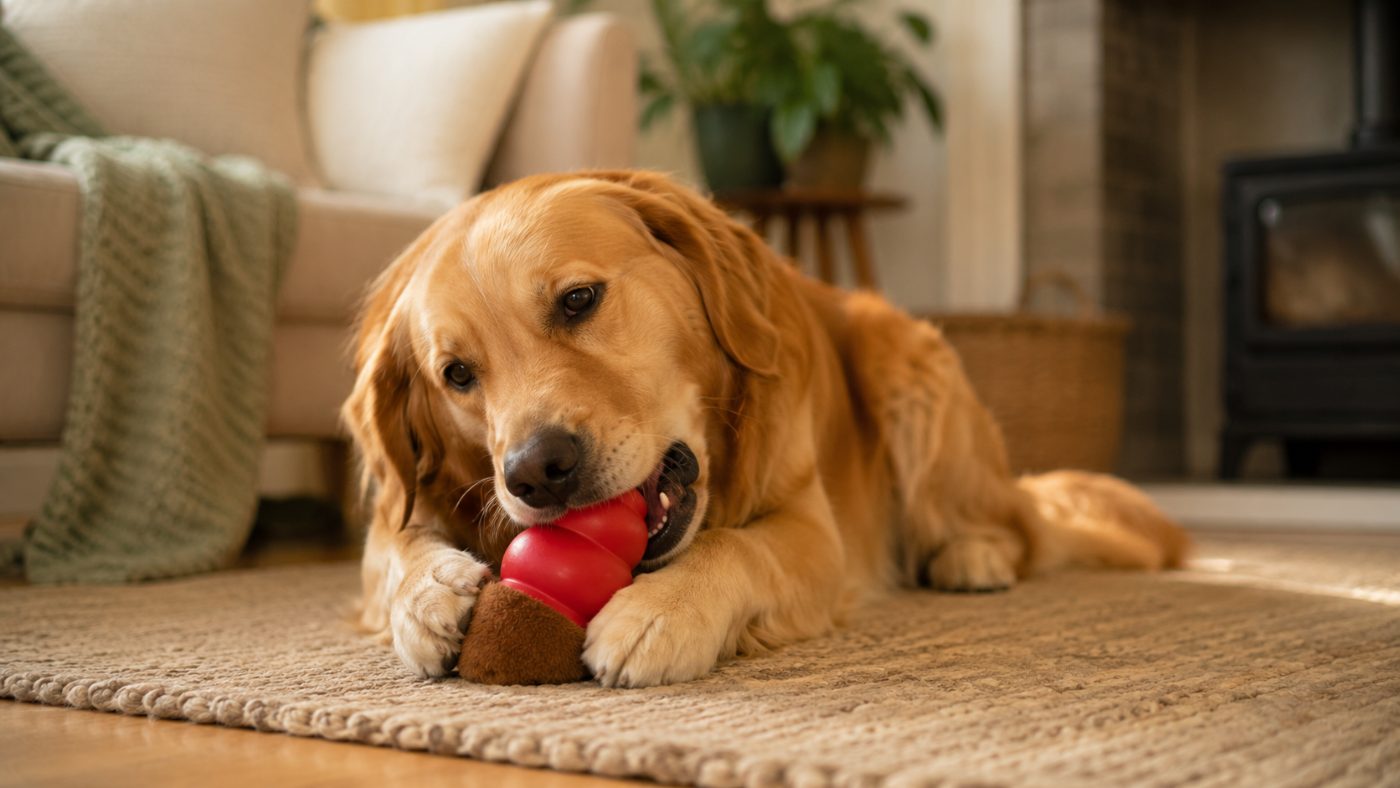
Alongside the desensitisation, give your dog good reasons to enjoy their own company. A stuffed, frozen food toy or a long-lasting chew given only when you leave can turn departure from a trigger into a treat, and the licking and chewing are naturally calming. A comfortable safe space, some background noise or calming music, and a really good walk or training session beforehand all help, because a physically and mentally satisfied dog has far less anxious energy to burn. Our guide to mental stimulation games is full of ways to tire the brain before you head out.
A note on crates
Crates are wonderful for many dogs, but for a dog with genuine separation anxiety a closed crate can sometimes intensify the panic, turning fear into a trapped, frantic state and risking injury. If your dog is relaxed and crate-happy, a crate can be part of their safe space. If confinement clearly makes the distress worse, give them more freedom in a dog-proofed room instead and focus on the emotional work. Our crate training guide explains how to tell the difference.
When to consider medication and professional help
Moderate to severe separation anxiety often needs more than home training, and there is no shame in that. Because the panic itself blocks learning, some dogs make far better progress with the help of anti-anxiety medication prescribed by a vet, used alongside the behaviour plan, not instead of it. A qualified, reward-based behaviourist or a veterinary behaviourist can read your dog’s subtle stress signals, build a tailored programme, and stop you accidentally pushing too fast. If your dog is injuring themselves, if the distress is severe, or if weeks of careful work bring no change, please reach out to your vet and a certified behaviourist. It is the kindest, fastest route.
What not to do
- Never punish the anxiety. Telling off a panicking dog for mess or damage only adds fear and makes it worse. They cannot help it.
- Do not flood your dog. Leaving them alone for hours “to get used to it” is the opposite of desensitisation and can deepen the trauma.
- Do not rush. Pushing past your dog’s threshold sets progress back. Slow is fast here.
- Do not assume a second dog will fix it. Separation anxiety is usually about the person, not company, so another dog often does not help and can even pass the anxiety on.
Preventing it in the first place
If you have a new puppy or a newly adopted dog, you can head a lot of this off. From the start, teach them that being alone is normal and fine: practise short, calm separations every day, build up gradually, and make their alone time comfortable and rewarding. Do not let a new dog shadow you every second of every day, as lovely as that is, because a dog that never experiences brief, relaxed solitude is a dog more likely to struggle later. Our puppy training schedule builds alone-time practice in from week one.
Frequently asked questions
How long does it take to fix separation anxiety in dogs?
It varies widely with severity and consistency. Mild cases can improve in a few weeks of daily practice, while moderate to severe cases often take several months. Going slowly and staying below your dog’s panic threshold is what makes it stick.
Can separation anxiety in dogs be cured?
Most dogs improve dramatically and many recover fully with consistent desensitisation, enrichment, and, where needed, veterinary support. Some remain sensitive and benefit from ongoing management, but a happy, calm alone-time is a very realistic goal.
Should I get another dog to help with separation anxiety?
Usually not. Separation anxiety is typically about being apart from a specific person, so a second dog rarely solves it and can sometimes make things harder. Focus on the desensitisation plan instead.
Is it OK to let my dog cry it out?
No. Leaving an anxious dog to panic reinforces the fear and can worsen it. The goal is the opposite: keep your dog under threshold so they never reach that panicked state.
Does medication help dog separation anxiety?
For moderate to severe cases, vet-prescribed anti-anxiety medication used alongside a behaviour plan can be very helpful, because it lowers the panic enough for your dog to actually learn. Speak to your vet.
The bottom line
Separation anxiety is panic, not misbehaviour, and it responds beautifully to patience and the right plan. Fade your departure cues, practise absences so small they never trigger fear, build up slowly, keep goodbyes boring, and make alone time genuinely pleasant. Protect your progress by not leaving your dog to panic in the meantime, and get veterinary and professional help for anything moderate or severe. With time and kindness, most dogs learn that being alone is perfectly safe. Next, set up a calm safe space with our crate training guide, and tackle any leftover noise with stopping barking when left alone.
Sources and further reading: ASPCA, RSPCA, and PetMD. This article is general guidance and not a substitute for advice from your vet or a qualified behaviourist.