

Bringing home a rescue dog is one of the most rewarding things you will ever do, and one of the easiest to get wrong in the first fortnight, purely out of love. Most new adopters do too much, too soon: lots of visitors, lots of fussing, straight into training. What a rescue dog actually needs first is space, quiet, and time to realise they are safe. Get that decompression period right and the training becomes far easier. This is a kind, patient, step-by-step guide to settling in and training a rescue dog, built around the framework rescue professionals swear by.
The 3-3-3 rule: what to expect
The single most useful thing to understand is the 3-3-3 rule, a rough map of how a rescue dog decompresses. In the first 3 days, your dog is overwhelmed and shut down. They may hide, refuse food, sleep a lot, or seem unusually quiet or clingy. This is not their personality, it is stress. In the first 3 weeks, they start to settle, learn the routine, and let their guard down, which is often when their real character, and any behaviour issues, begin to show. By 3 months, most dogs feel genuinely at home, bonded, and secure. Full settling can take six months or more. Knowing this stops you panicking when your quiet, perfect first-week dog suddenly starts testing boundaries in week three. That is normal, and it means they feel safe enough to be themselves.
The first days: do less, not more
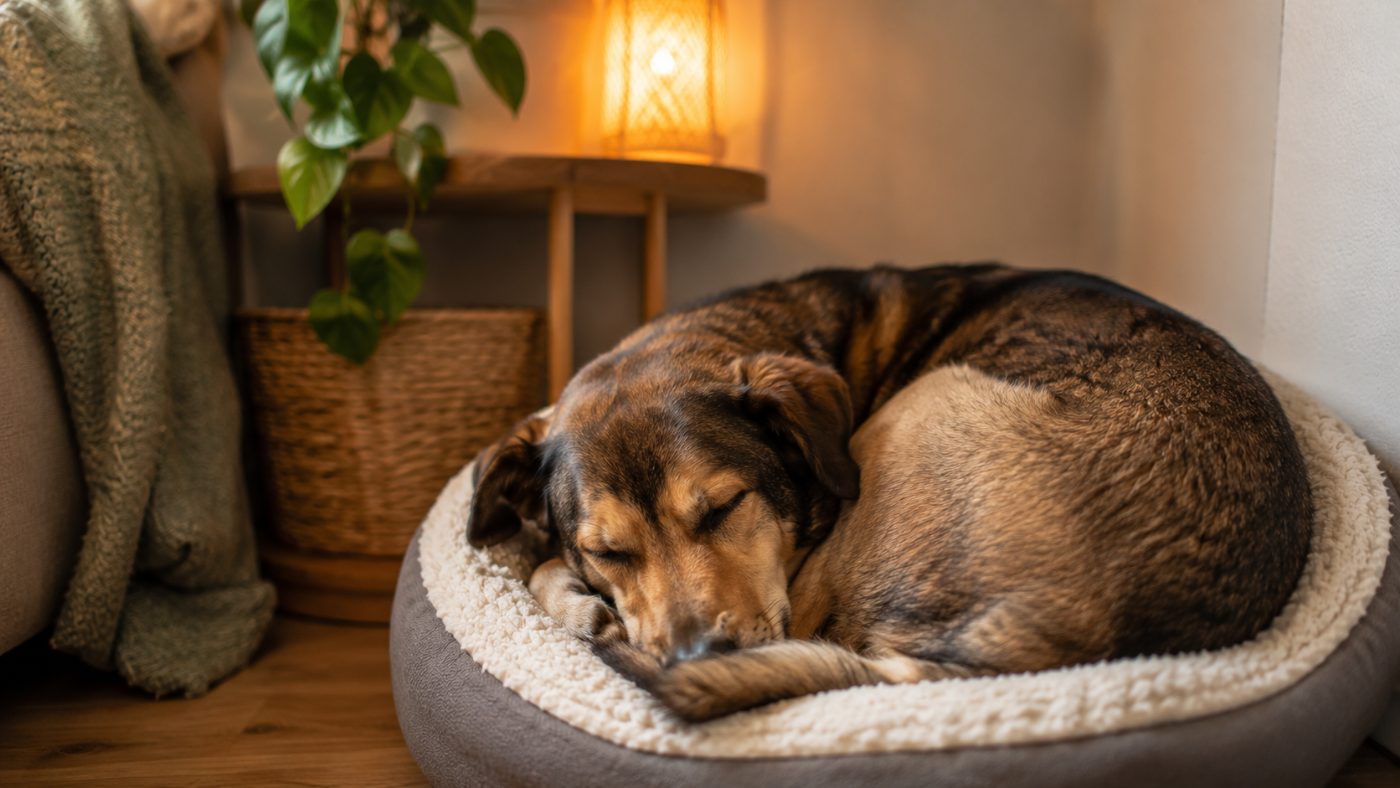
This is the part that feels counterintuitive. When you finally get your dog home, your instinct is to shower them with love, introduce them to everyone, and start bonding. Resist it. For the first few days, keep life calm, quiet, and boring. Skip the visitors, keep fuss and even conversation gentle and low-key, and let your dog explore and rest at their own pace. Give a calm guided tour on a lead, then let them retreat to a quiet safe space whenever they want. You are not being cold, you are giving an overwhelmed animal the one thing they need most: the chance to decompress without pressure. Training, in the formal sense, waits.
Set up a safe space
Every rescue dog needs a den, a quiet spot that is theirs and theirs alone, where nobody bothers them. A crate is ideal if your dog is comfortable with one, or a cosy corner with a bed in a low-traffic room. Feed meals there, let them rest there undisturbed, and teach children and other pets to leave them completely alone when they are in it. This safe space becomes the anchor for everything else, because a dog who knows they always have somewhere to feel secure recovers confidence far faster. Our crate training guide shows how to introduce a crate gently, which matters doubly for a rescue who may have bad associations with confinement.
Build a routine straight away
Predictability is deeply reassuring to a dog who has just had their whole world turned upside down. From day one, keep meals, walks, toilet breaks, and bedtime at roughly the same times. A dog who knows what happens next feels safe, and a dog who feels safe settles and learns. If you can, arrange to be home for the first week or two so you can establish this rhythm and be a calm, steady presence while your dog finds their feet.
Trust first, training second
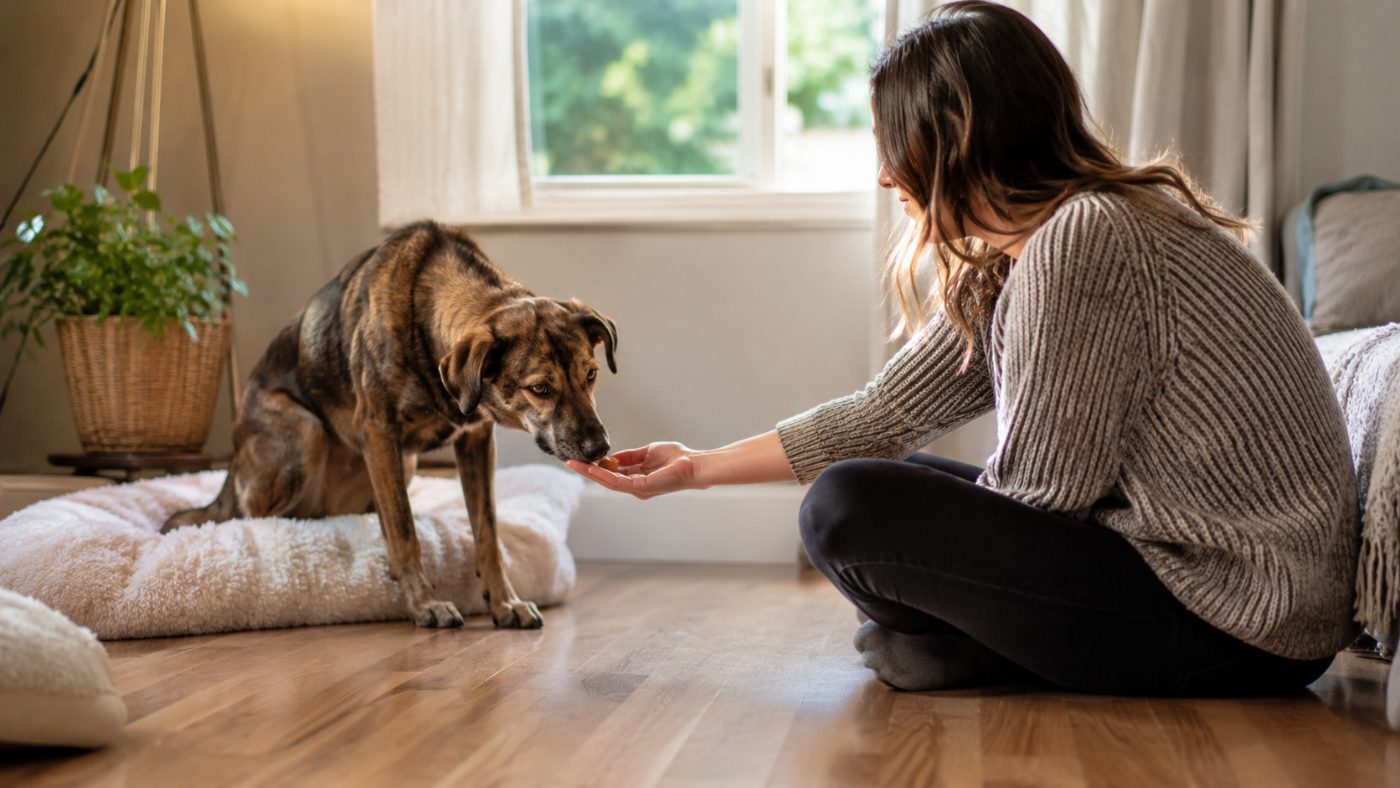
Here is the mindset shift that changes everything: you cannot train a dog who does not trust you yet. So the real “training” in the early days is relationship building. Hand-feed some meals, sit quietly nearby without demanding interaction, and let your dog choose to approach you. Every time being near you leads to good things and no pressure, their trust grows. Once that bond is forming, usually into the second or third week, gentle training becomes not just possible but genuinely enjoyable for your dog. And crucially, train the dog in front of you, not the dog you imagined. Meet them where they are.
The first things to teach
When your dog is ready, keep early lessons short, positive, and low-pressure. Good first goals are their name (so they learn to look to you), a rock-solid, happy recall, and the basics like sit, all taught with rewards and zero correction. Reward-based training is non-negotiable with a rescue: treats, praise, and play build confidence, while scolding or any physical punishment deepens fear and can undo weeks of trust. Little and often is the rule, five happy minutes here and there rather than long sessions. Our mental stimulation games are perfect for gentle early engagement that builds your bond without pressure.
House training a rescue dog
Do not assume a rescue dog is house trained, even an adult, and do not be surprised by accidents in the first weeks. Stress alone can cause them, and some dogs have never learned to toilet on a lead or in a garden like yours. Treat it as a fresh start: take your dog out frequently and at set times, reward them warmly the moment they go in the right place, and never punish accidents, which only adds fear. Our house training guide works just as well for an adult rescue as a puppy.
Common rescue challenges
As your dog comes out of their shell, a few issues commonly surface, and none of them mean you have a “bad” dog. Fearfulness of noises, strangers, or specific things is common and responds to gentle, gradual exposure paired with good things, never forcing them to face fears. Separation anxiety is especially common in rescues, who may have been abandoned before, so build alone-time slowly from the start, as we cover in our separation anxiety guide. And resource guarding or wariness around food is understandable in a dog who has known scarcity, and is best handled with a qualified, reward-based trainer if it is at all serious. Older rescues settle beautifully too, with the same patience, as we discuss in training an older dog.
What not to do
- Do not flood them with attention and visitors early on. It overwhelms an already stressed dog. Quiet and space come first.
- Do not punish fear or accidents. It deepens anxiety and damages the trust you are trying to build.
- Do not rush training or expect too much too soon. Work at your dog’s pace, not a timetable.
- Do not give too much freedom too fast. A dog off-lead in an unsecured area before your recall is solid can bolt, and a frightened new dog is a flight risk.
When to get help
Most rescue dogs settle wonderfully with patience, routine, and kindness. But do not struggle alone if you need support. Reach out to a qualified, reward-based trainer or a veterinary behaviourist if your dog shows aggression, severe fear or anxiety, or if you feel out of your depth. Many rescue organisations also offer post-adoption support, and a good vet can rule out any pain or medical issue behind a behaviour. Asking for help early is a sign of a good owner, not a failing one.
Frequently asked questions
What is the 3-3-3 rule for rescue dogs?
It is a rough guide to decompression: 3 days to start feeling less overwhelmed, 3 weeks to settle into the routine and show their real character, and 3 months to feel genuinely at home. Full settling can take six months or more.
How long does it take to train a rescue dog?
Trust comes first and takes days to weeks. Once your dog feels safe, basic training progresses much like any dog, over weeks of short, positive sessions. The whole settling-and-training process is best measured in months, not days.
Should I crate train my rescue dog?
A safe space is invaluable, and a crate works well if introduced gently and positively. If your rescue has bad associations with confinement, use an open bed in a quiet corner instead and never force the crate.
Why is my rescue dog worse after a few weeks?
This is normal and actually a good sign. Around three weeks, a settling dog lets their guard down and their true personality, including any issues, emerges. It means they feel safe enough to be themselves. Keep being patient and consistent.
Can you train an older rescue dog?
Absolutely. Older dogs learn well with reward-based methods and often settle faster because they are calmer. The same patience and kindness apply at any age.
The bottom line
Training a rescue dog is really an exercise in patience and trust. Follow the 3-3-3 rhythm, do less rather than more in the early days, give your dog a safe space and a steady routine, and build the bond before you build the skills. Keep everything reward-based, expect the odd wobble around week three, and get help for anything that feels beyond you. Do that, and you will watch a nervous newcomer blossom into a confident, devoted companion. Next, set up their safe den with our crate training guide, and get ahead of alone-time worries with our separation anxiety guide.
Sources and further reading: Pedigree Adoption Hub, ASPCA behaviour resources, and RSPCA.