
Bringing a new puppy home is one of life’s great joys, and also, if we are honest, one of its more exhausting weeks. There is a lot to think about, a small creature who cannot yet tell you what they need, and probably a few sleepless nights. The reassuring news is that puppies do not need perfection, they need patience, gentleness, and a bit of a plan. Get the first week right and you set the tone for a calm, confident, well-adjusted dog. Here is exactly what to focus on, from the moment you walk through the door to the end of that first big week.
Before your puppy arrives
A little preparation makes everything smoother. Puppy-proof your home the way you would for a curious toddler: move electrical cords, shoes, houseplants, and anything small or chewable out of reach, and use baby gates or a pen to block off unsafe areas. Gather the essentials, a crate, a comfy bed, food and water bowls, the same food the breeder was using, a collar and lead with an ID tag, and plenty of safe toys and chews. Agree a name and a set of house rules with everyone in the household before the puppy arrives, because consistency from day one is one of the biggest factors in easy training.
The first day: keep it calm
Your puppy has just left their mother and littermates and everything they have ever known, so the number one goal on day one is to help them feel safe, not to show them off. When you get home, take them straight to your chosen toilet spot in the garden and give them a chance to go, praising warmly if they do. Then let them explore one or two rooms calmly, at their own pace. Resist the urge to invite the whole neighbourhood round. Keep introductions to immediate household members, keep everything low-key and gentle, and let your puppy come to people rather than being passed around. A quiet, reassuring first day pays off for weeks.
Surviving the first night
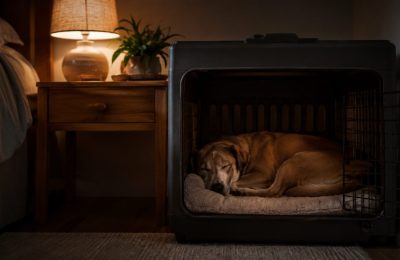
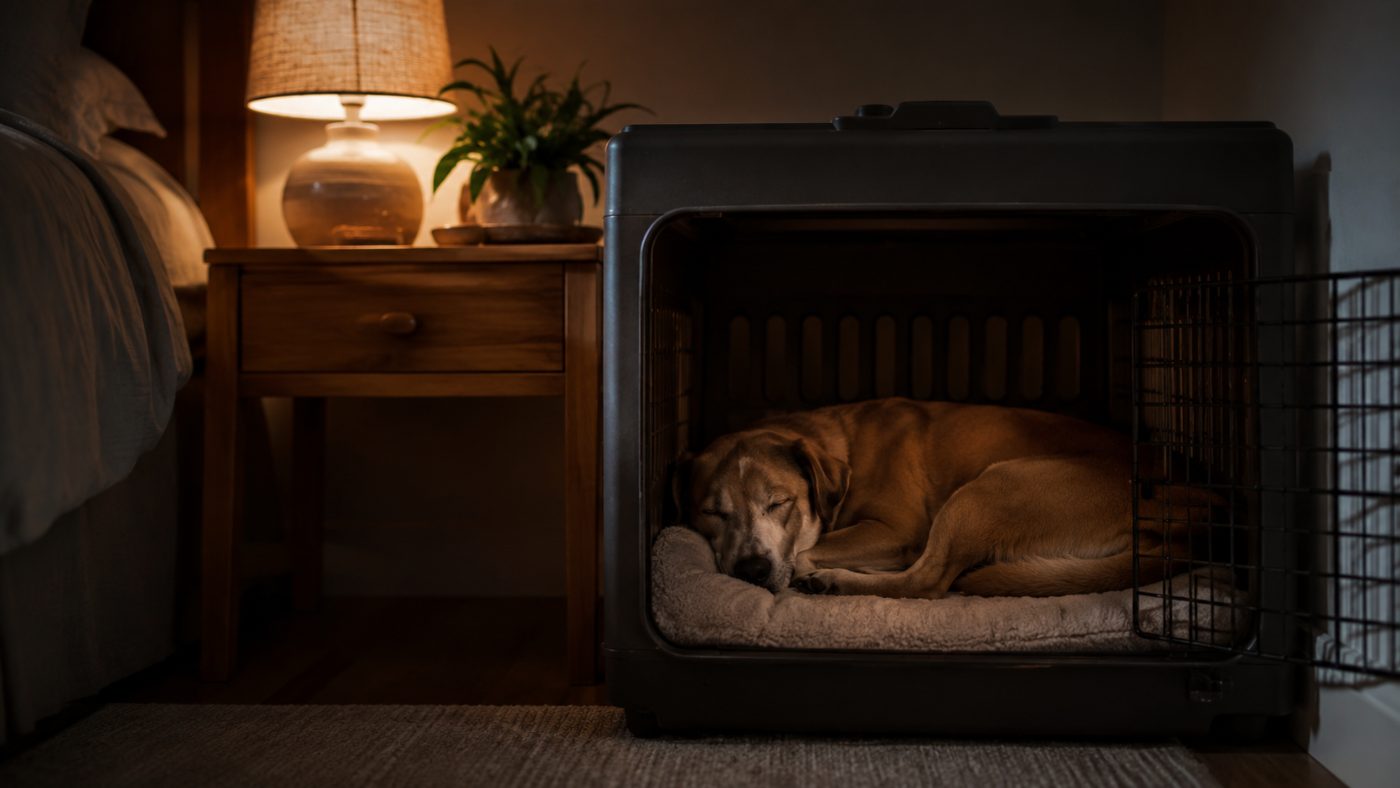
The first night is often the hardest, and a little crying is completely normal, because your puppy is alone for the first time in their life. The kindest and most effective approach is to have your puppy sleep close to you, with their crate or bed in your bedroom, so they can hear and smell you and feel secure. Many puppies settle far faster this way than shut away alone. Take them out for a toilet break if they wake and genuinely need it, keeping it calm and boring so there is no reason to wake for fun. It gets easier quickly, usually within a few nights, as they learn they are safe. Our crate training guide helps make the crate a cosy den rather than a scary box.
Start a gentle routine
Puppies thrive on predictability, and a simple routine helps everything fall into place. Aim for regular times for meals, toilet trips, play, short training, and sleep. Crucially, puppies need a lot of sleep, around 18 to 20 hours a day, so build in plenty of nap time and do not let visitors or excited children keep an overtired puppy awake. Much of the first-week “naughtiness” people describe is simply an exhausted puppy who needs a nap. A rough rhythm of wake, toilet, play or train, then rest, repeated through the day, keeps your puppy settled and makes toilet training far easier. This grows into the fuller puppy training schedule by age.
Toilet training from day one
Start toilet training the moment your puppy arrives, because habits form fast. Take them out to the same spot frequently: after waking, after eating, after play, and roughly every hour or two in between, plus any time they sniff or circle. Go out with them, wait, and reward calmly the instant they go in the right place. Accidents indoors are inevitable and are never your puppy’s fault, so simply clean up with an enzymatic cleaner (to remove the scent that draws them back) and never punish. Patience and consistency here are everything, and most puppies make steady progress over the following weeks.
Gentle handling and early socialisation
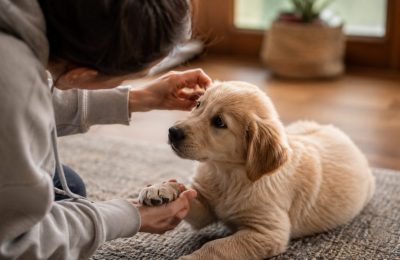
The first week is the start of the most important learning window of your puppy’s life. Handle them gently every day, touching paws, ears, and mouth so they grow up comfortable with grooming and vet visits. Begin gentle, positive exposure to household sights and sounds, always at your puppy’s pace and paired with treats and calm praise. Since your puppy is not fully vaccinated yet, carry them out to see the world safely and invite calm, vaccinated adult dogs and friendly visitors to your home. This early socialisation is so important that it has its own guide: our puppy socialization checklist walks through exactly what to expose them to and when.
First vet visit and health
Book a vet appointment within the first few days. Your vet will give your puppy a full health check, weigh them, discuss the vaccination schedule, worming, and flea prevention, and answer your questions about diet and neutering. It is also a lovely chance to make the vet a positive place with treats and gentle handling, so future visits are calmer. Keep feeding the same food the breeder used at first, and if you want to change it, do so gradually over a week or so to avoid an upset tummy.
Begin the tiny building blocks of training
You can start gentle training straight away, and short, fun sessions are perfect for a young puppy’s attention span. Teach their name by rewarding them for looking at you, reward calm behaviour, and start rewarding four paws on the floor rather than jumping up. Keep it all reward-based and playful, a minute here and there, because this early foundation shapes how easily everything else comes later. Nipping and mouthing are completely normal at this age, and our guide on how to stop a puppy biting shows you how to handle those sharp little teeth kindly.
Look after yourself too
It is worth saying plainly: the first week can be overwhelming, and a lot of new owners feel a wobble of “what have we done” somewhere around day three. That is completely normal and it passes. Puppies are hard work at the start, the sleep is broken, and progress feels slow. Take it a day at a time, celebrate the small wins, share the load with your household, and remember that the exhausting bits are temporary while the bond you are building lasts a lifetime. By the end of the week most puppies are visibly more settled and confident, and so are their people.
Frequently asked questions
What should I do on the first day with a new puppy?
Keep it calm. Take your puppy to the toilet spot first, let them explore one or two rooms at their own pace, limit introductions to household members, and avoid overwhelming them with visitors. A quiet, gentle first day helps your puppy feel safe and settles them faster.
Where should my puppy sleep the first night?
Close to you, ideally with their crate or bed in your bedroom, so they can hear and smell you and feel secure. Some crying is normal on the first nights. Take them out calmly for genuine toilet needs. Most puppies settle within a few nights.
How often should I take my puppy out to toilet in the first week?
Very often: after waking, eating, and playing, and roughly every hour or two in between, plus whenever they sniff or circle. Go out with them, reward going in the right spot, clean accidents with an enzymatic cleaner, and never punish.
When should I take my new puppy to the vet?
Within the first few days. The vet will do a health check, discuss vaccinations, worming, and flea prevention, and answer your questions. Making the visit positive with treats helps future trips go smoothly.
Is it normal to feel overwhelmed in the first week with a puppy?
Completely normal. Broken sleep, constant supervision, and slow-feeling progress catch many new owners out around day three. It passes quickly as your puppy settles. Take it a day at a time, share the load, and celebrate small wins.
The bottom line
The first week with a puppy is about safety, gentleness, and the start of good habits, not perfection. Prepare your home, keep the first day and night calm and close, build a simple routine with plenty of sleep, start toilet training and gentle handling from day one, book the vet, and begin tiny reward-based training sessions. Be kind to your puppy and to yourself, because the exhausting early days are temporary and the foundation you lay now lasts a lifetime. Next, keep the momentum going with our puppy training schedule by age, and get socialisation right with our puppy socialization checklist.
Sources and further reading: Purina, the American Kennel Club, and the PDSA.