
The first few nights with a new puppy can be brutal. You are exhausted, they are crying, and it is heartbreaking and frustrating in equal measure. Take a breath, because this is completely normal and it is temporary. A crying puppy is not being difficult, they are a baby animal who has just left their mother and littermates and finds being alone genuinely frightening. The good news is that with the right, kind approach, most puppies settle within a week or two. Here is exactly why puppies cry at night and how to help yours sleep, without leaving them to sob it out alone.
Why puppies cry at night
Understanding the cause makes everything easier. Your puppy is almost always crying for one of a few very reasonable reasons. Loneliness is the big one: they have never slept alone before and being isolated feels scary. A full bladder is another, because young puppies simply cannot hold it through the night and may be asking to go out. Too much energy at bedtime, an unfamiliar, uncomfortable sleeping spot, hunger, or plain fear of the new environment can all play a part. Once you meet these needs sensibly, the crying eases fast. It is worth noting this settling process fits right into the wider picture in our guide to the first week with a new puppy.

The single most effective fix: keep them close
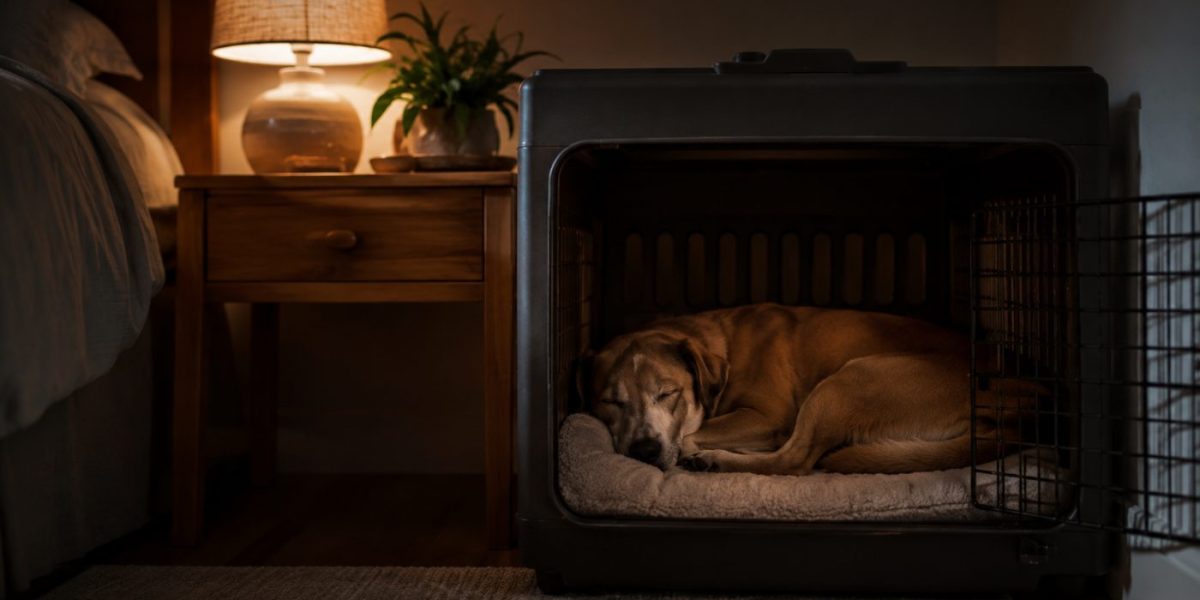
If you take just one thing from this guide, make it this. For at least the first few nights, have your puppy sleep close to you, with their crate or bed right next to yours in your bedroom. Being able to hear, smell, and sense you nearby is enormously reassuring, and many puppies who sob when shut away alone settle almost instantly once they are not isolated. This is not creating a bad habit, it is meeting a genuine developmental need. Once your puppy is sleeping soundly, usually after a week or so, you can gradually move the crate a little further from your bed each night if you eventually want them elsewhere.
Set the crate up for success
A well-set-up crate becomes a cosy den your puppy wants to sleep in. Make sure it is the right size, just big enough for them to stand up, turn around, and lie down, because too much space lets them toilet in one corner and sleep in another. Add soft, warm bedding, and pop in an item of clothing you have worn that day so it carries your comforting scent. Covering part of the crate with a light blanket can make it feel more den-like and secure, as long as there is good airflow. If your puppy is not yet happy in the crate, work through proper crate training during the day so the crate is a happy place, not a source of stress.
Build a calming bedtime routine
Puppies thrive on predictability, and a consistent wind-down routine tells your puppy’s body it is time to sleep. Aim to settle them at the same time each night. Make sure they have had their dinner and last drink a couple of hours before bed so they have time to digest and empty out. Have a calm play session or a short potter in the garden an hour or so before bedtime to burn off energy, then wind right down: lights low, quiet voices, a final toilet trip, and into the crate. A predictable sequence that always ends in sleep helps your puppy settle far faster.
Handle night-time toilet trips calmly
Young puppies genuinely need to toilet in the night, so you cannot simply ignore all crying. The trick is to make toilet trips boring and business-only. When your puppy wakes and needs to go, take them out calmly with minimal fuss, no talking, no play, no bright lights, let them toilet, praise softly, and pop them straight back to bed. You are meeting the need without making waking up fun. As their bladder matures over the following weeks, they will be able to hold it longer and the night wakings naturally stretch out and stop. Avoid rushing in for every single whimper, though, or you risk teaching them that any noise brings you running.
Tire the body and the brain before bed
A puppy with unspent energy will struggle to settle, so a satisfied, gently tired puppy sleeps far better. This does not mean a long, exhausting walk, which is bad for young joints. It means age-appropriate play, a little training, and some gentle brain work earlier in the evening. A short session with a stuffed food toy or a simple sniffing game drains mental energy beautifully. Our mental stimulation ideas are perfect for tiring a busy puppy mind without overdoing the physical exercise.
What not to do
- Do not shout at or punish a crying puppy. They are frightened, not naughty, and punishment makes the fear and the crying worse.
- Do not leave a young puppy to cry it out alone all night. It is distressing, can create lasting anxiety, and ignores genuine toilet needs.
- Do not make night wakings exciting. Keep toilet trips calm and dull so there is no fun payoff for waking.
- Do not give up after a couple of tough nights. Consistency is what gets you there, and it usually clicks within a week or two.
When crying might be something more
Most night crying is normal settling that fades within a fortnight. If your puppy’s distress is extreme, frantic, and does not ease at all over a couple of weeks despite doing everything above, or if it is focused on panic at being separated from you even in the day, it may be tipping into separation-related anxiety, which benefits from a more structured, gradual approach. Our guide to separation anxiety can help, and a chat with your vet or a qualified behaviourist is worthwhile if you are worried.
How long does it take?
For most puppies, the worst is over within the first three or four nights of keeping them close, and they are settling reliably within one to two weeks as their routine locks in and their bladder matures. Some nights will be better than others, and that is normal. Stay consistent, meet the genuine needs, keep wakings calm, and hold your nerve. Before long those broken nights become a distant memory and you have a puppy who sleeps soundly through.
Frequently asked questions
Should I ignore my puppy crying at night?
Not entirely. Young puppies genuinely need night-time toilet trips and reassurance, so do not leave them to cry it out alone. Instead, keep them close, meet real toilet needs calmly and boringly, and avoid rushing in for every tiny whimper so you do not reward attention-seeking.
Where should my puppy sleep to stop crying at night?
Close to you, with their crate or bed in your bedroom for at least the first few nights. Being able to hear and smell you is hugely reassuring and settles most puppies far faster than being shut away alone. You can move the crate gradually once they are sleeping well.
How long will my puppy cry at night?
Usually the worst passes within the first three or four nights, with most puppies settling reliably within one to two weeks as their routine and bladder mature. Consistency is the key factor.
Why does my puppy cry in the crate at night?
Most often loneliness and a full bladder, sometimes an uncomfortable or too-large crate, hunger, or excess energy. Keep the crate cosy and right-sized in your bedroom, settle them with a calm routine, and take them out calmly for genuine toilet needs.
Should I put my puppy’s crate in my bedroom?
Yes, for the first week or two it is the single most effective way to reduce night crying. Your presence reassures your puppy and helps them sleep. Once settled, you can gradually move the crate if you want them to sleep elsewhere.
The bottom line
A crying puppy at night is meeting a real need for comfort, security, and often a toilet trip, not misbehaving. Keep them close by your bed, set up a cosy right-sized crate, build a calm bedtime routine, handle night toilet trips quietly and boringly, and tire their body and brain gently before bed. Skip the shouting and never leave a young puppy to sob alone. Do that and the sleepless nights pass quickly, usually within a week or two. Next, get the whole settling-in period right with our first week with a new puppy guide, and make the crate a happy den with our crate training guide.
Sources and further reading: Bella and Duke, Pooch and Mutt, and the RSPCA puppy advice.