
Few things fray your nerves quite like a dog who barks through the night. You are exhausted, the neighbours are unimpressed, and it can feel like nothing works. The reassuring truth is that nighttime barking almost always has a specific, fixable cause, and once you find it, the solution usually follows quickly. This guide walks through every common reason a dog barks at night, then gives you a calm, kind, practical plan to get everyone, including your dog, sleeping soundly again.
First, find the cause
Dogs do not bark at night to be difficult. They bark because something is wrong or unmet, and the fix depends entirely on which cause you are dealing with. Work through this list and watch your dog’s pattern for a few nights, because identifying the real trigger is more than half the battle. The main culprits are a full bladder, loneliness or anxiety, too much pent-up energy, fear of sounds or the dark, hunger, discomfort, or simply a habit that has been accidentally rewarded. Let us take each in turn.
Toilet needs, especially in puppies
If you have a puppy, a full bladder is the most likely reason for nighttime barking. Young puppies simply cannot hold it all night, so a bark may be a genuine request for a toilet trip rather than a demand for attention. The fix is to take your puppy out for a calm, boring toilet break, with no play and minimal fuss, then straight back to bed. As their bladder matures over the following weeks, the night wakings stretch out and stop. It fits hand in hand with your wider puppy routine. In an older dog, a sudden new need to toilet at night can signal a health issue, so see your vet.
Loneliness and separation anxiety
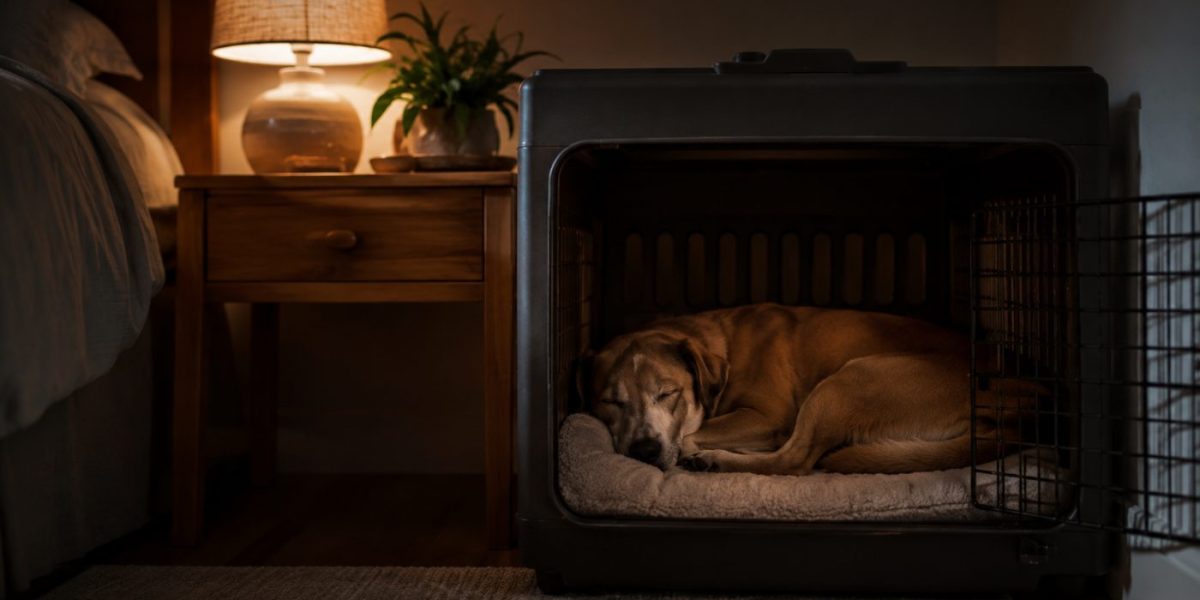
Dogs are social animals, and being shut alone in a room or crate at night can feel genuinely distressing, especially for a new puppy who has just left their littermates. If your dog settles when near you but barks when isolated, loneliness is likely. A simple, effective fix is to move the crate or bed into your bedroom so your dog can see, hear, and smell you. Many dogs settle instantly once they are not alone. Over the following weeks, if you want them elsewhere, you can gradually move the bed a little further each night. If the barking comes with real panic, drooling, or destructiveness, you may be dealing with separation anxiety, which needs the gentle approach in our separation anxiety guide.
Too much energy, not enough tired
A dog who has lounged around all day has a tankful of unused energy at bedtime, and that energy has to go somewhere. Often it comes out as restless, noisy nights. The answer is to make sure your dog is genuinely tired, in body and mind, before bed. A good walk in the evening helps, but mental tiredness matters just as much, so a little training, a puzzle feeder, or a sniffy game late in the day works wonders. Our mental stimulation games are perfect for draining that last bit of energy so your dog is ready to sleep rather than sing.
Fear of sounds and the dark
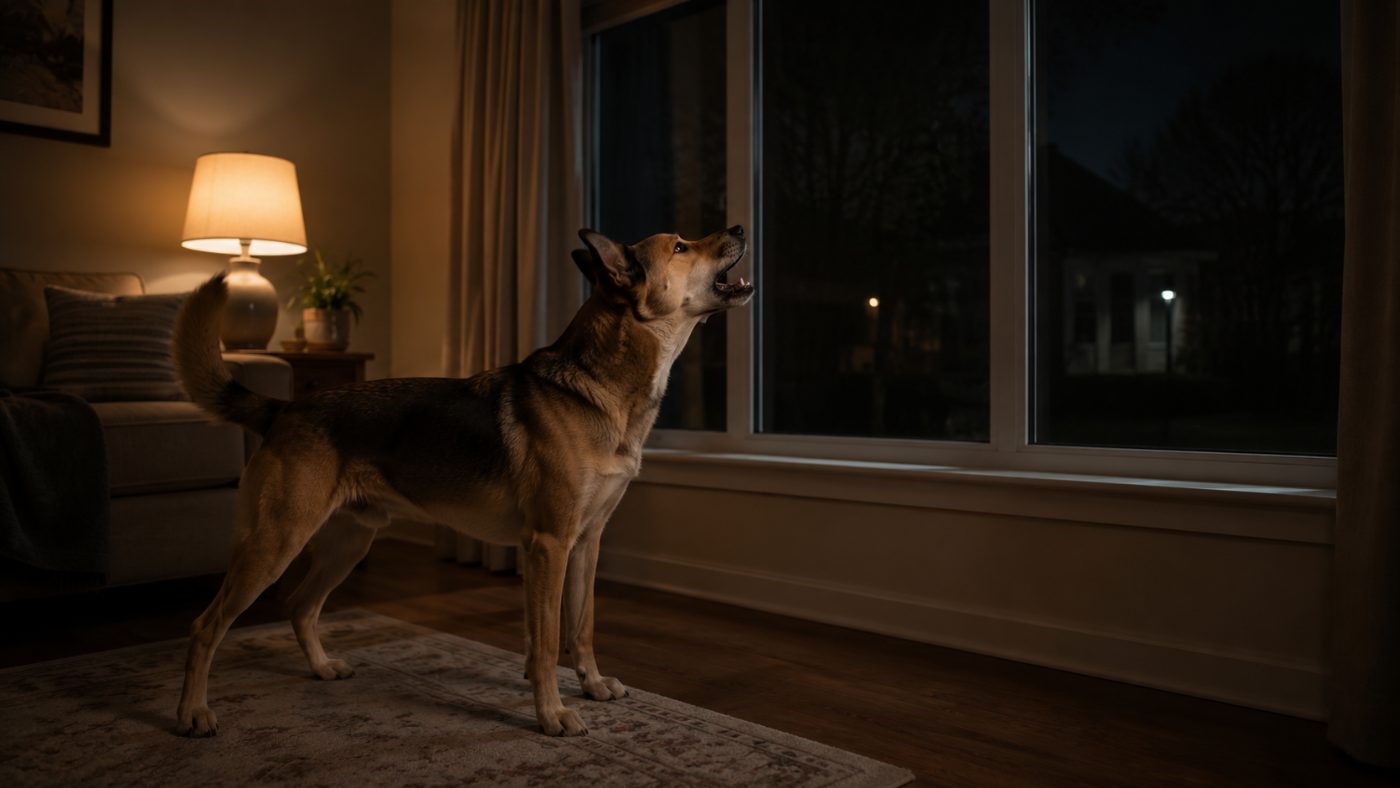
Sometimes the barking is a response to something your dog can hear or sense that you cannot: a fox in the garden, a distant siren, the neighbour’s cat, or unfamiliar creaks in a new home. If your dog barks in alert bursts toward a window or door, this is likely. Reduce the triggers by closing curtains, and mask outside sounds with white noise, a fan, or calm music, which genuinely helps many dogs settle. Making the sleeping spot feel den-like and secure, tucked away from windows, also lowers the alerting.
Build a calming bedtime routine
Dogs thrive on predictability, and a consistent wind-down routine is one of the most powerful tools you have. Aim to crate or settle your dog at the same time each night, preceded by the same calming ritual: a last toilet trip, lights down, maybe a chew or a stuffed toy to settle with, and a quiet, low-key atmosphere. When your dog learns that the same sequence always leads to sleep, they settle far faster. Keep the last hour before bed calm rather than boisterous, so your dog is winding down, not gearing up.
Make the sleeping space cosy and right
Comfort matters more than people realise. Make sure the bed or crate is the correct size, with soft, warm bedding, positioned somewhere quiet and free of draughts. A crate covered with a light blanket can feel wonderfully den-like and secure for many dogs, though make sure there is good airflow. Adding an item of your worn clothing gives comforting familiar scent. If your dog is new to the crate, work through proper crate training first, so the crate is a happy place rather than a source of stress.
Do not accidentally reward the barking
This is the trickiest part. If your dog barks and you rush in, talk to them, or let them out to play, you teach them that barking works, and they will do more of it. So once you have ruled out a genuine need like the toilet, the rule is to avoid rewarding the noise. Wait for a pause in the barking before you respond to anything, so you are rewarding quiet, not the racket. For genuine toilet trips, keep them silent, dull, and business-only, so there is no fun payoff for waking. It can mean a few tough nights of holding your nerve, but consistency here pays off fast. This pairs well with actively teaching a “quiet” cue during the day, so your dog understands what you are asking for.
When to see the vet
If nighttime barking starts suddenly in a previously settled adult or older dog, do not just treat it as a behaviour problem. A new need to toilet overnight, restlessness, pacing, or barking can point to pain, illness, or, in senior dogs, cognitive decline (a kind of canine dementia that often disrupts sleep). A quick vet check rules out or treats a medical cause, which no amount of routine or training will fix on its own. It is always the responsible first step when the behaviour is new or out of character.
How long does it take?
For a puppy whose barking is about a maturing bladder and settling into a new home, expect steady improvement over the first few weeks as their routine locks in and their body clock matures. For an older dog where you are breaking a rewarded habit or building a new routine, many owners see a real difference within one to two weeks of consistency, provided you have found and addressed the true cause. The single biggest factor is not reacting to the barking itself, so hold your nerve, stay consistent, and the quiet nights come.
Frequently asked questions
Why does my dog suddenly bark at night?
Sudden nighttime barking in a previously settled dog often signals a change or a problem: a new toilet need, discomfort or pain, a new noise or fox in the garden, or in senior dogs, cognitive decline. Because it is new, a vet check is wise to rule out a medical cause.
Should I ignore my dog barking at night?
Once you have ruled out a genuine need like the toilet, yes, avoid rewarding the barking with attention, talk, or play, and wait for a pause before responding so you reward quiet. But never ignore a puppy who genuinely needs to toilet or a dog showing signs of real distress.
How do I get my puppy to stop barking at night?
Take them out for calm, boring toilet breaks as needed, put their crate in your bedroom so they are not alone, tire them out before bed, keep a consistent wind-down routine, and avoid making a fuss. As their bladder matures over a few weeks, the barking eases.
Will a covered crate stop my dog barking at night?
For many dogs a light cover makes the crate feel den-like and secure, which reduces alert barking at sights and sounds, so it often helps. Ensure good airflow, and pair it with a calm routine and enough exercise. It works best alongside the other fixes, not alone.
Is it cruel to let my dog bark it out at night?
Simply leaving a distressed dog to bark for hours is neither kind nor effective, and can worsen anxiety. The kind approach is to find and fix the cause, meet genuine needs calmly, build security and routine, and only then avoid rewarding attention-seeking barks by waiting for quiet.
The bottom line
Nighttime barking is almost always solvable once you stop guessing and start diagnosing. Rule out toilet needs and health issues, ease loneliness by keeping your dog close at first, tire them properly before bed, mask scary sounds, build a calm and consistent bedtime routine, make the sleeping space cosy, and above all avoid rewarding the barking with attention. Do that and peaceful nights return, usually faster than you expect. Next, make sure the crate itself is a happy place with our crate training guide, drain that evening energy with some brain games, and if anxiety is at the root, read our separation anxiety guide.
Sources and further reading: Tractive on nighttime barking, Barc London, and the ASPCA barking guide.